TIMELINE:
18 MAY - 24 MAY 2026
RESEARCH METHODS:
WORKSHOP, CREATIVE TOOLKIT
TEAM:
VIBHOOTI • DIYA • CLARA • MARY • OINDRILLA • REVATI • VERONIKA • WALEED • YIFEI
Vitae Curricula:
Week 4
Brief
"Design an experiential CV."
Overview of Week
For this week, we allocated the majority of our time for a high-fidelity workshop. We also split preparation tasks for individual material exploration.
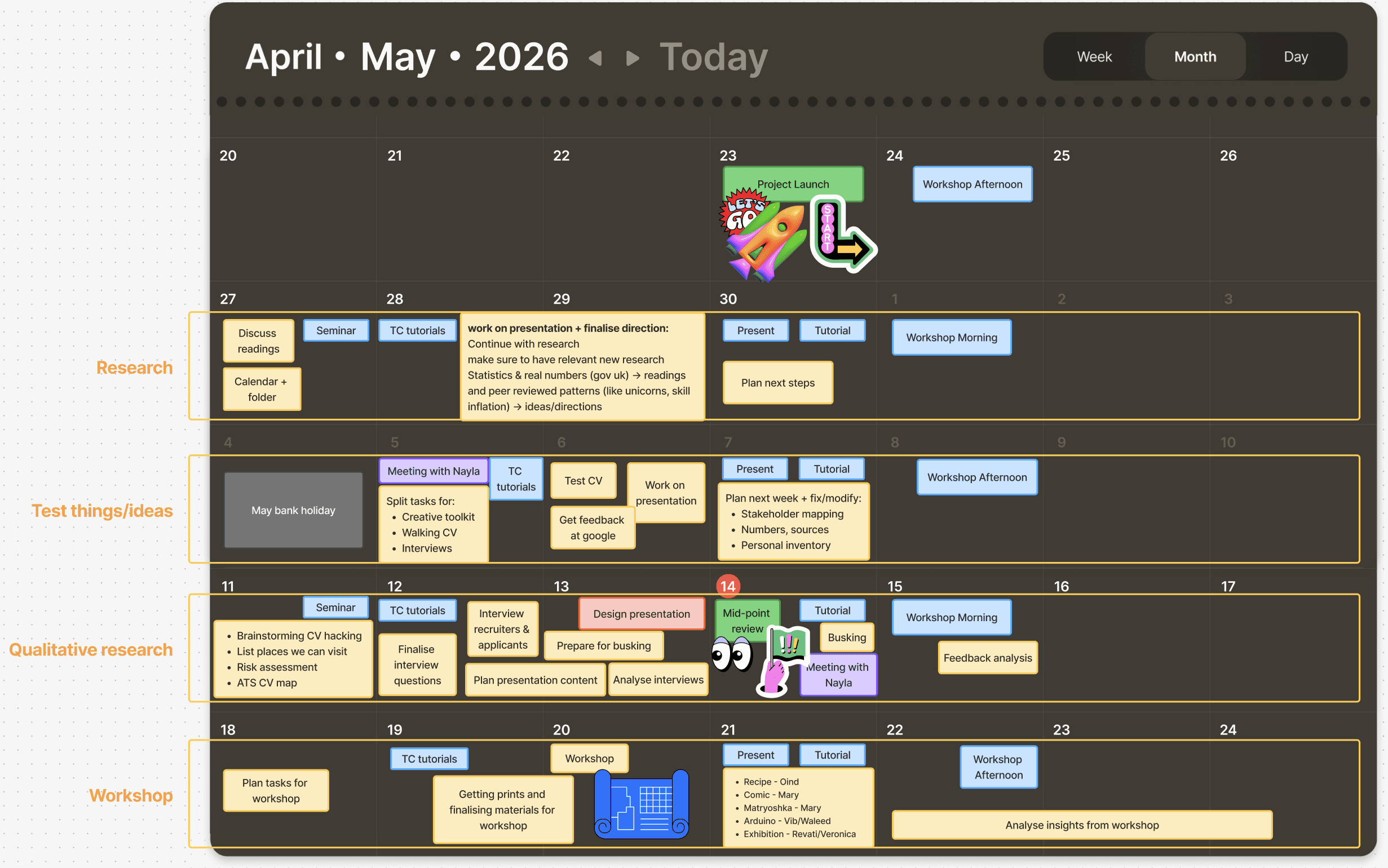
Preparing for the workshop
We had identified early on that grabbing attention is not possible for the majority of participants. This led us to try and make an adaptable framework, potentially through a workshop. Since this could be one of our final outcomes, we wanted to conduct it as professionally and high-fidelity as possible.

We refined the structure and timings for the activities by testing it in our group and this was our final flow. It included 4 major activities besides icebreakers. Total duration 1.5h. (Visual credits: Author)
Initial drafts for the sheets and high-fidelity ones generated through Claude. (Credits: Veronika)
Presentation for our workshop. We kept it light as we had Oindrilla as the speaker and wanted to give simple context through the slides. (Credits: Author) (Video controls are available)
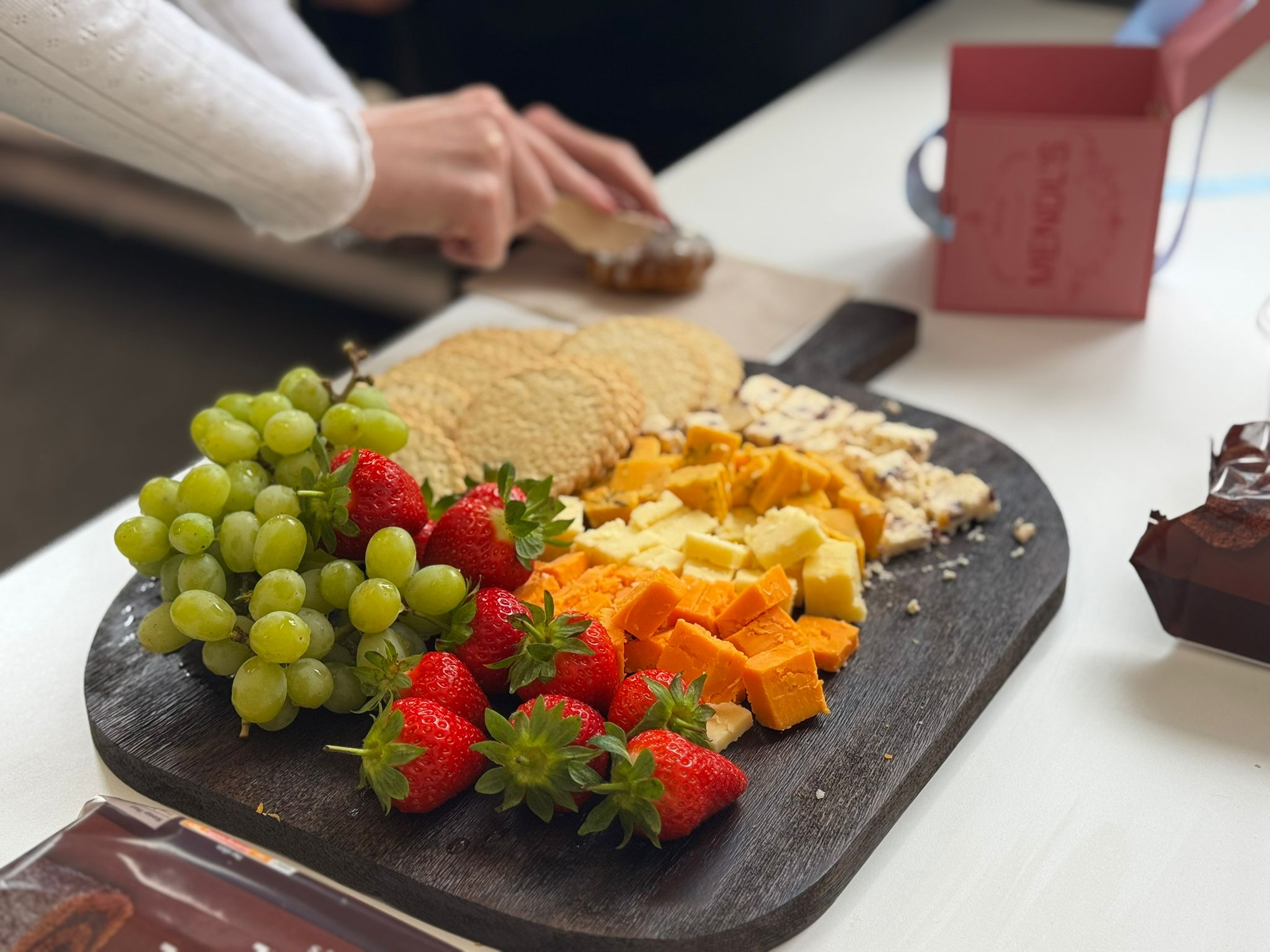
A selection for refreshments was arranged for the participants. (Image credits: Mary, Yifei)
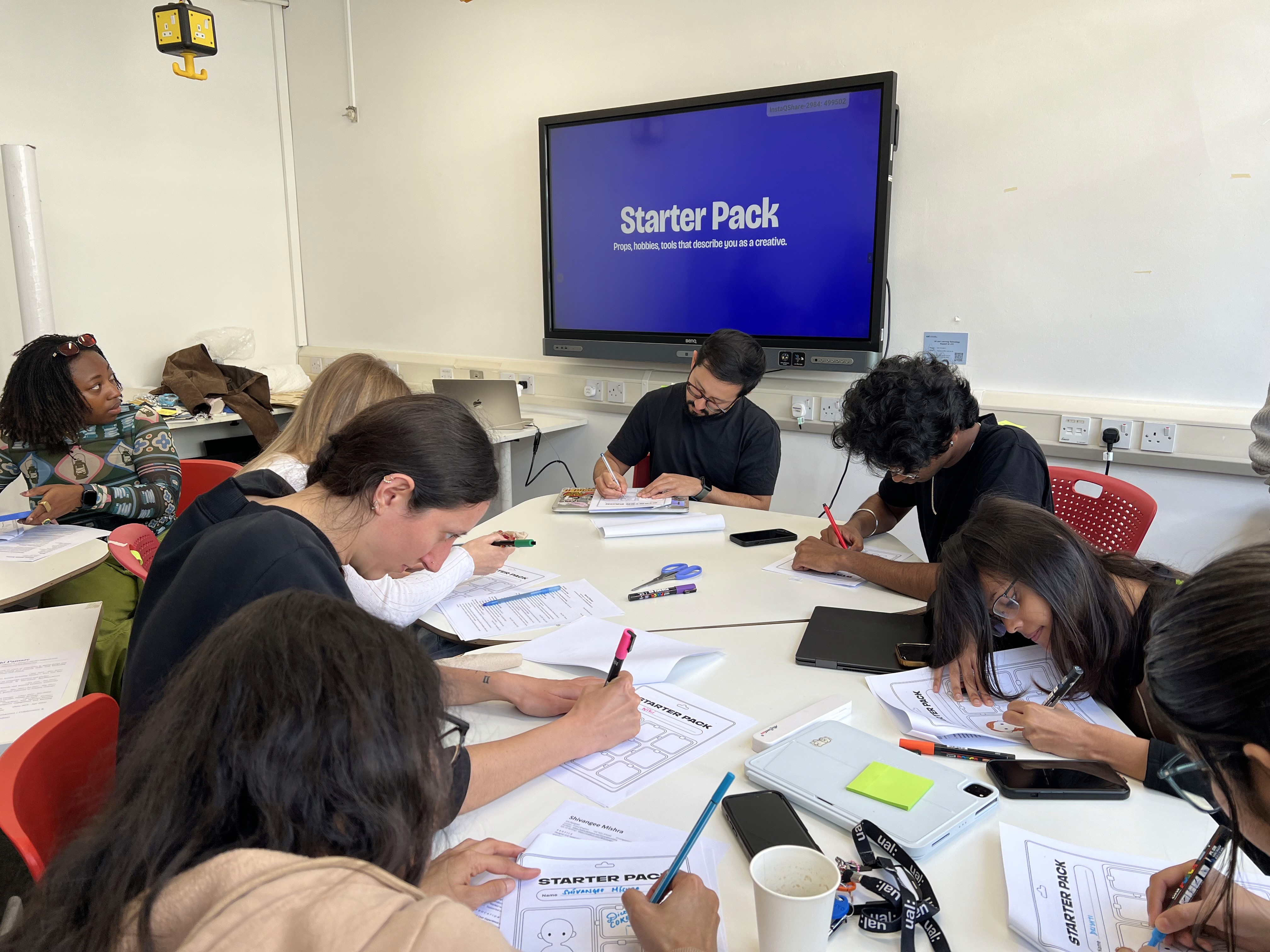
We conducted it with 13 classmates due to convenience and to understand gaps. (Image credits: Mary, Yifei)
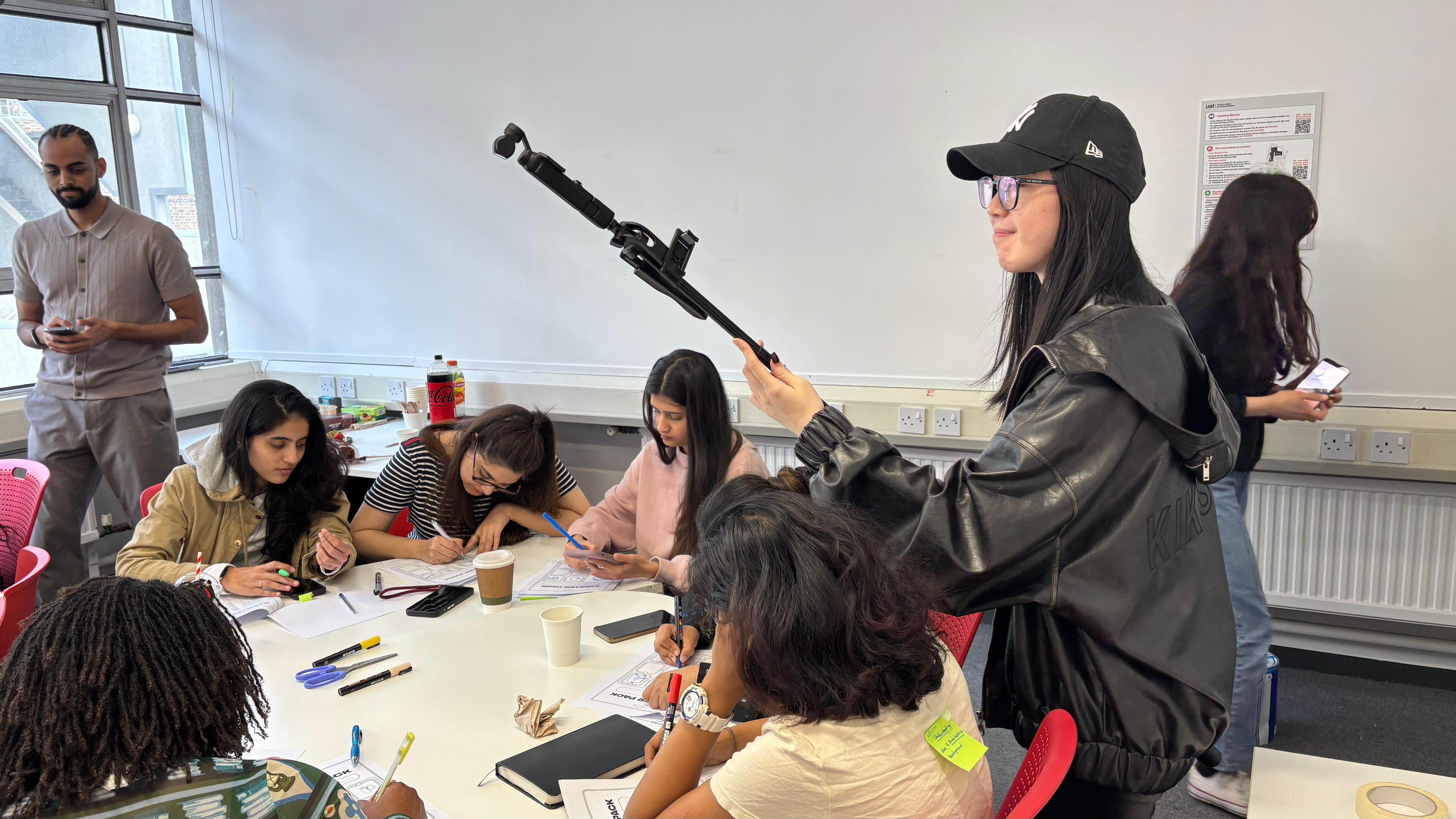
Mary and Yifei took ownership of documentation through photos, audio, and video. (Image credits: Author)
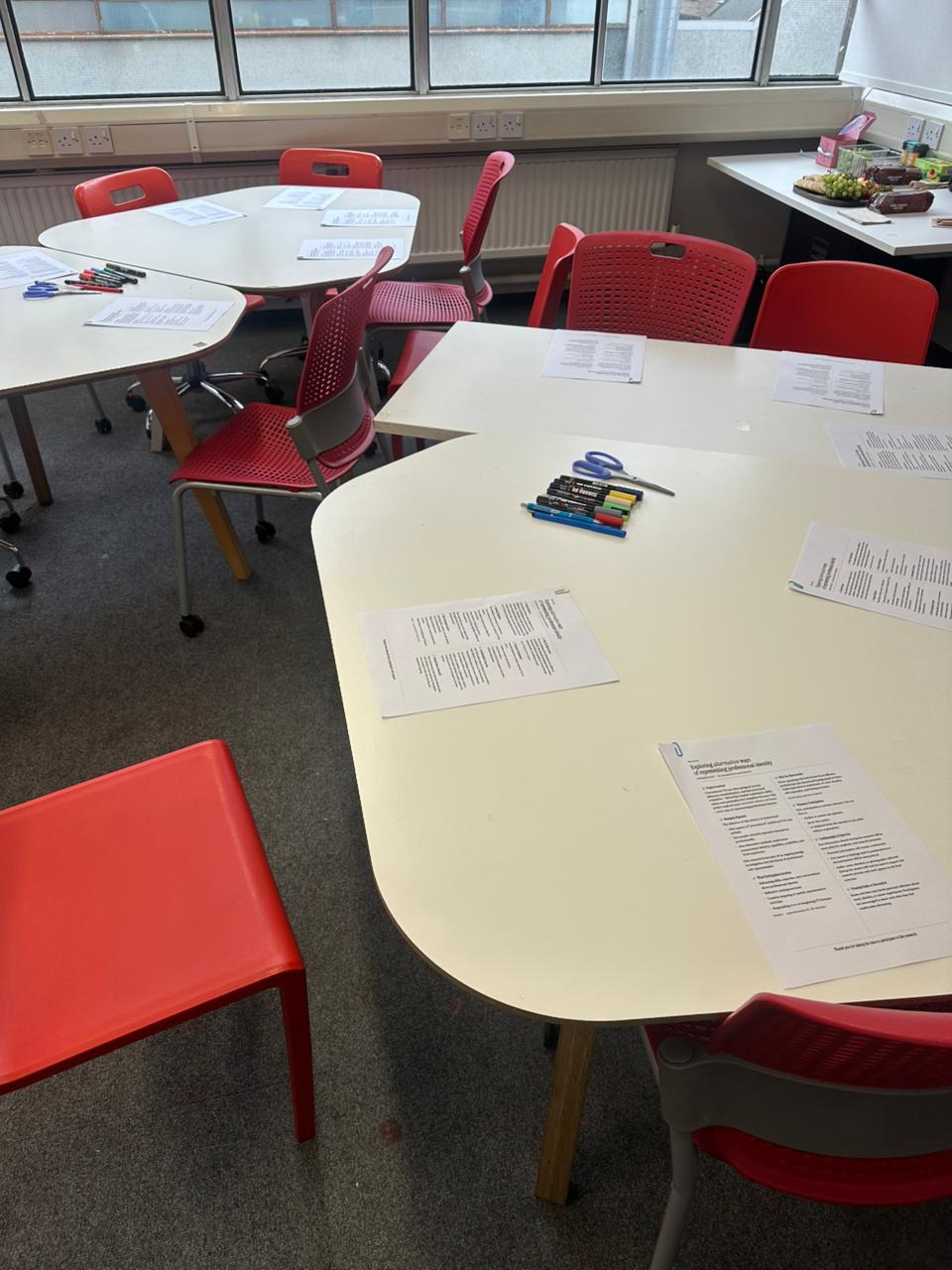
Stationary and sheets were arranged beforehand for consent, warmup, reframing and group discussion. (Image credits: Mary, Yifei)

Starter pack activity designed as a warmup while gauging personality. We picked it as the format is familiar to most. (Credits: Revati)
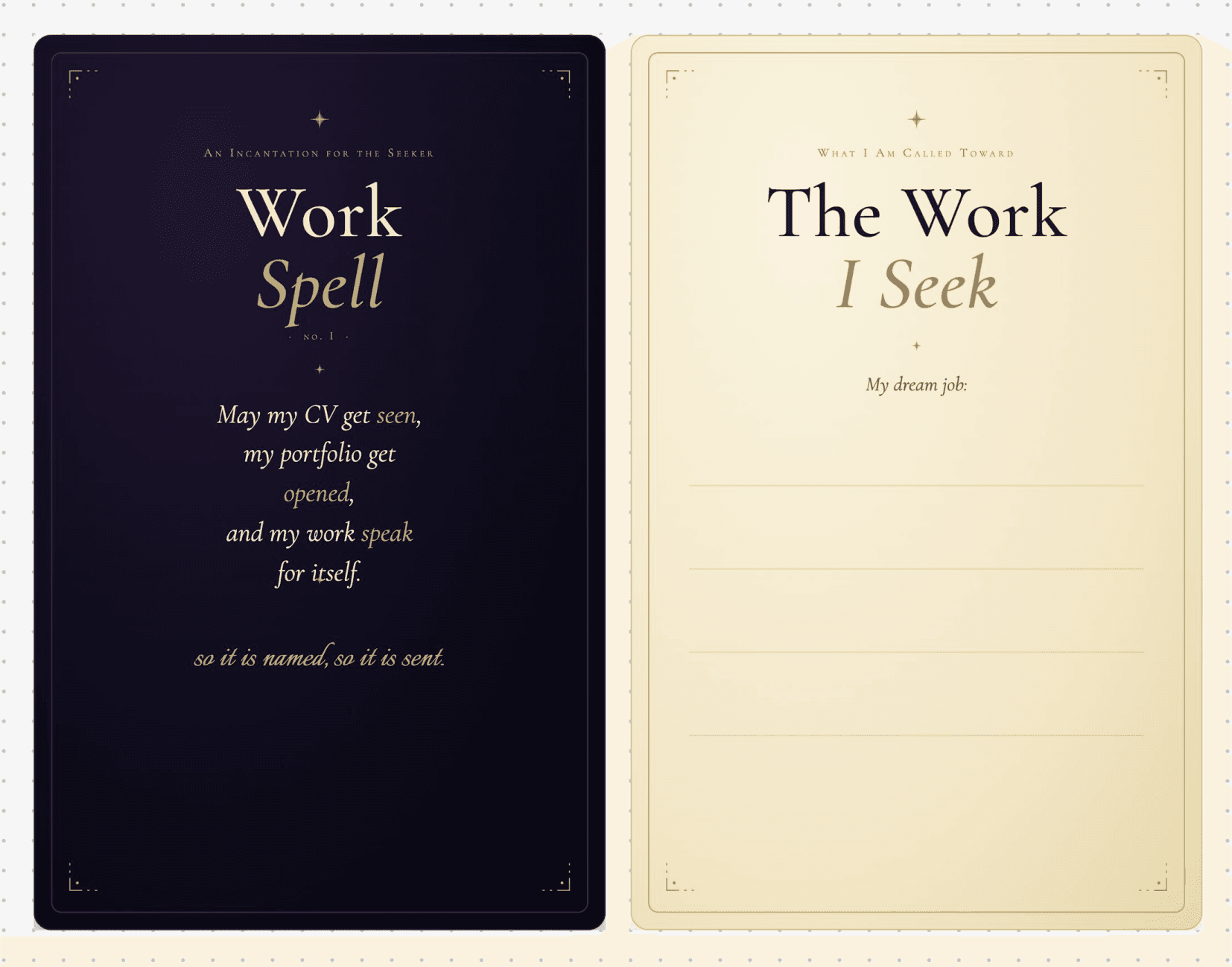
To end the experience, we created manifestation cards inspired from Etsy witches. (Credits: Revati, Veronika)
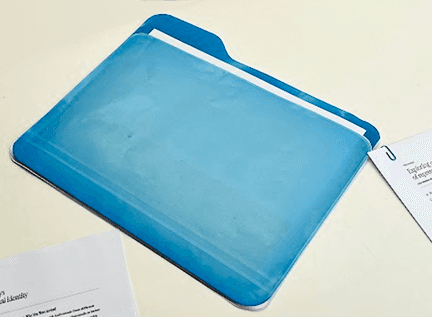
We had printed the participants' CVs prior to the workshop and kept them in a folder. (Credits: Revati, Author | (Image credits: Mary, Yifei))
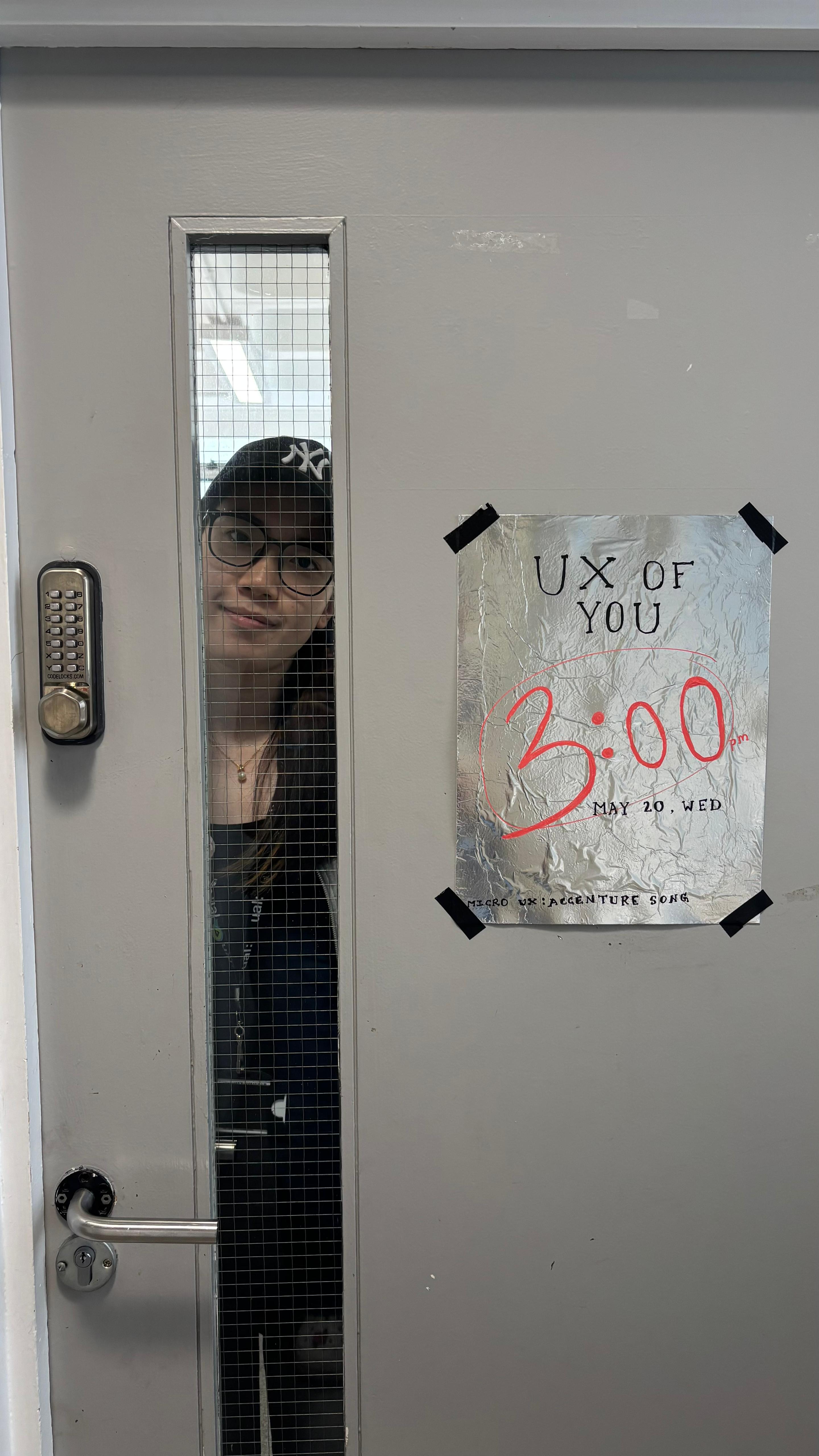
Poster for the event was reflective and showed the person's reflection. (Credits: Author)
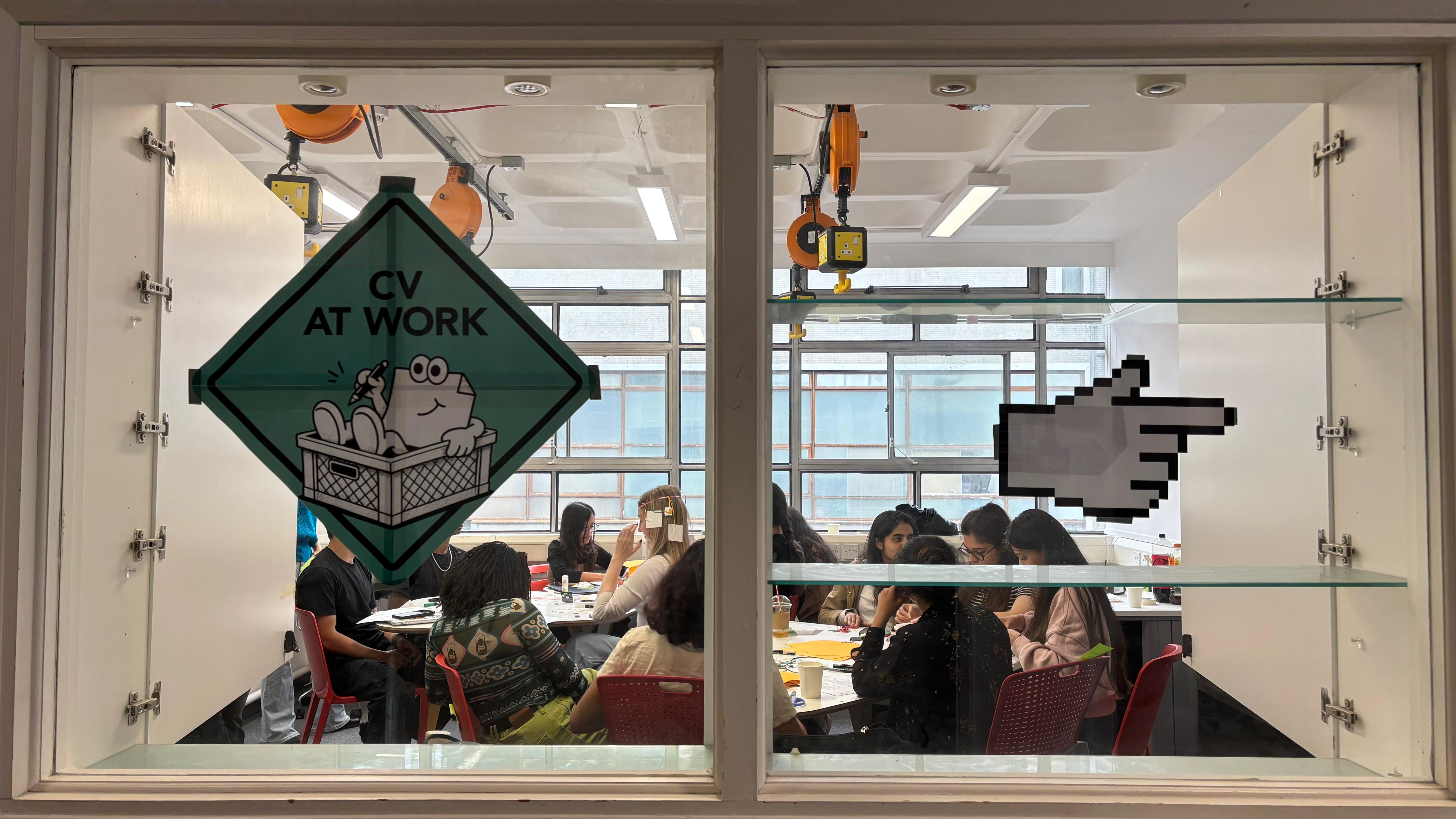
Other prints for the windows. (Credits: Revati)
Conducting the workshop
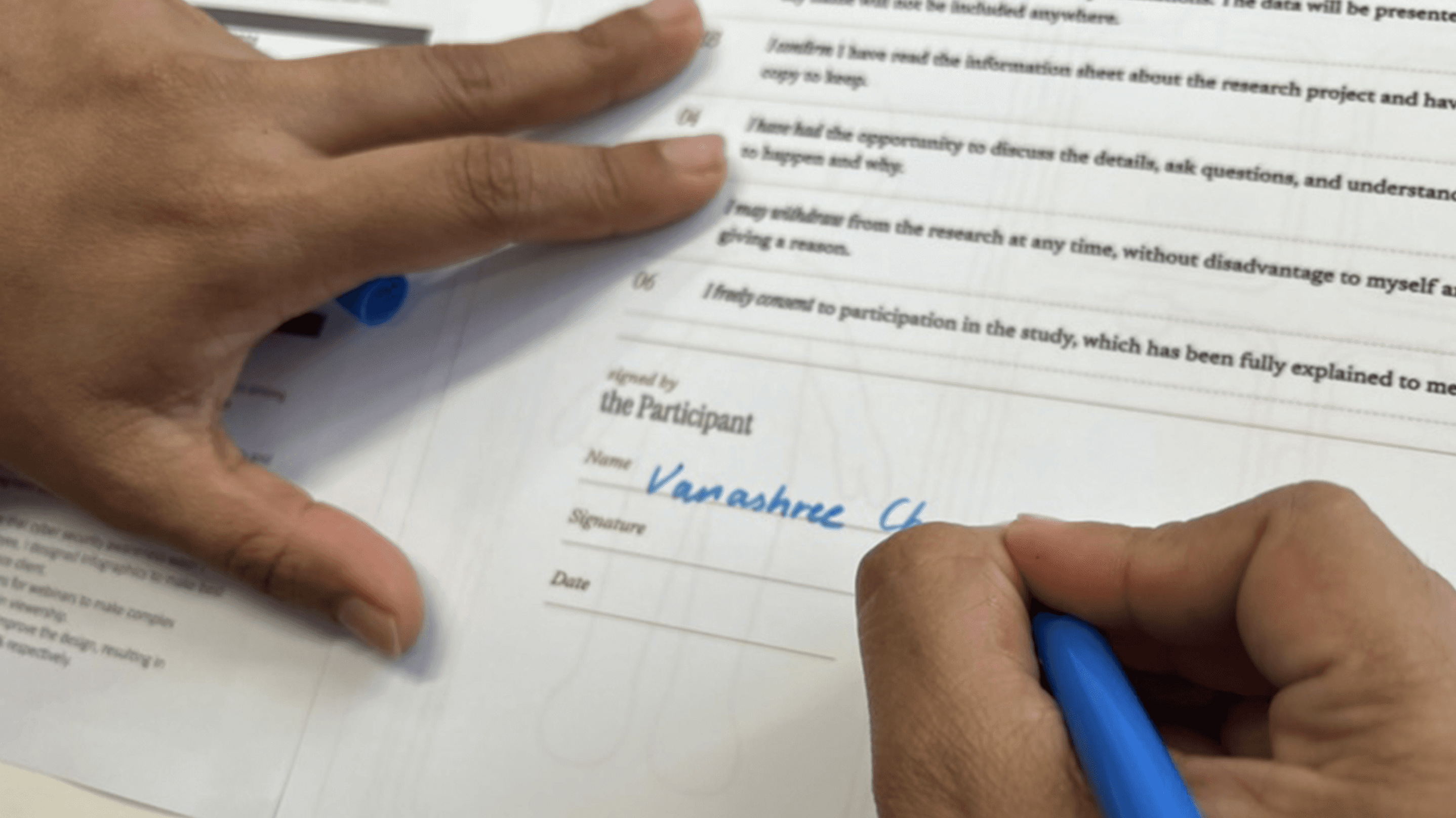
Consent forms were filled out first. (Image credits: Mary, Yifei)
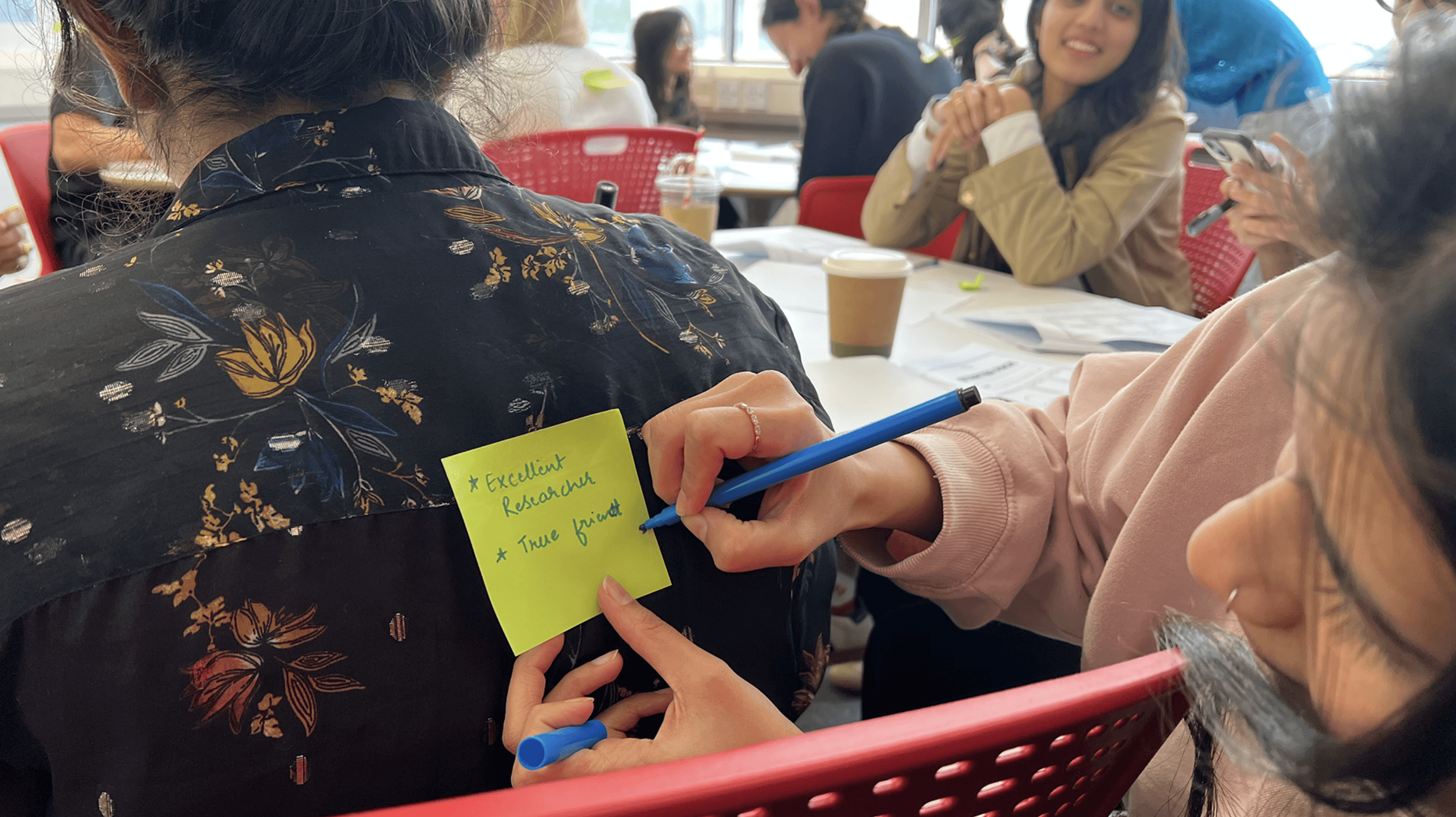
Participants doing an icebreaker. This let people identify qualities about themselves that they might not know. (Image credits: Mary, Yifei)
Participants discarding their weaknesses in a moving bin. This was a precursor to weakness -> strength. (Image credits: Mary, Yifei)
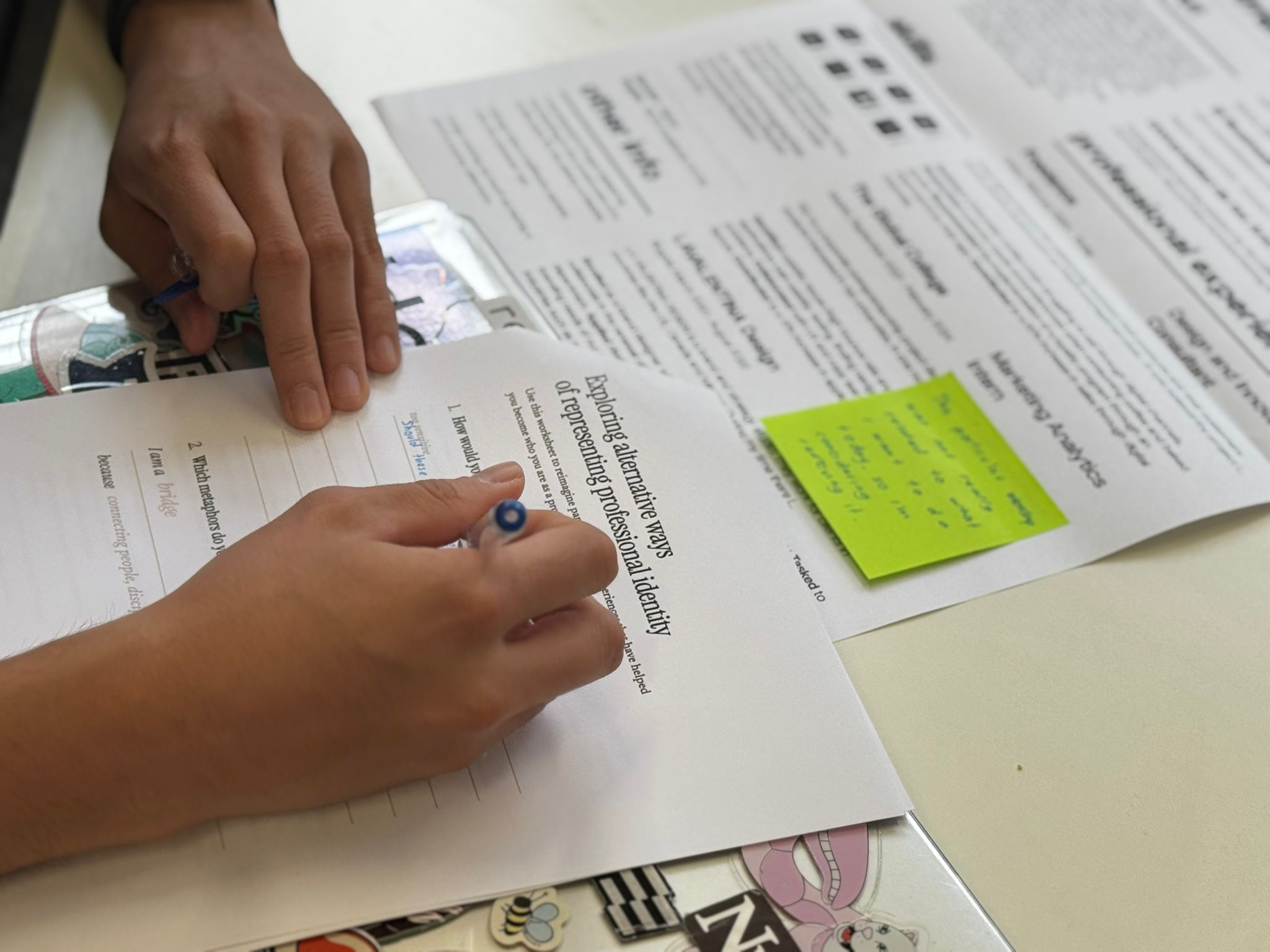
Participant reframing their weaknesses and creating metaphors of themselves. (Image credits: Mary, Yifei)
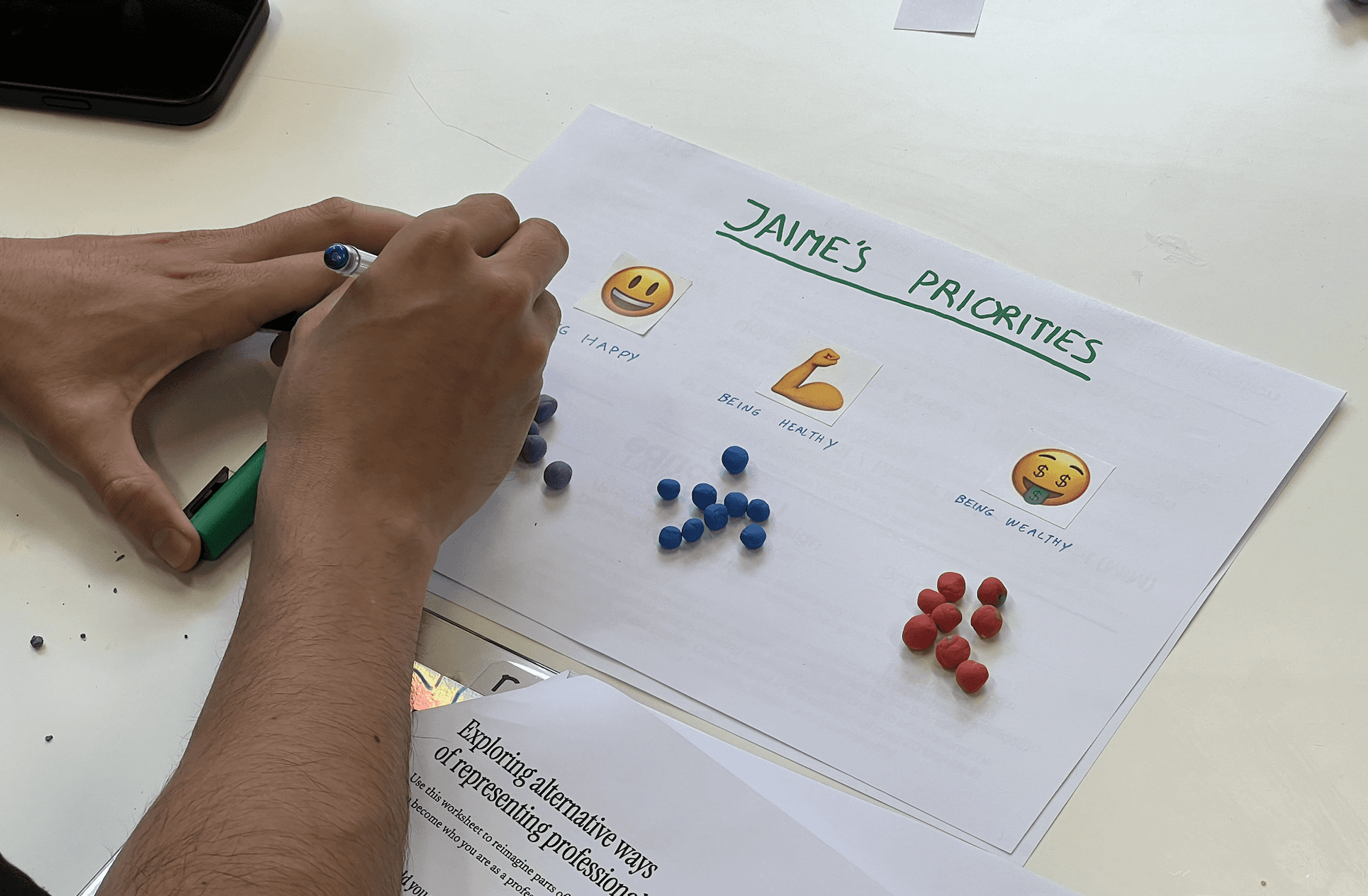
Participant constructing their alternative CV. (Image credits: Mary, Yifei)
Manifesting dream job and salary and opening the room to feedback. (Video controls are available) (Video credits: Yifei)
Alternative CVs
Some of the artefacts produced in the workshop:

Participant showcasing their universe and adding a telescope for other people to view. (Image credits: Mary, Yifei)
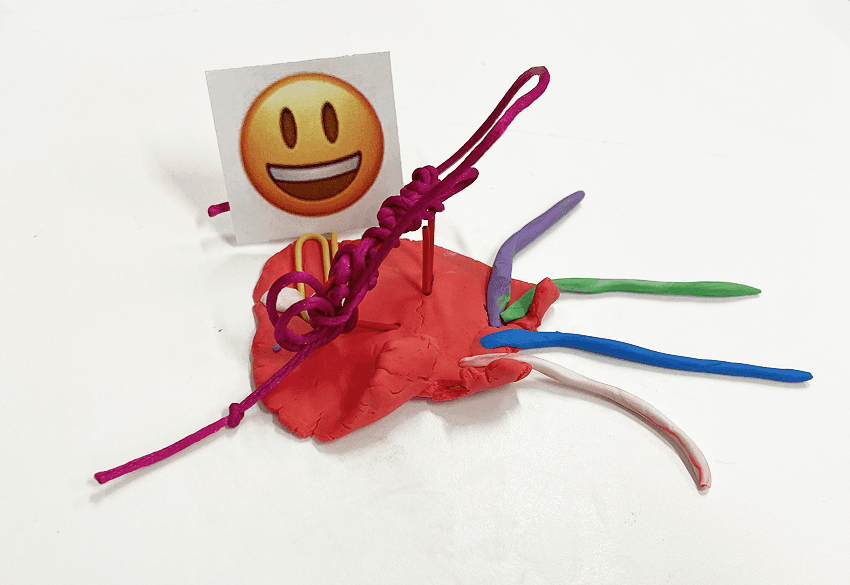
Participant depicting calm during chaos and how they're a team player as their CV. (Image credits: Mary, Yifei)

Participant used their metaphor (waves) and wrapped around their CV (right) to show their craft and decorativeness. (Image credits: Mary, Yifei)
Participant with her crown CV representing playfulness, multitude of skills, and a complete person inside and outside work. (Image credits: Mary, Yifei)

Participant used their metaphor (woven tapestry) with torn bits of her CV to make an alternative. (Image credits: Mary, Yifei)

Participant showcasing their multitude of skills and her strength of bringing everything together. (Image credits: Mary, Yifei)
Analysis
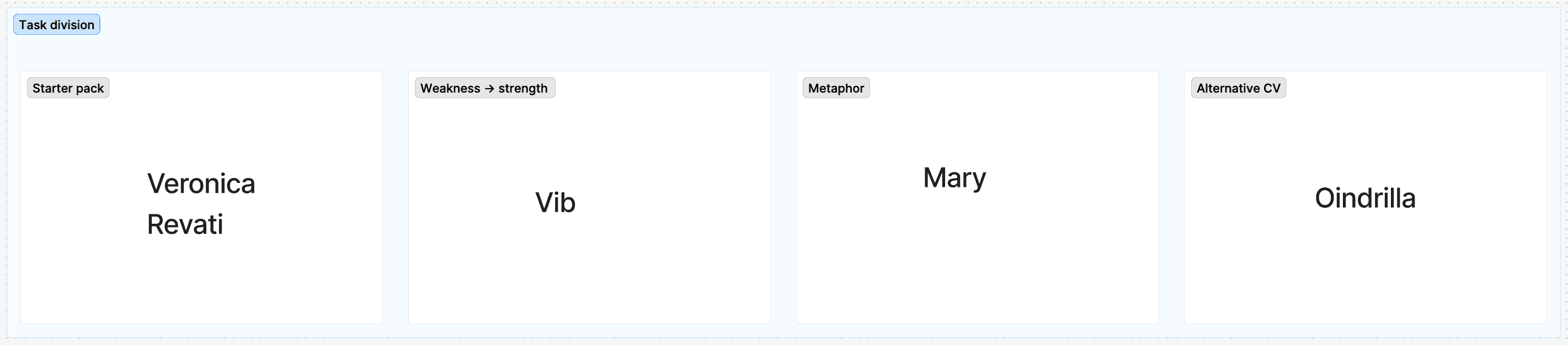
We divided the work for analysis and did it over the weekend.
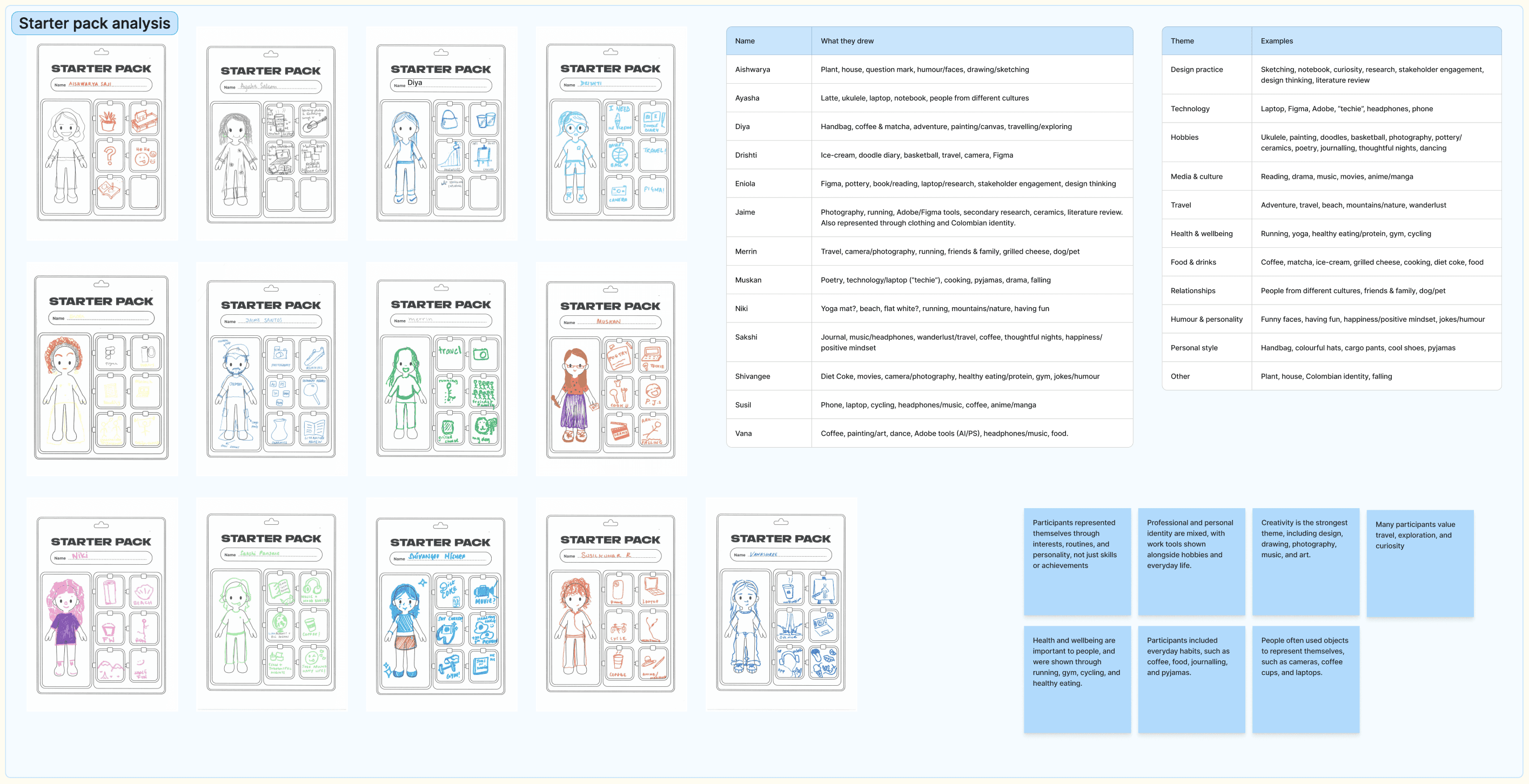
Starter pack analysis looked at what they drew (plant, latte, Figma, etc) and found themes (design practice, technology, food, health, etc). (Image is larger on click)

Metaphor analysis looked at the reasons to identify the theme (social, abstract, nature, etc) and the emotional tone (curious, responsible, etc). (Image is larger on click)
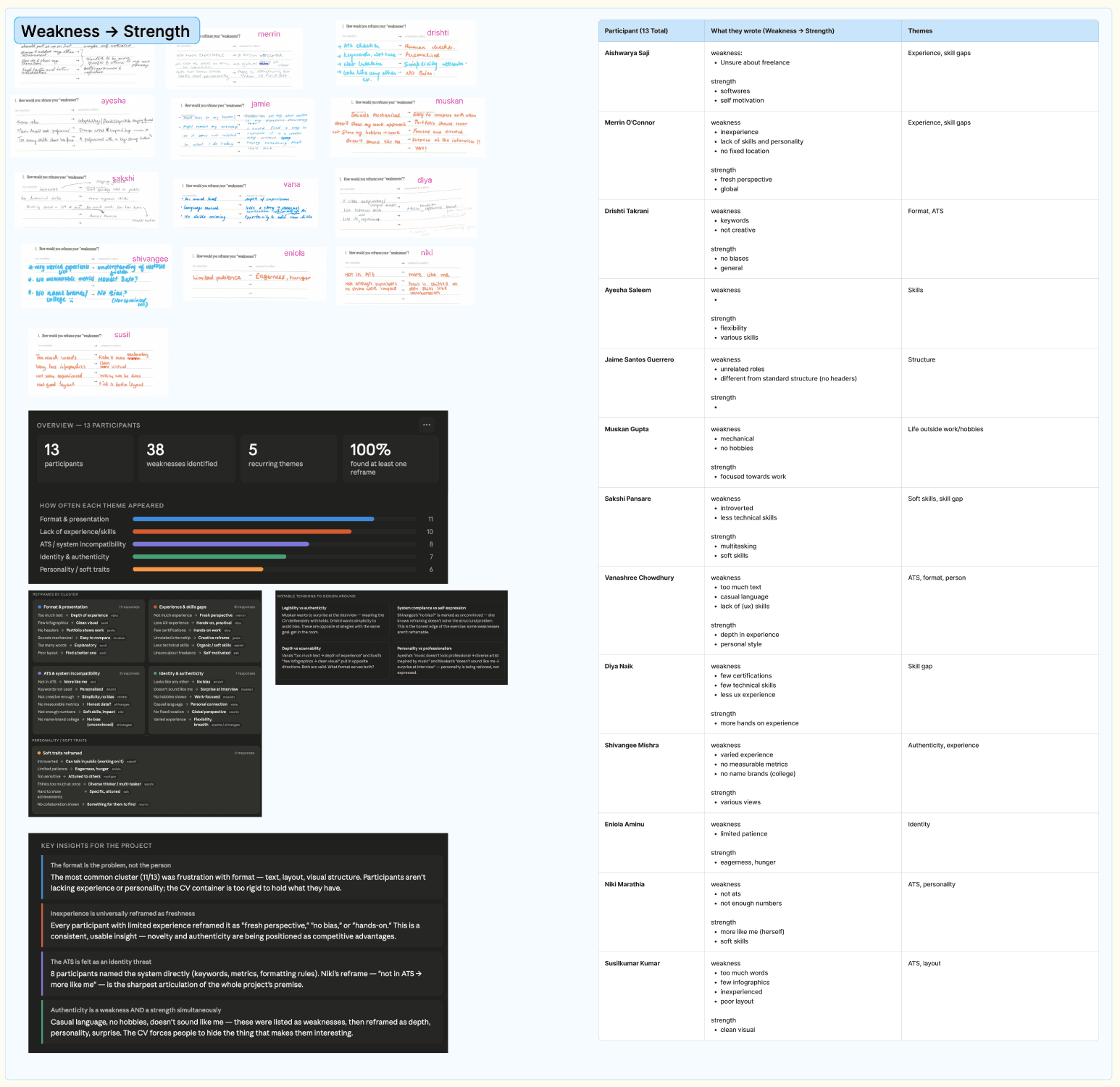
Strengths and weaknesses was analysed based on themes (experience, skill gap, authenticity, etc). Part of the synthesis used Claude to create clusters quicker. (Image is larger on click)
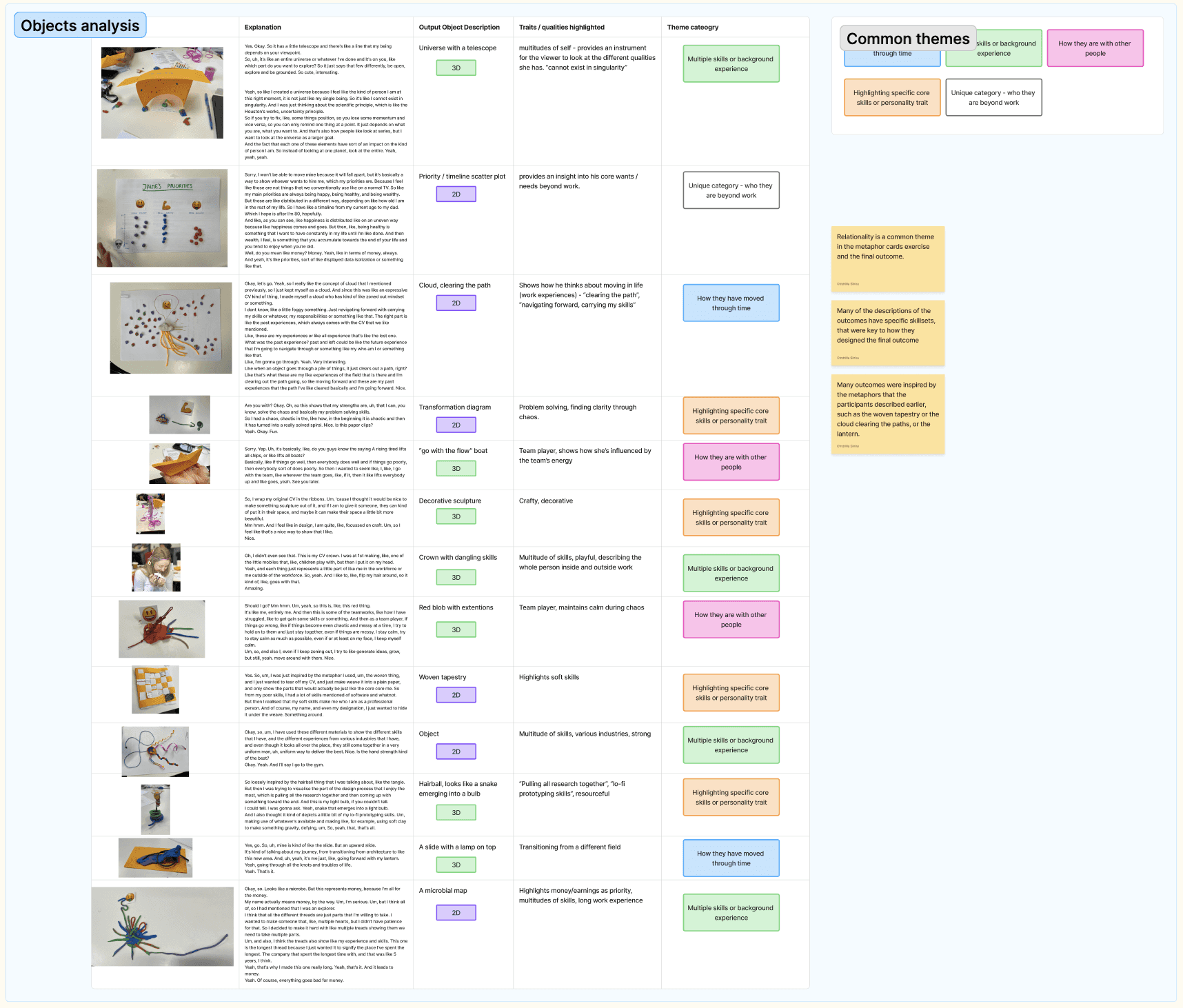
Object analysis looked at output (2D, 3D), traits and qualities, and found 5 themes (change with time, multiple skills or background, social behaviour, core trait, and beyond work). (Image is larger on click)
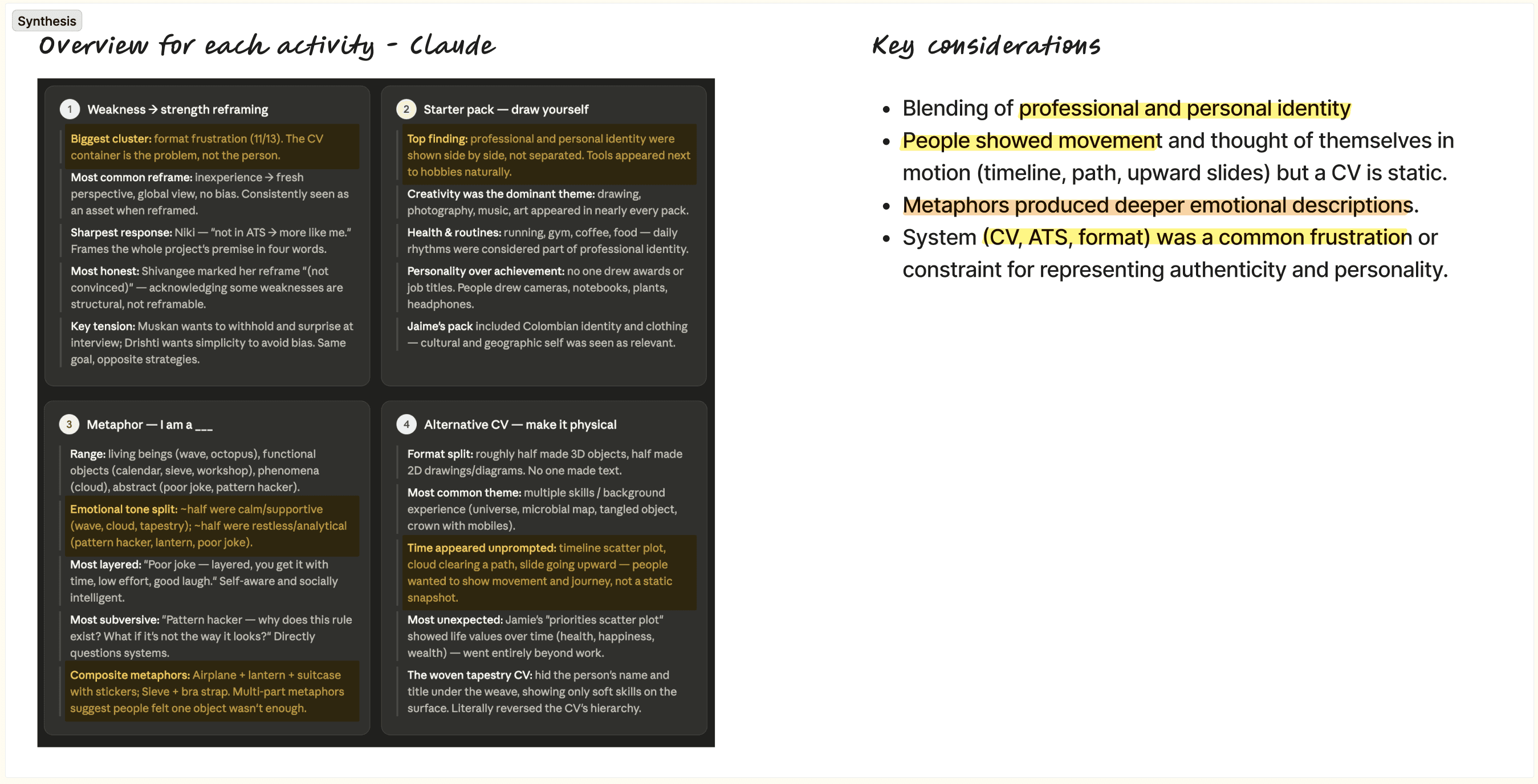
Final synthesis was aided by Claude, something we looked at collectively and analysed for gaps, and I made key considerations based on the discussion and data. (Credits: Author)
Presentation
We showed the workshop and some of the work done by the participants.
Presentation from Thursday. (Video controls are available)
Next steps
Since the metaphors produced interesting results, we want to lean into it more and refine the framework. (In line with feedback)
We want to explore formats a CV can be pushed in and do material exploration (sketches/prototypes/feasibility checks) individually.
Reflection
Stepping into real-world contexts offers authentic insights but inevitably introduces messiness, emotional labour, and logistical unpredictability (Koskinen et al., 2011). We felt this while conducting the workshop and were left very fatigued at the end. However, since we divided responsibilities clearly before the workshop, we were able to share that burden.
Moreover, once Veronika, Revati and I were done making the assets, we realised that they all had a very different style. We were short on hands and were designing and printing them as soon as it was done. We only identified the disconnect once a few of them were printed and did not have the liberty to redesign everything. Although this did not affect the workshop and outcomes, it could have been more deliberate if one person oversaw the visual language.
Lakoff (1980) argues that the essence of metaphor is understanding and experiencing one kind of thing in terms of another, and they provide structure to how we perceive, how we think, and what we do. We did not anticipate the metaphors to work well while planning the workshop, they were scaffolding for expression, without being too directing or too vague, while allowing skills and nuances to surface and coexist.
References
Koskinen, I., Zimmerman, J., Binder, T., Redström, J. and Wensveen, S. (2011) Design Research Through Practice: From the Lab, Field, and Showroom. Waltham, MA: Morgan Kaufmann.
Lakoff, G. and Johnson, M. (1980) Metaphors We Live By. Chicago: University of Chicago Press.