TIMELINE:
1 JUNE - 4 JUNE 2026
RESEARCH METHODS:
ARTEFACT ANALYSIS
TEAM:
VIBHOOTI • DIYA • CLARA • MARY • OINDRILLA • REVATI • VERONIKA • WALEED • YIFEI

Vitae Curricula:
Week 6
Brief
"Design an experiential CV."
Overview of Week
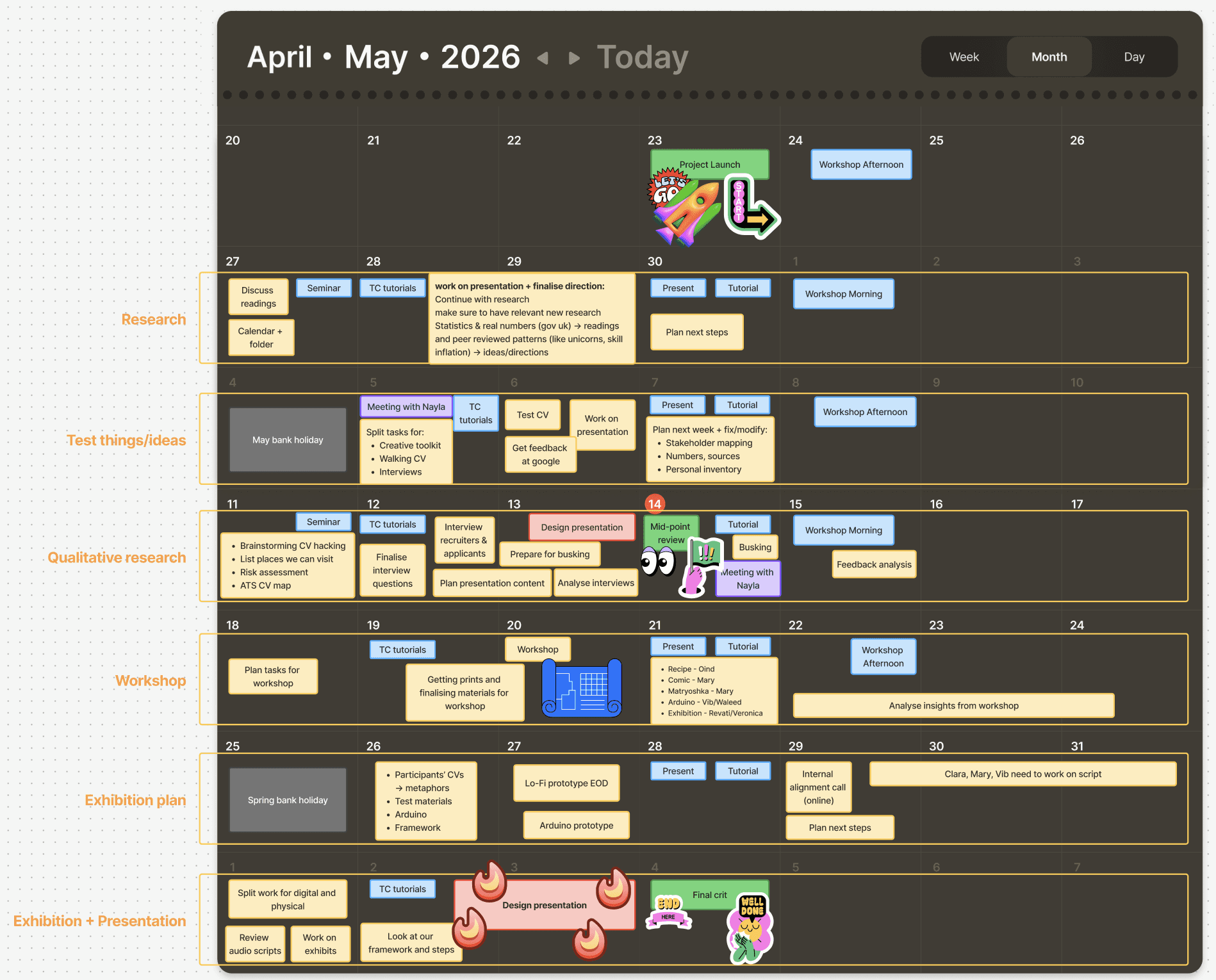
For this week, we finished the exhibits, worked on the audios, documented, and made a presentation.
Exhibition assets
Exhibit 1: River
This required a significant amount of effort due to the size and various materials. Oindrilla and Clara took primary ownership while Veronika and I helped out wherever possible and gave feedback for changes.
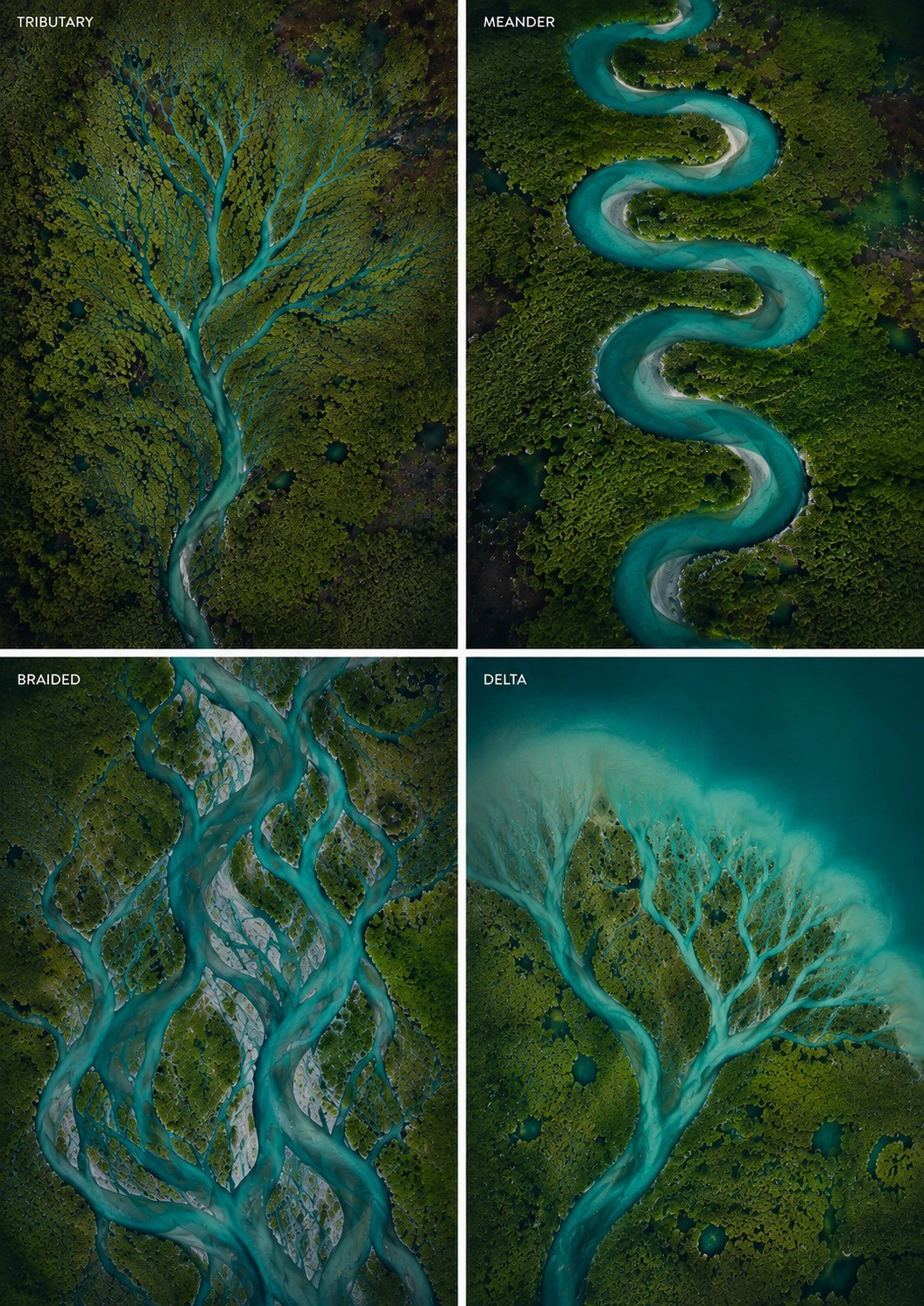
Visuals generated through Claude as support for the exhibit. (Credits: Clara)
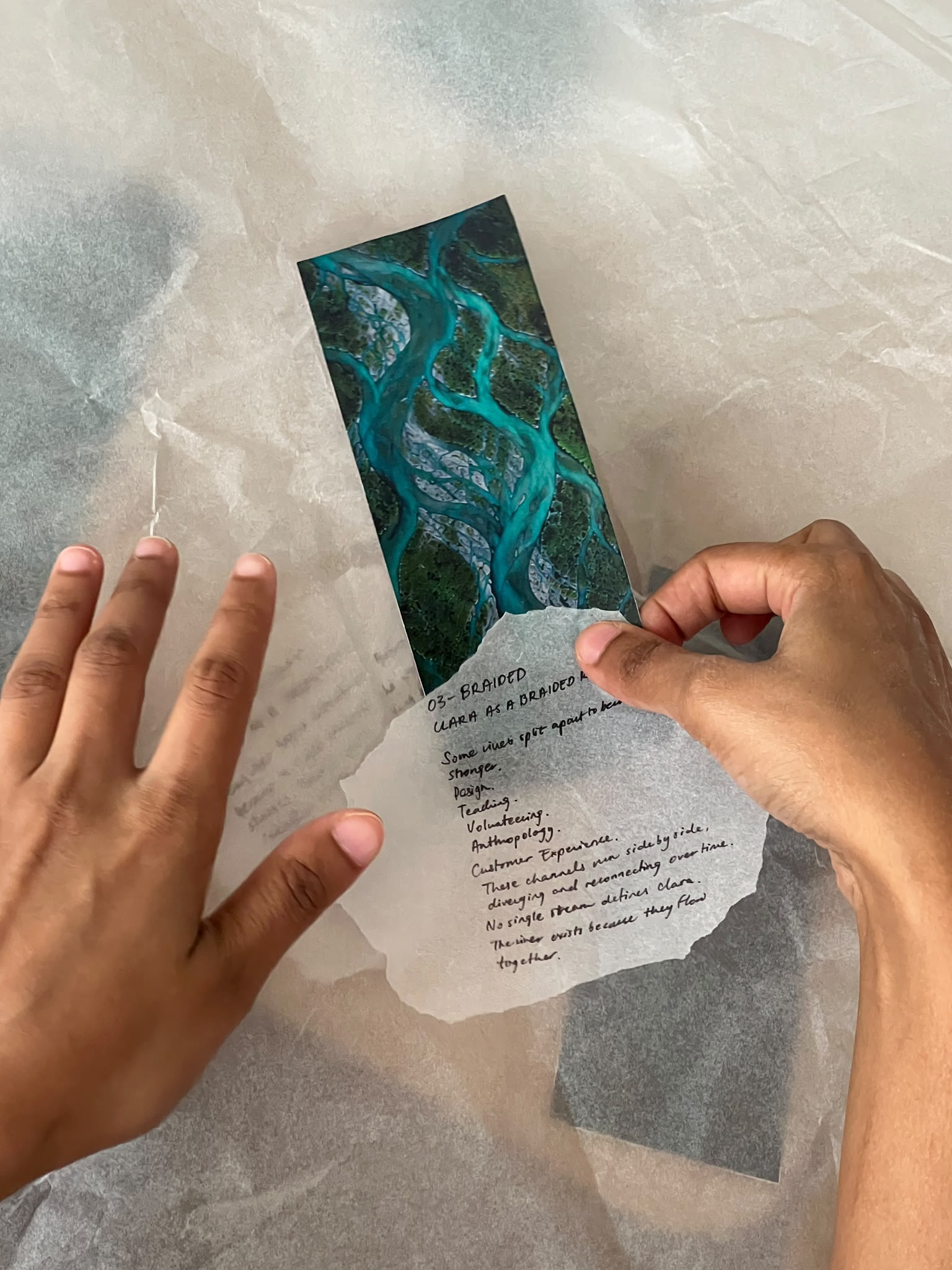
Oindrilla and Clara layered images and texts for the composition. (Image credits: Yifei)

Final CV that can be browsed by the audience. (Image credits: Yifei)
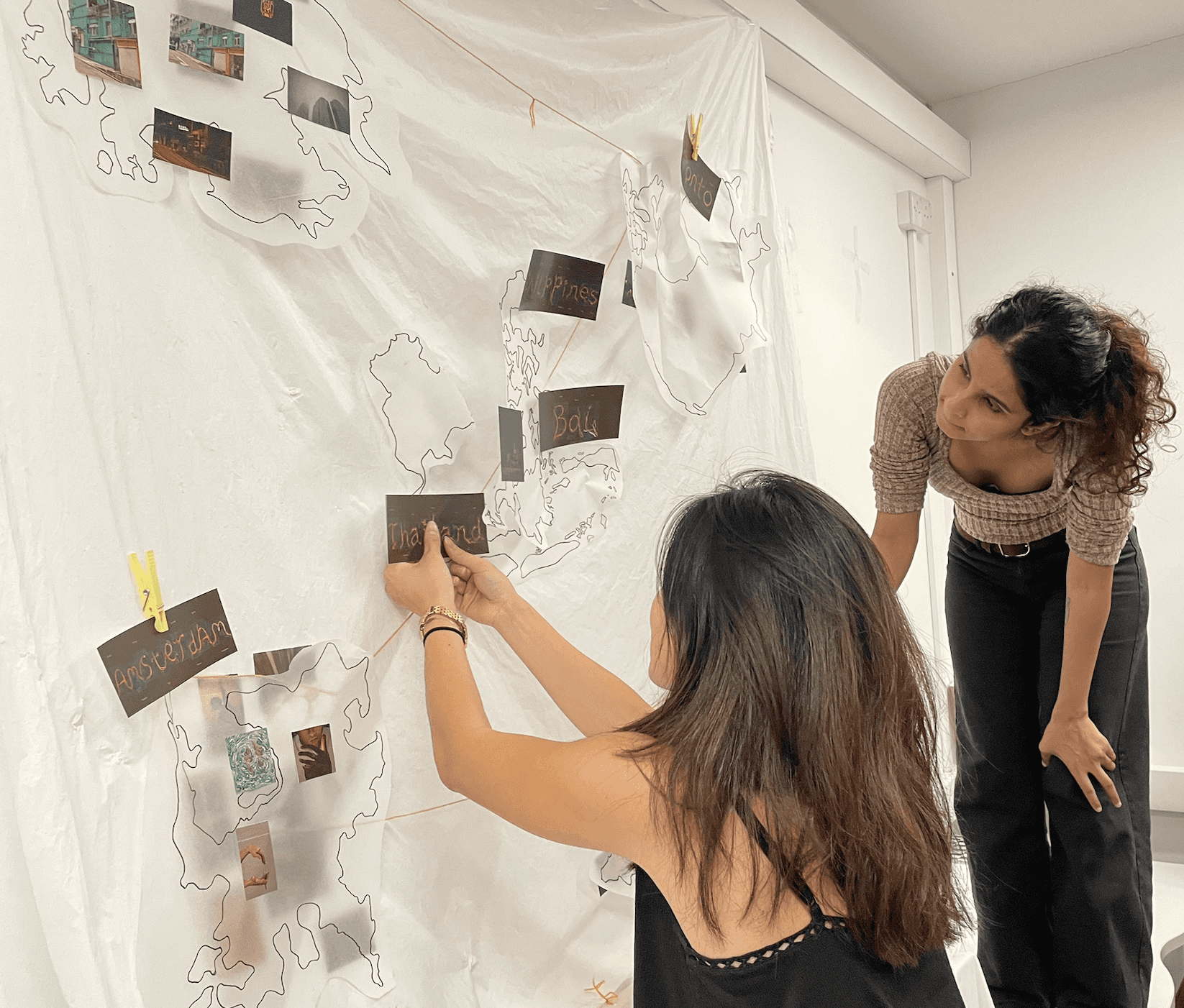
Oindrilla and Clara arranging elements on translucent paper. (Image credits: Veronika)

Visual representation of Clara's journey with pictures she took. (Image credits: Veronika)
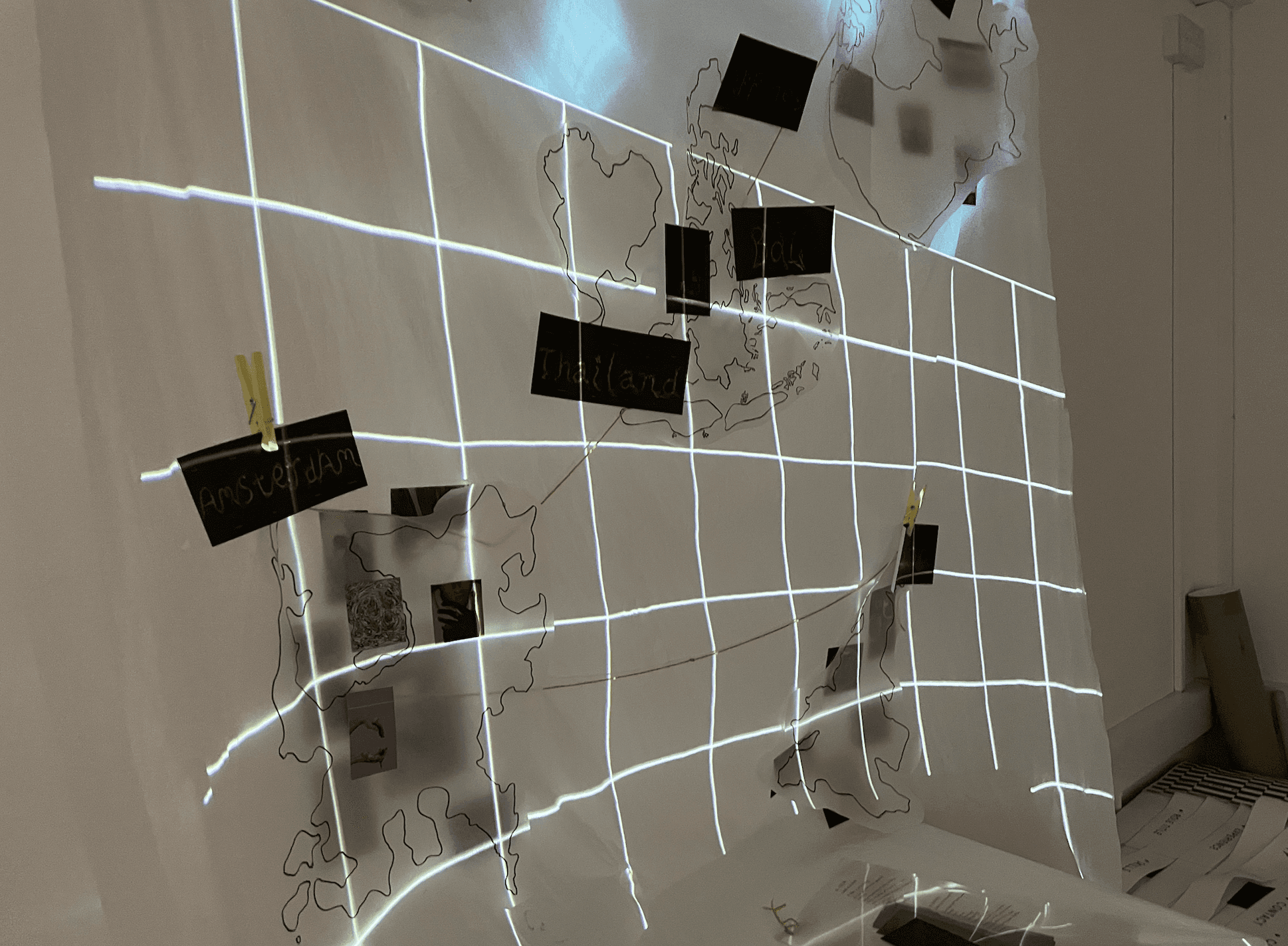
Author mapping projection of waves through MadMapper. (Image credits: Veronika)
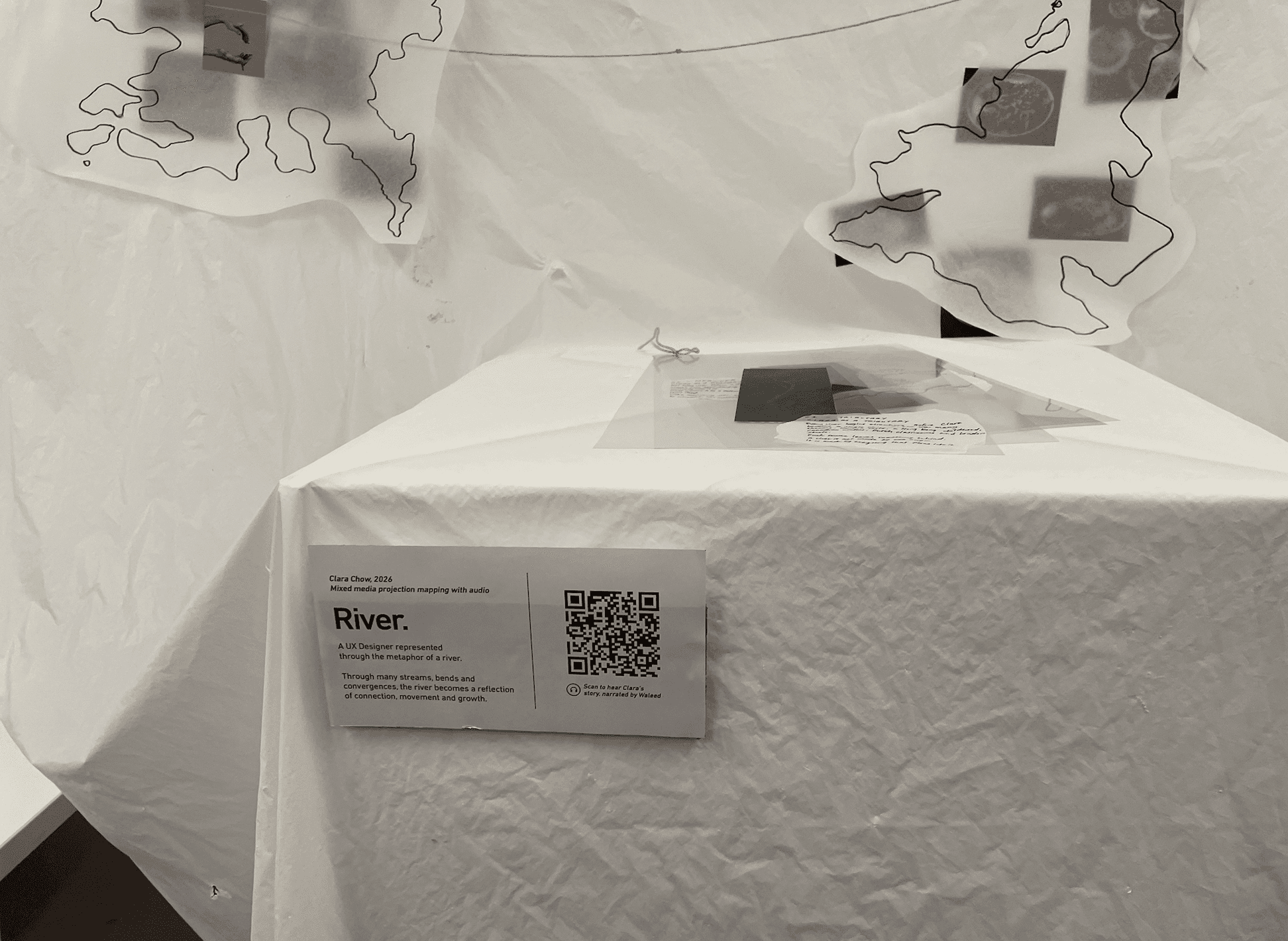
Description card designed by Revati, with Clara's script narrated by Waleed. (Image credits: Veronika)
Image and audio after scanning. (Video controls are available, Image credits: Revati)

Final scene with mapping. (Image credits: Clara)
Exhibit 2: Fish
This only needed assembly and minor tweaks for the scene. Veronika and I completed the remaining work while keeping the rest of the team in loop for feedback.
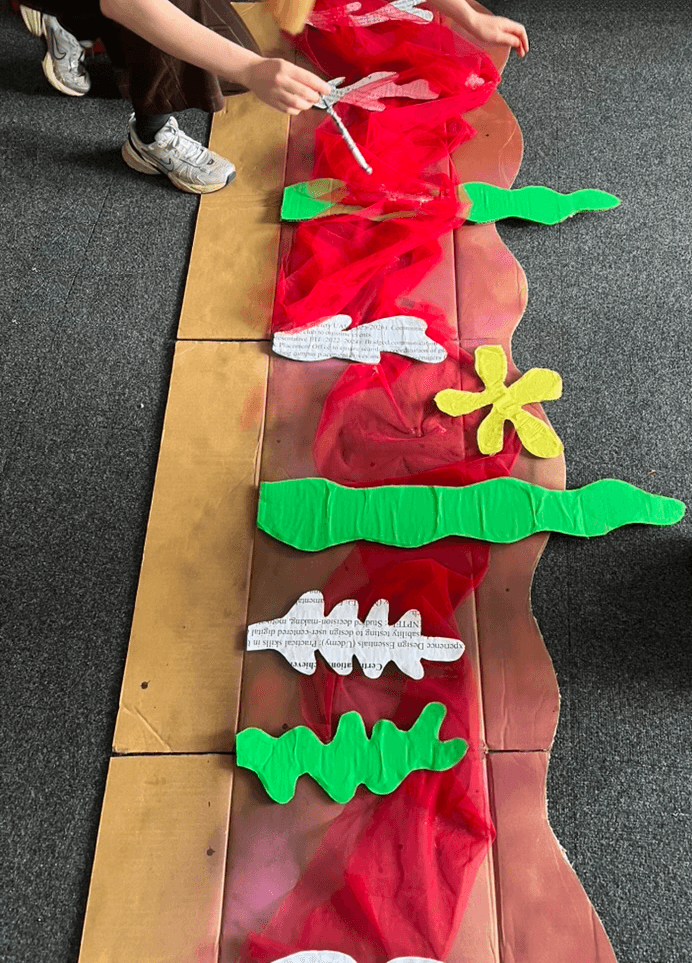
Veronika assembling the seaweed and adding depth and texture. (Image credits: Revati)
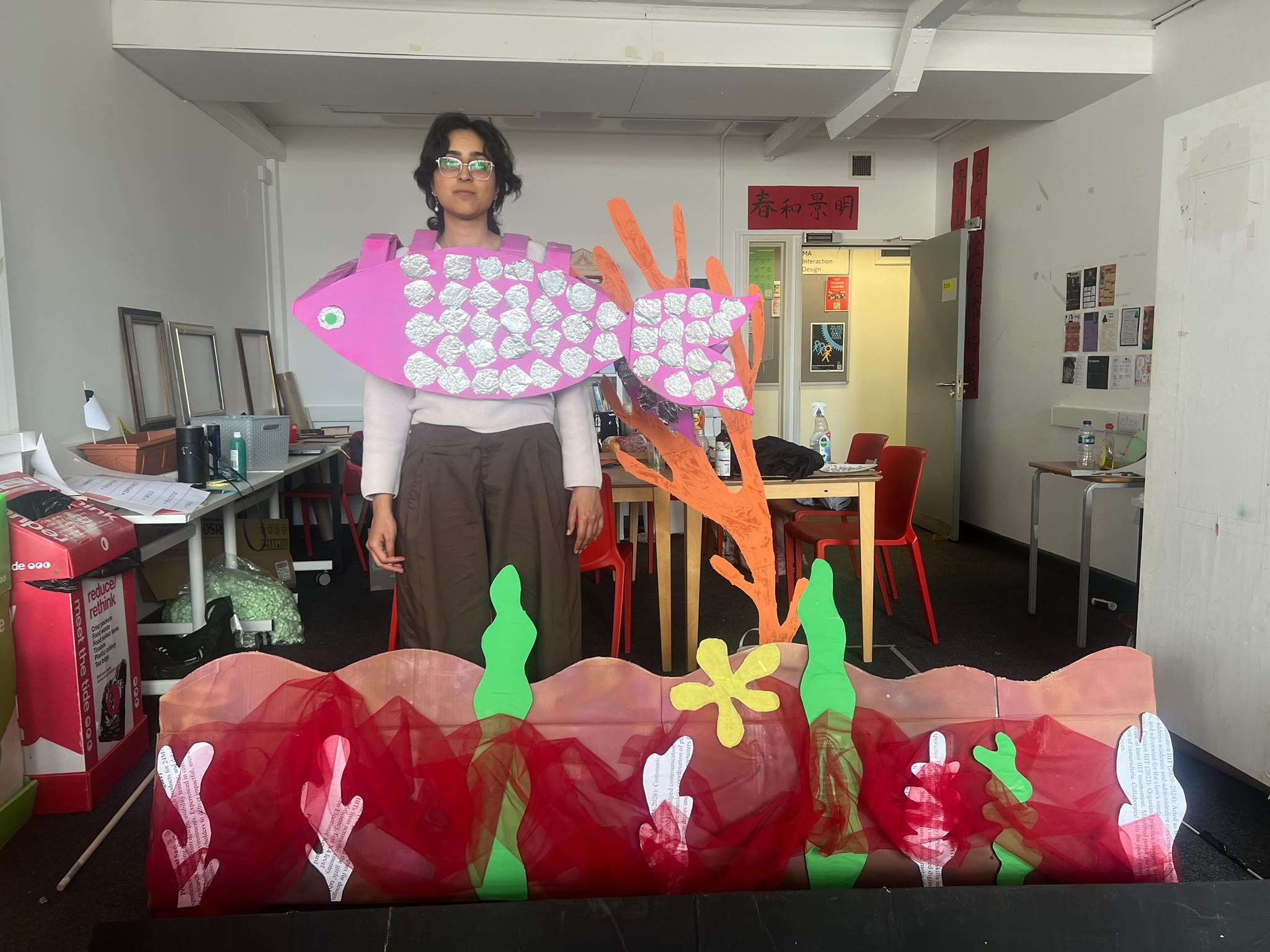
Checking if the scene has enough contrast for the fish and is appropriately sized. (Image credits: Revati)
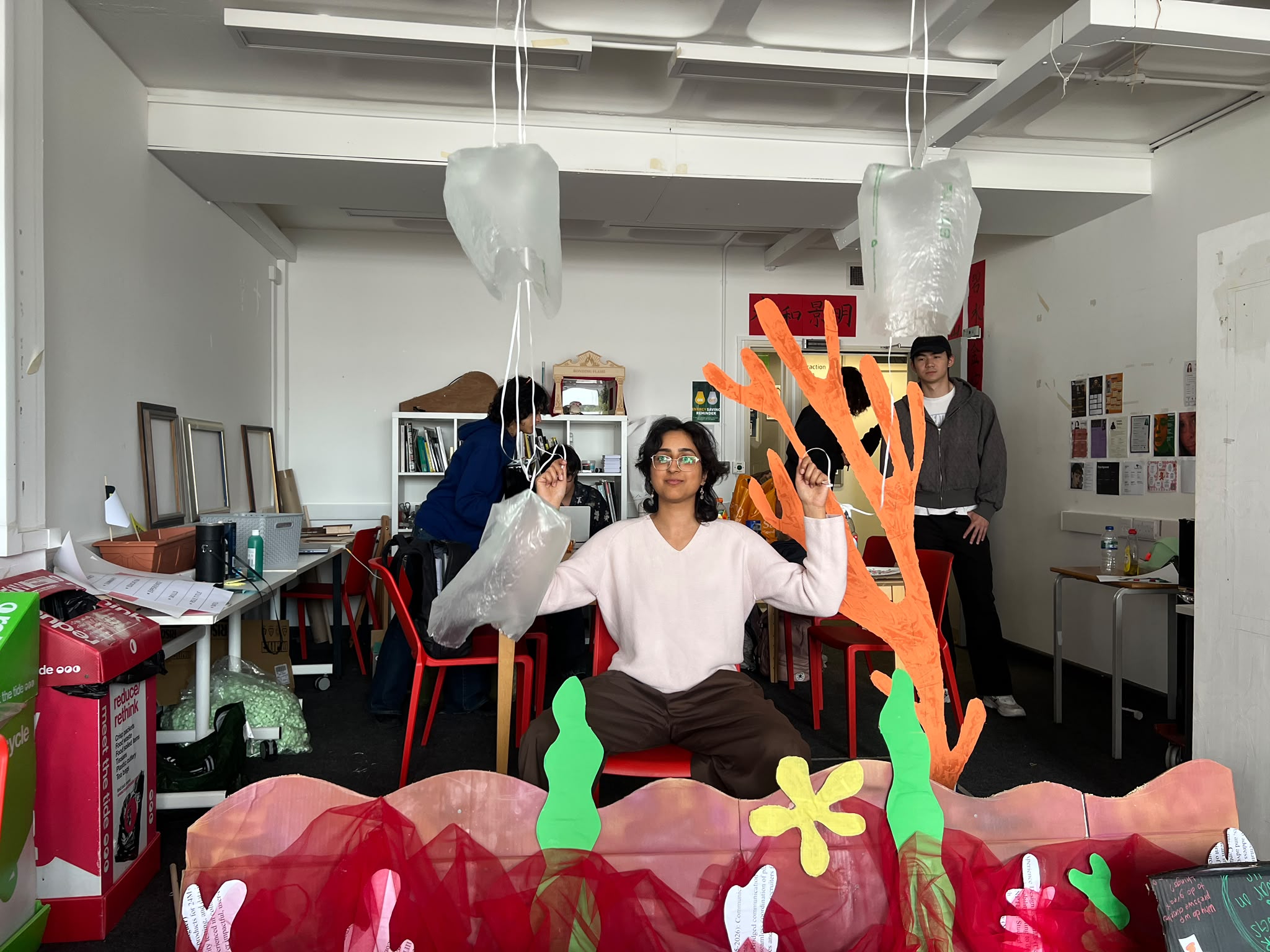
Addition of plastic jellyfish and orange seaweed. (Credits: Author, Image credits: Revati)
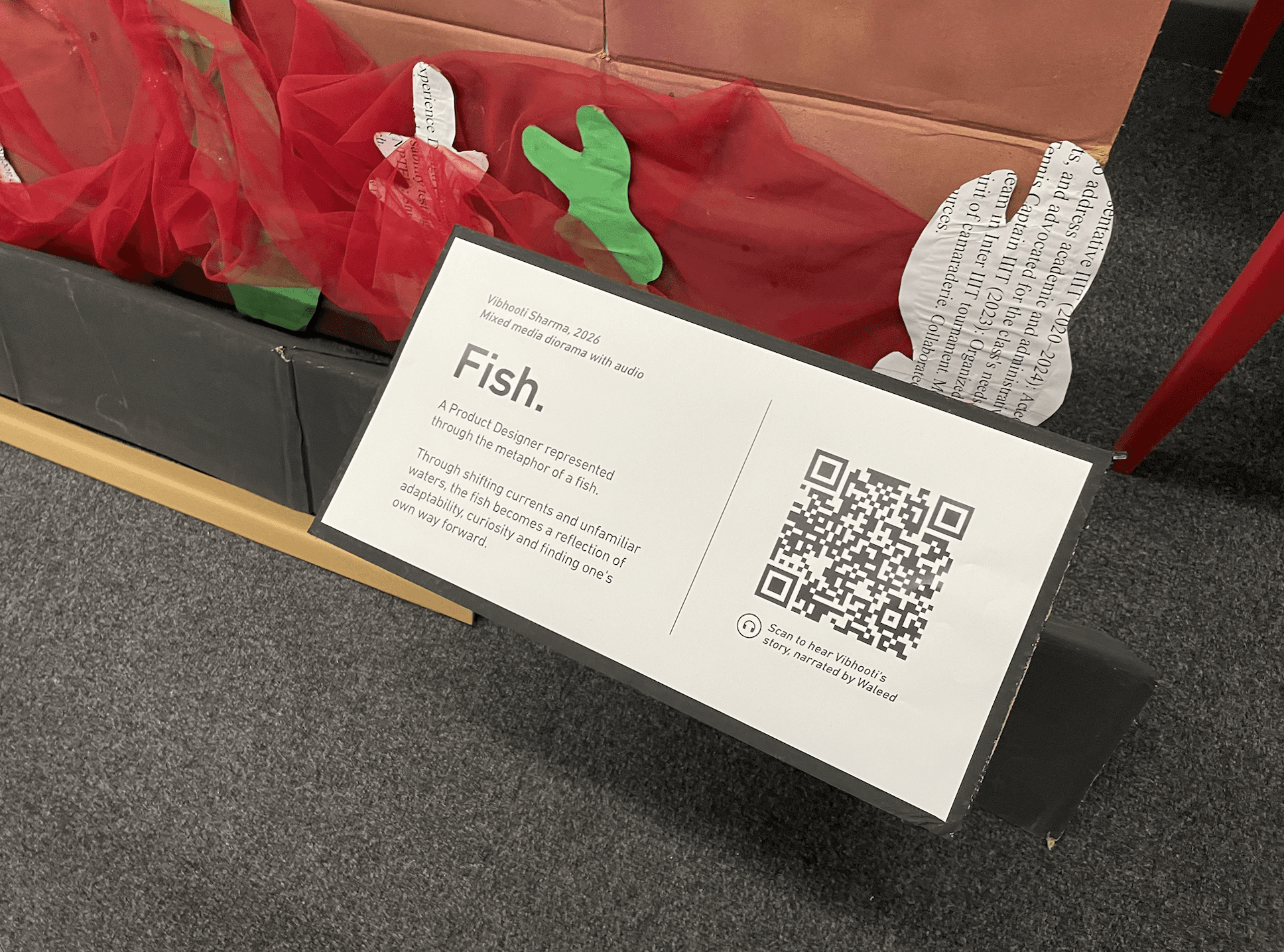
Description card designed by Revati, with Author's script narrated by Waleed. (Image credits: Veronika)
Image and audio after scanning. (Video controls are available, Image credits: Revati)
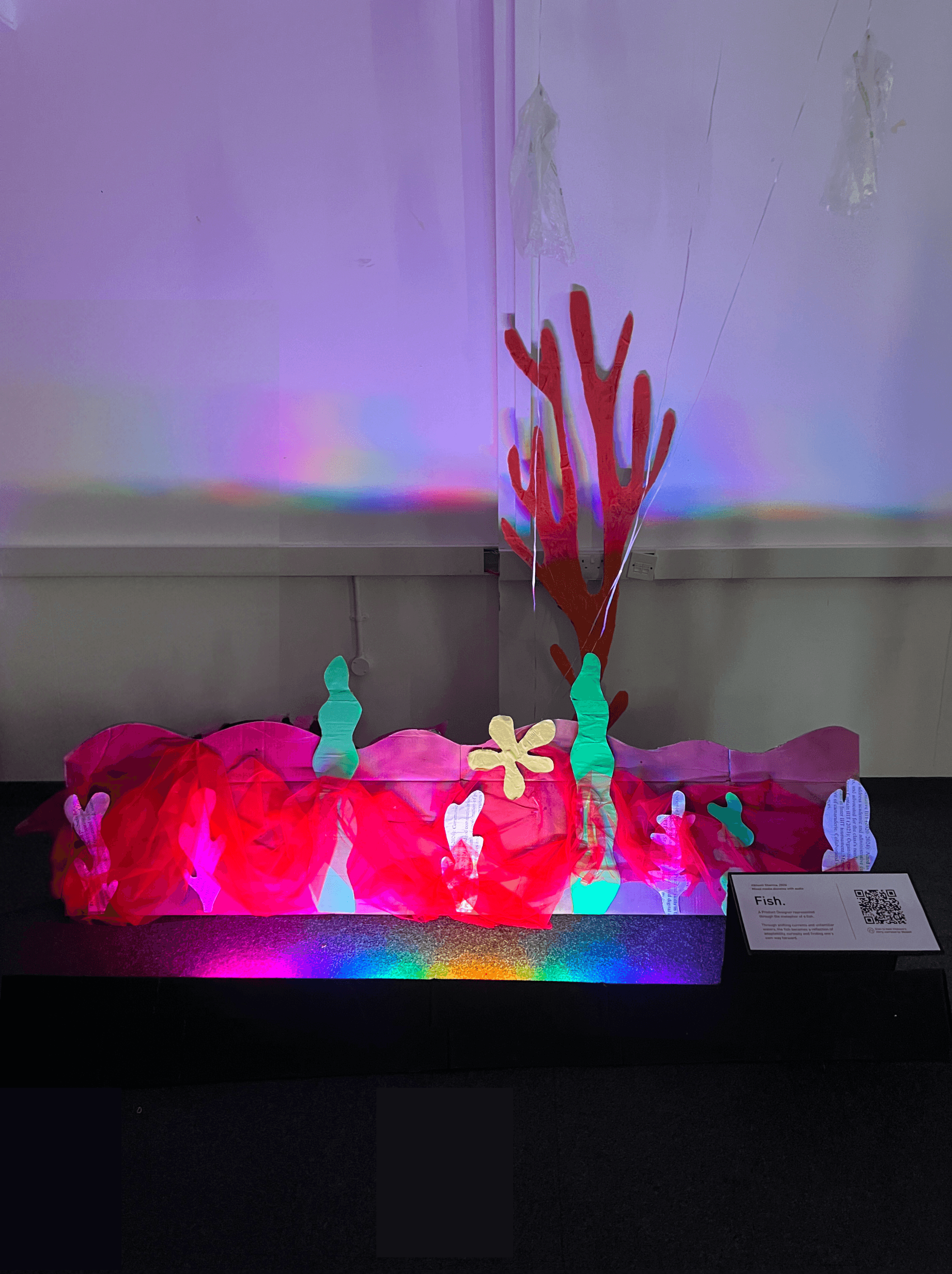
Final scene with the addition of lights and bubbles, similar to a home aquarium. (Credits: Author, Image credits: Yifei)
Exhibit 3: Dappled Light
Mary, Waleed, and Yifei worked on this independently. In retrospect, there was a lack of transparency for this exhibit, the rest of the team saw the visuals at the end of the project. This was something that could have been refined further since some of the visuals were less personal or had mistakes from AI generation.
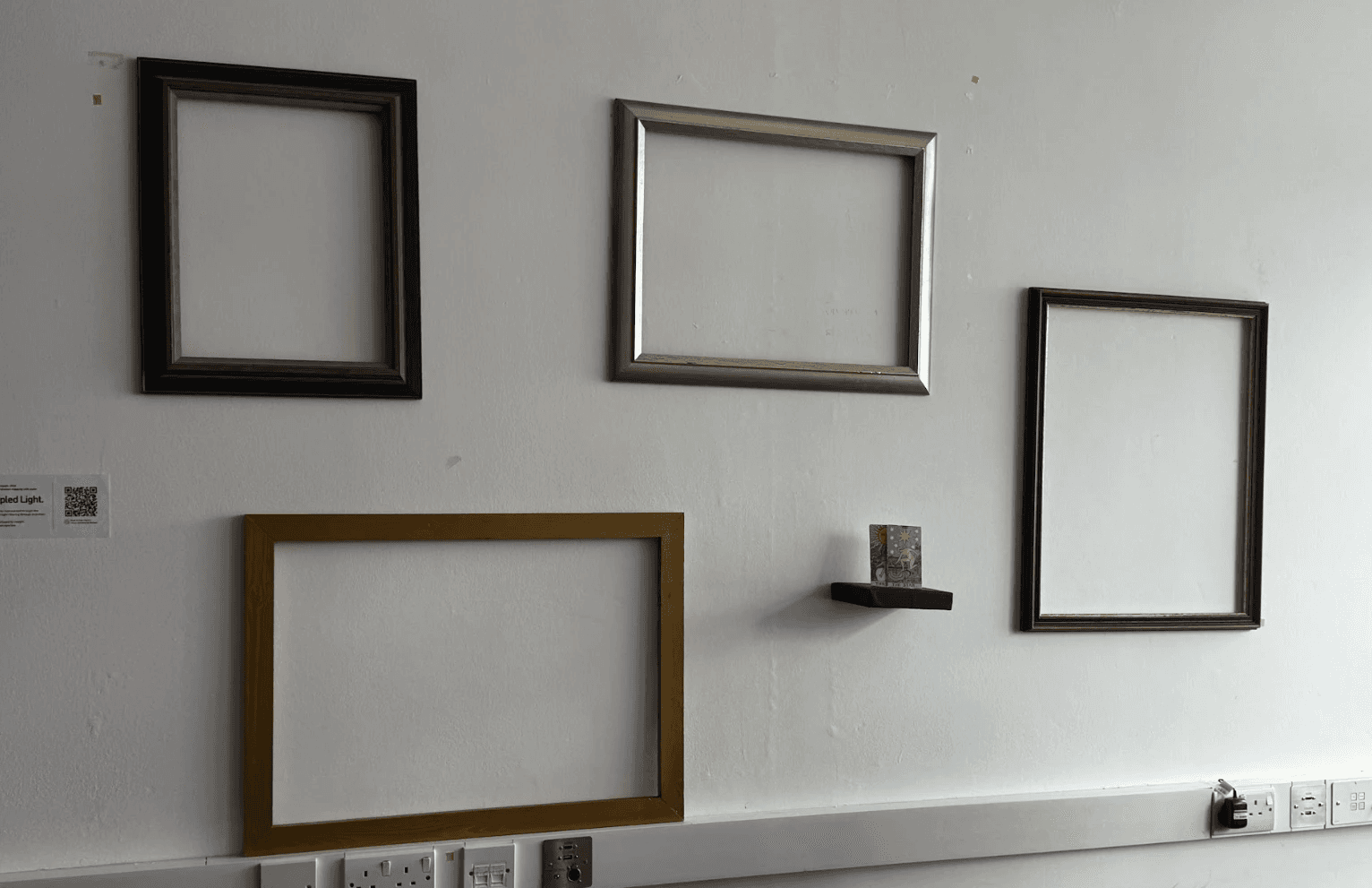
Frames arranged with Tarot cards. (Image credits: Mary)
Waleed adjusting projection and hand detection. (Credits: Waleed) (Video controls are available)
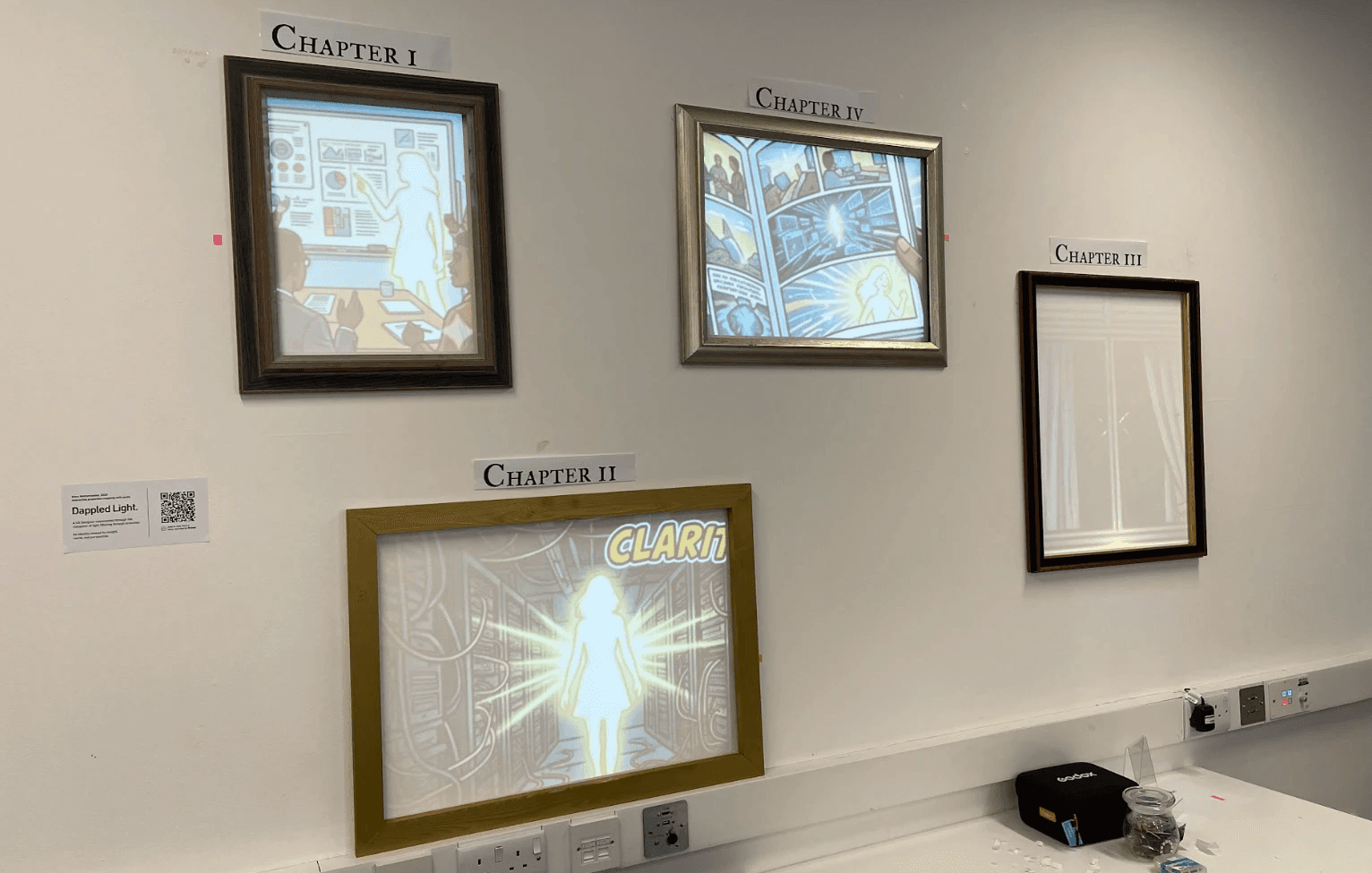
Chapters of Mary's life mapped. (Image credits: Veronika)
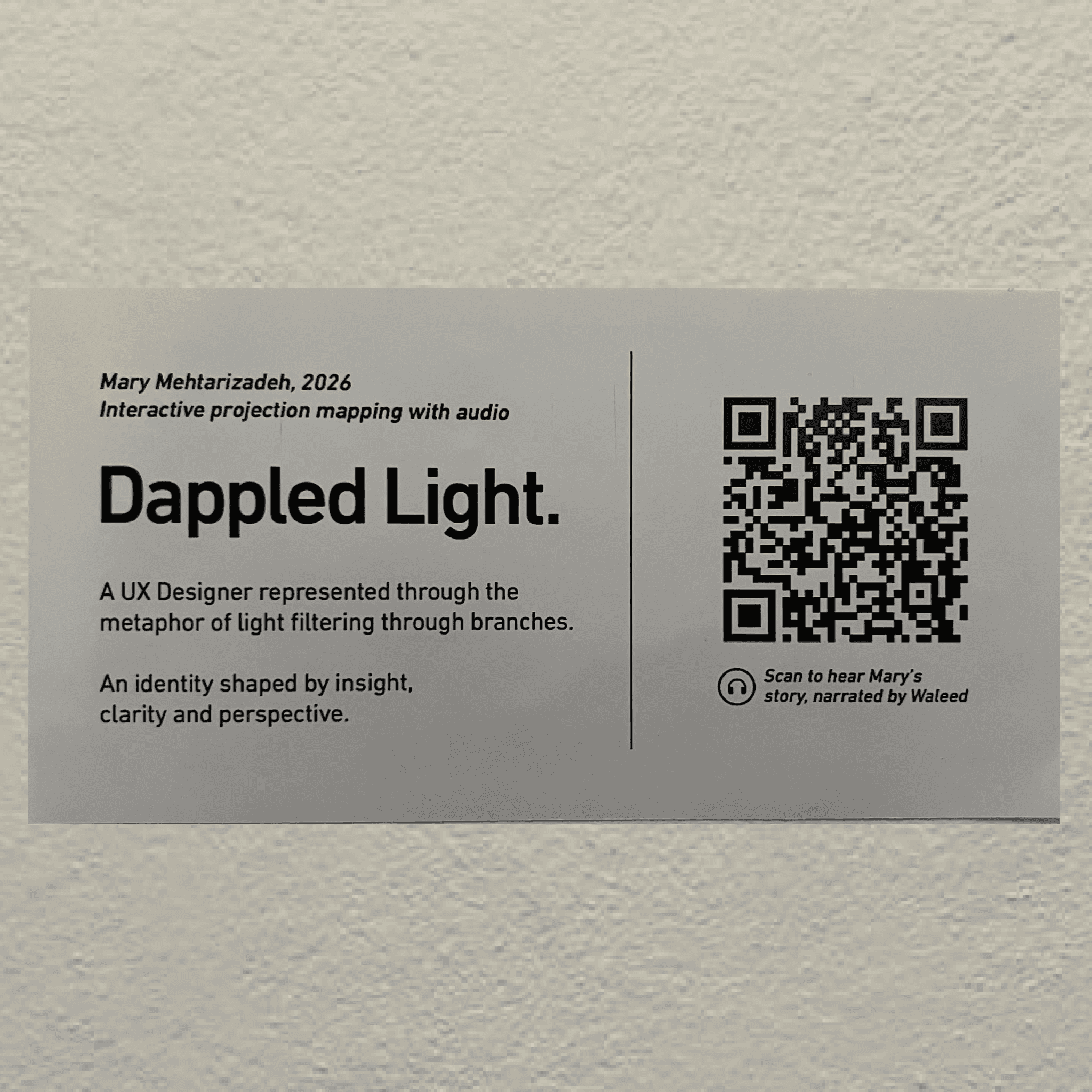
Description card designed by Revati, with Author's script narrated by Waleed. (Image credits: Veronika)
Image and audio after scanning. (Video controls are available, Image credits: Revati)
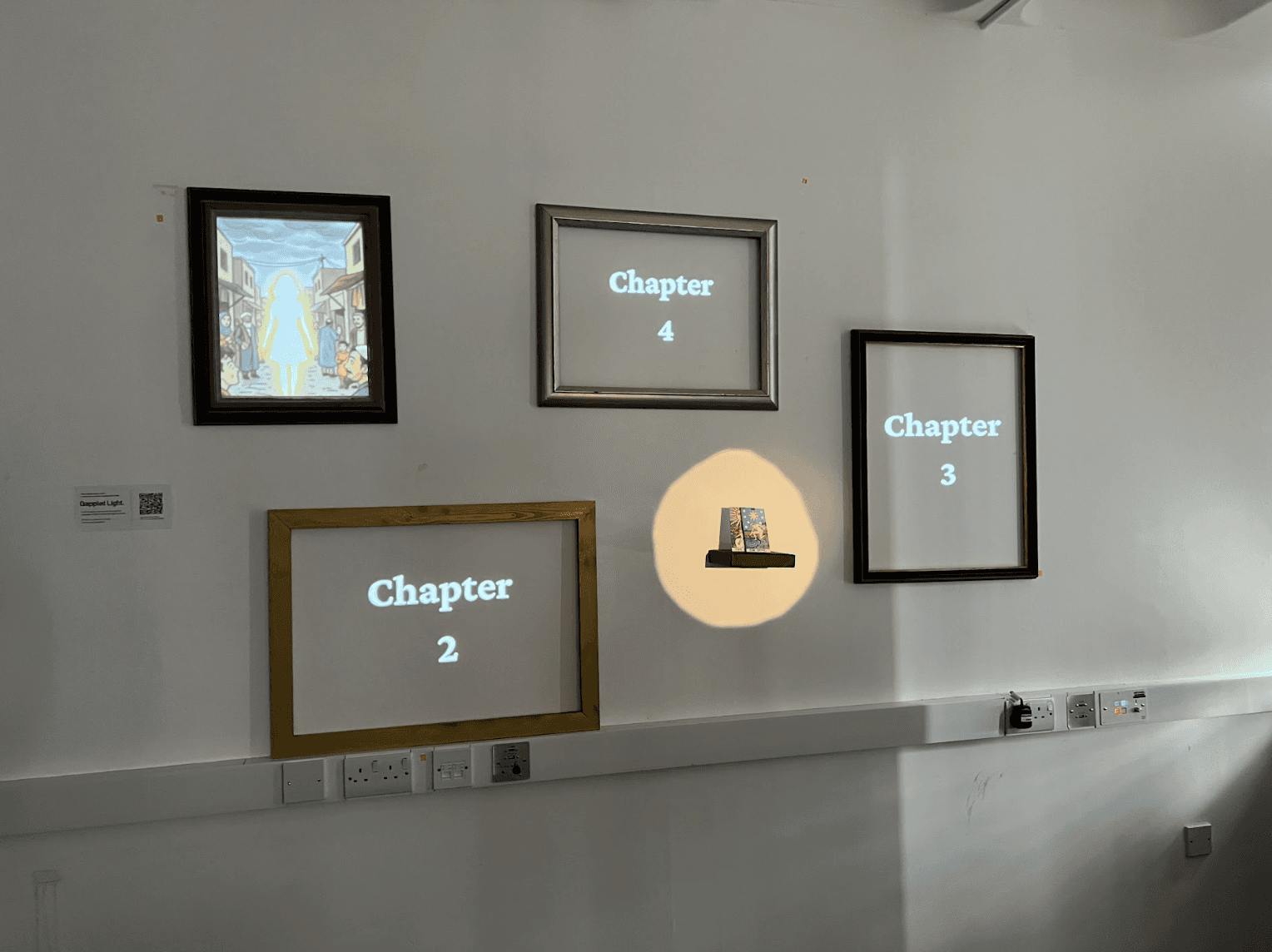
Final scene with the addition of spotlight for tarot cards (Image credits: Yifei)
Other assets
Revati created supporting assets to bring the exhibition together, we assisted her with cutting and printing them. She added a life-size image being shredding to highlight how people's CVs go unnoticed and how the process feels to them (quoted from prior interview). To make it feel like a museum exhibition, she worked on description cards with QRs and brochures.

Image of Mary with text from her CV being shredding and binned. The exhibition directions borrowed the style of UAL's exhibitions. (Image credits: Clara) (Image is larger on click)
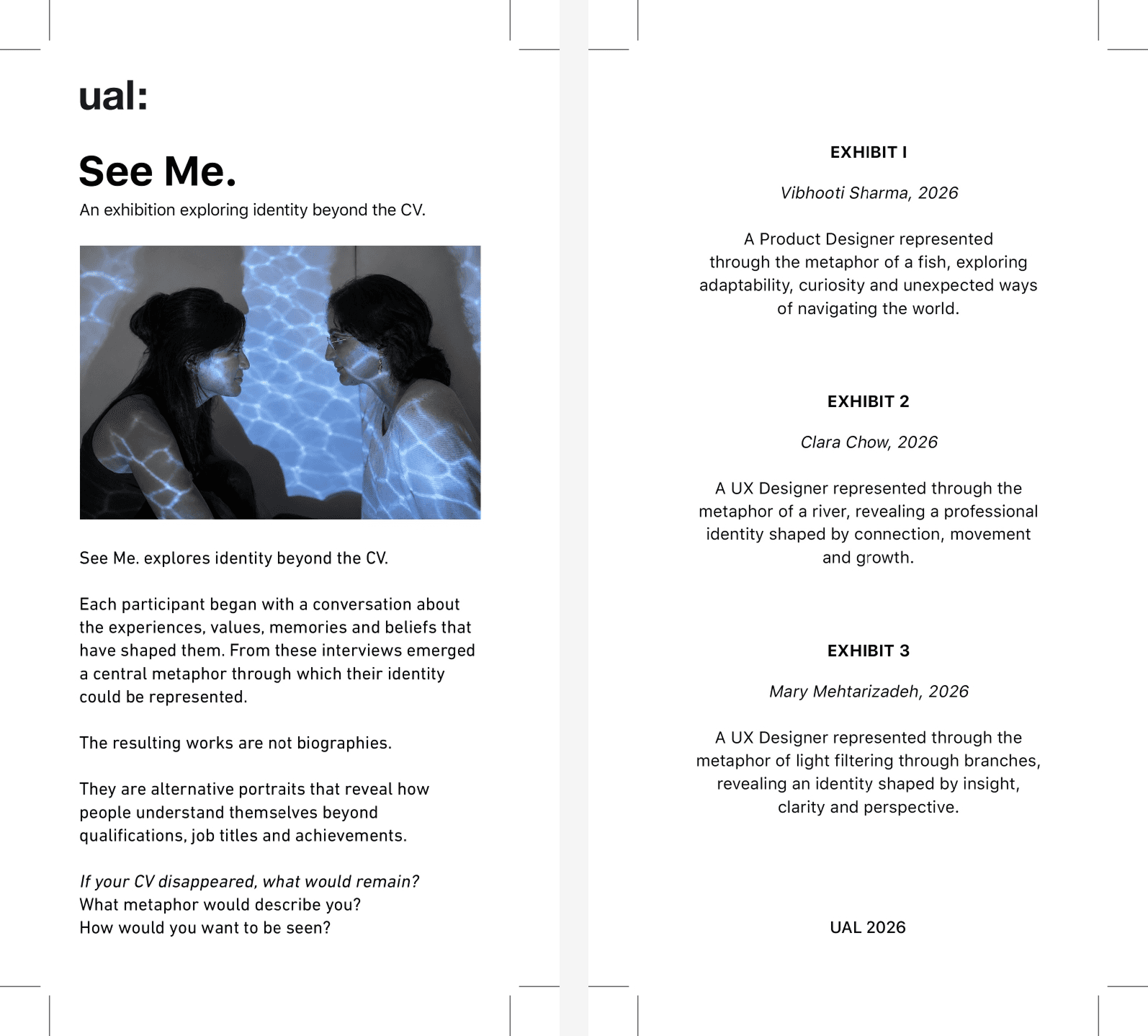
Exhibition brochures were handed out that had an overview of the project and exhibits (same content as description cards). (Image is larger on click)
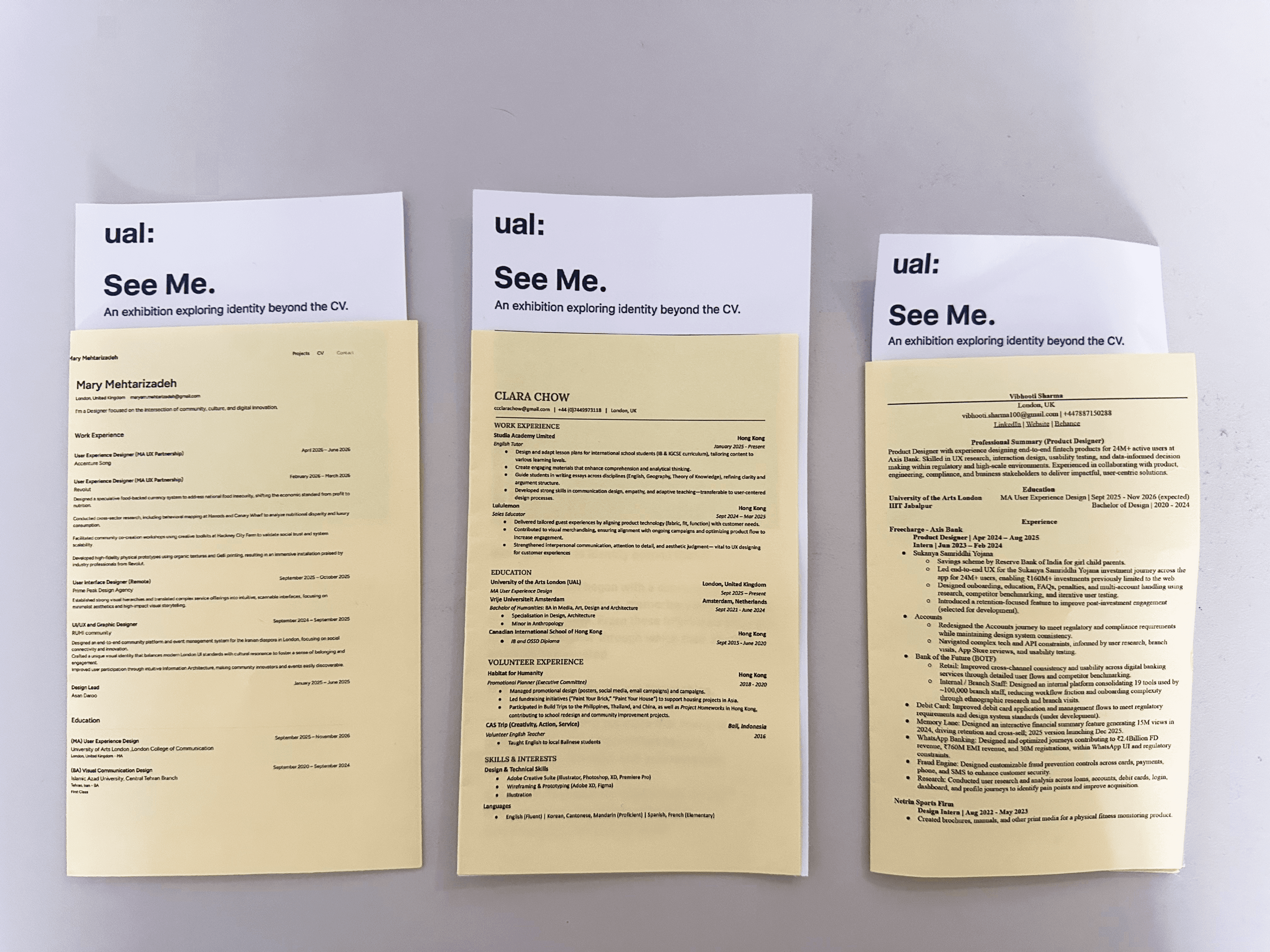
The brochures were enveloped with Mary, Clara, and my CV in yellow for contrast. We handed out the CVs at the same time this way. (Image credits: Clara) (Image is larger on click)
Exhibition viewed in class
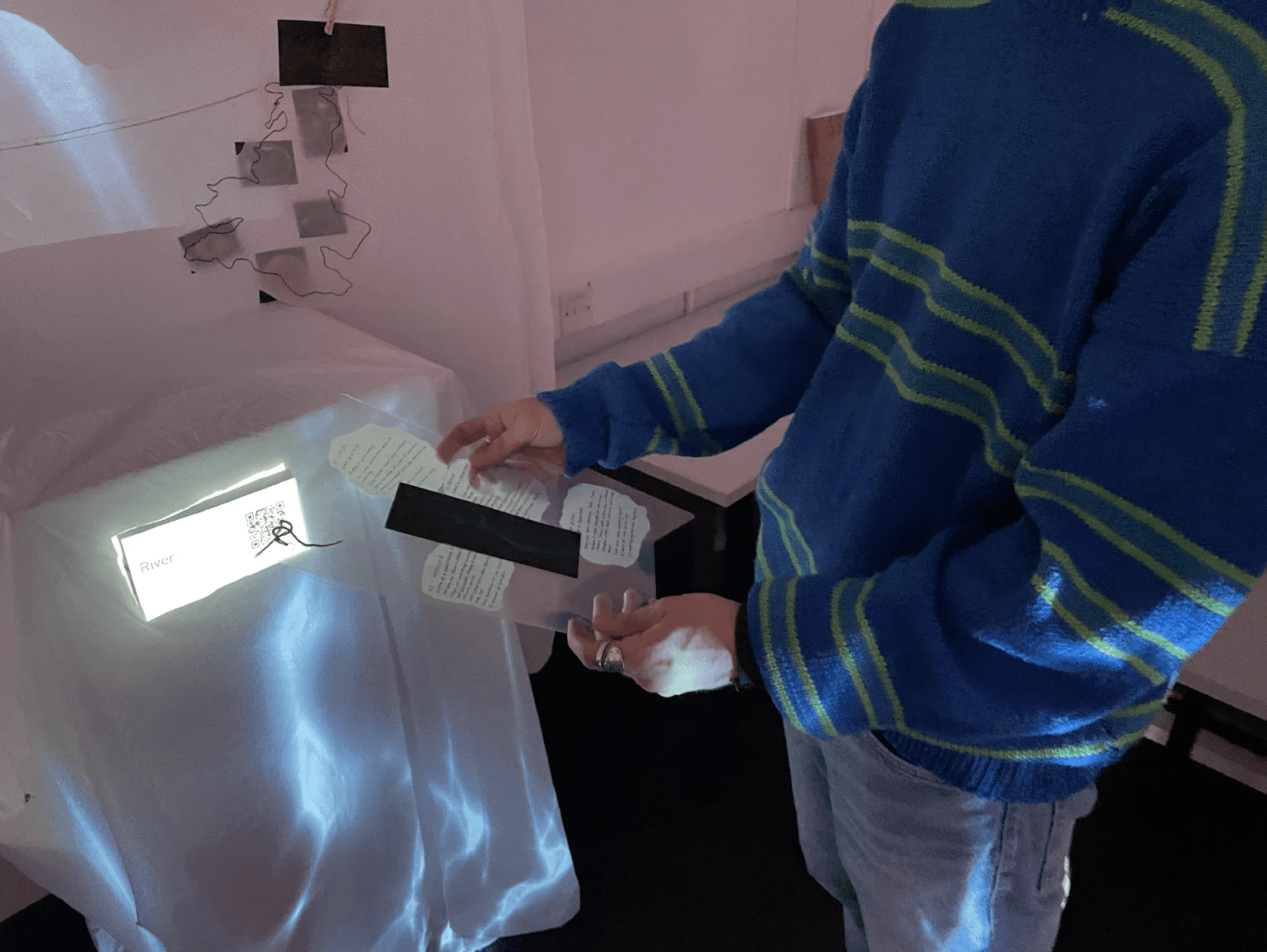
Viewer reading Clara's CV in the exhibit. (Image credits: Veronika)
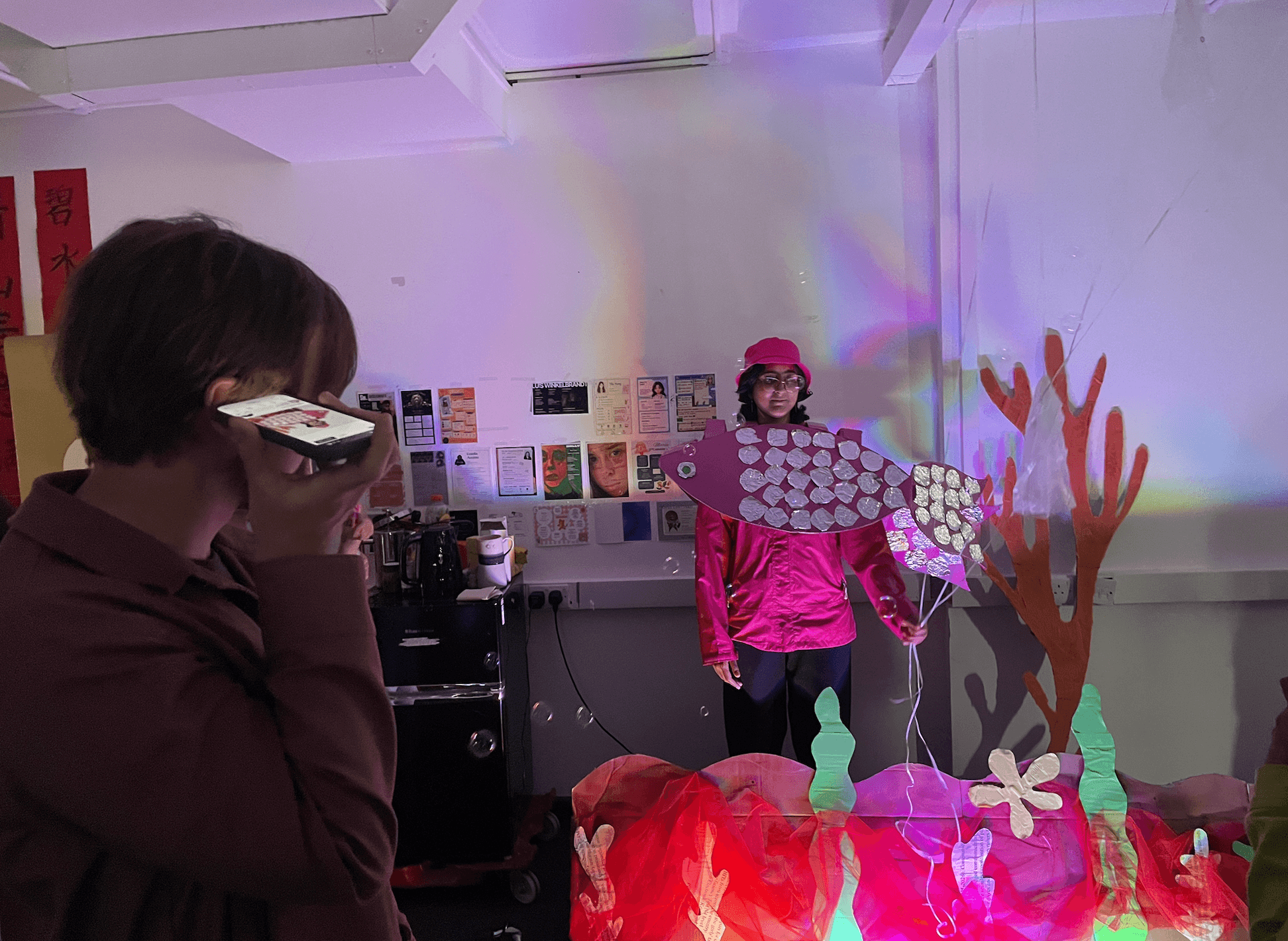
Viewer observing the exhibit and listening to scanned audio. (Image credits: Revati)
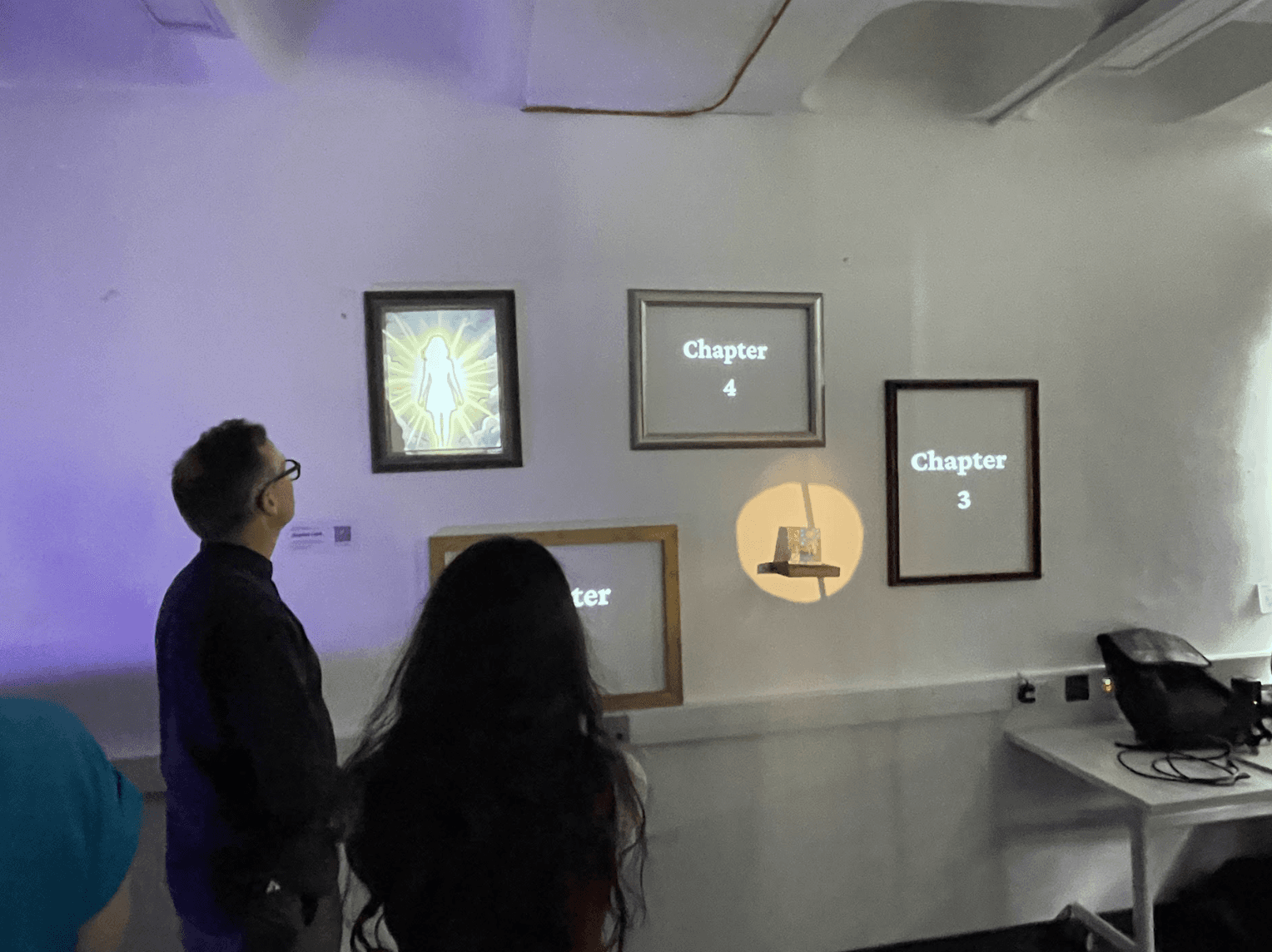
Viewers watching and listening to Mary's CV through pointing. (Image credits: Revati)
Clara's exhibit. (Video credits: Clara) (Video controls are available)
Author's exhibit. (Video credits: Revati) (Video controls are available)
Mary's Exhibit. (Video credits: Mary) (Video controls are available)
Reflection
Even though all three exhibits had a very different format, they did far more justice at showing the person behind an application compared to a traditional CV. It was a deliberate choice to not use AI for narration, I felt that the audio narration by Waleed, a colleague, made it very personal and showcased collaboration and care.
Even after developing a metaphor-based framework that allowed applicants to communicate personhood more fully, the framework ultimately had to exist as a QR code, video, or file upload to a conventional application. The alternative therefore did not replace the recruitment system; it attached itself to it. Although it fulfilled the brief to represent personhood, the power remains with the institutions. Furthermore, our feedback emphasised making the outcome quick to evaluate, or compatible with AI, which prioritises legibility, efficiency, and comparability, qualities necessary for institutional decision-making but potentially at odds with richer forms of self-expression. Since our outcome prioritises human connection, it is constrained by whether the CV carrying it can pass through ATS, which itself illustrates the system's grip.
References
Aung Din, D., Chipchase, J. and Mazé, R. (2021) 'Mediums of Change', in Amatullo, M. et al. (eds.) Design for Social Innovation: Case Studies from Around the World. New York: Routledge.
D'Ignazio, C. and Klein, L.F. (2020) Data Feminism. Cambridge, MA: MIT Press.
Haraway, D.J. (2016) Staying with the Trouble: Making Kin in the Chthulucene. Durham, NC: Duke University Press.