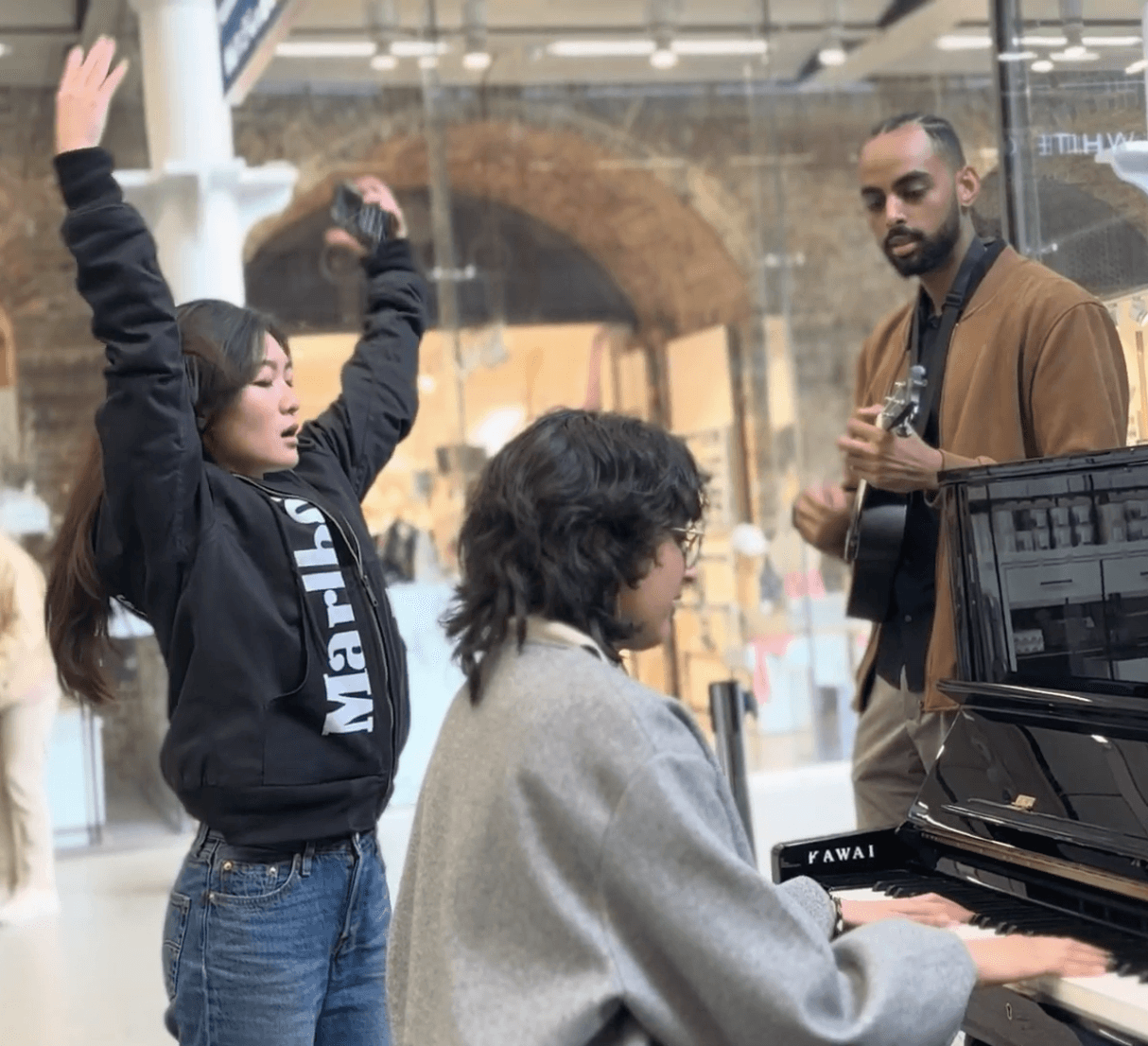
TIMELINE:
4 MAY - 10 MAY 2026
RESEARCH METHODS:
CREATIVE TOOLKIT, COGNITIVE MAPPING, PERSONAL INVENTORY
TEAM:
VIBHOOTI • DIYA • CLARA • MARY • OINDRILLA • REVATI • VERONIKA • WALEED • YIFEI
Vitae Curricula:
Week 2
Brief
"Design an experiential CV."
Overview of Week
This week we split research tasks and went to test things at Google and WPP.
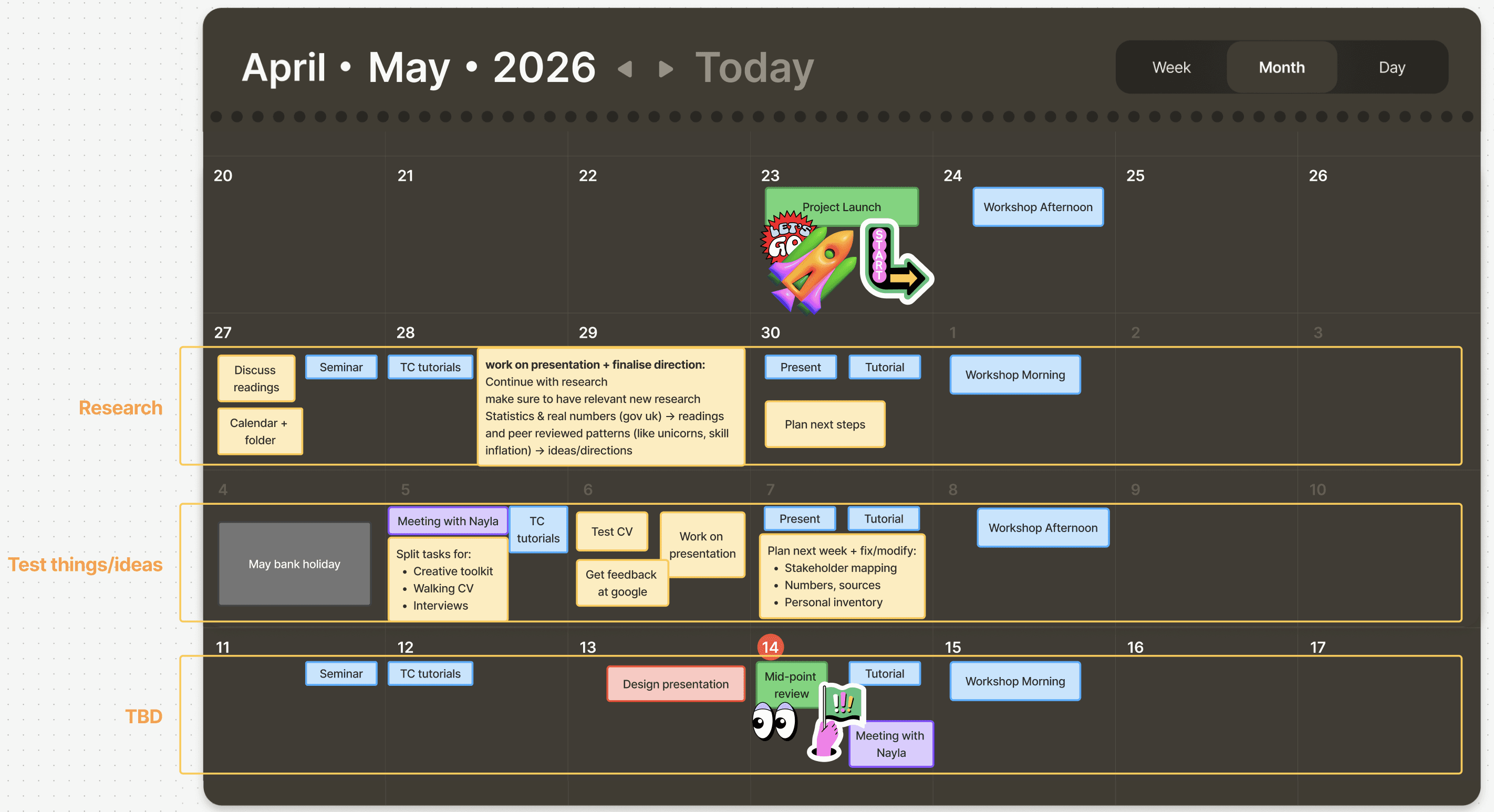
Distribution of tasks
Out of the research methods we identified last week as next steps, we decided to conduct Creative Toolkit, Personal Inventory & Cognitive Mapping, and Stakeholder Mapping.
Waleed was also keen to conduct feedback at Google. Revati, Yifei and I tested being a CV at WPP in parallel.
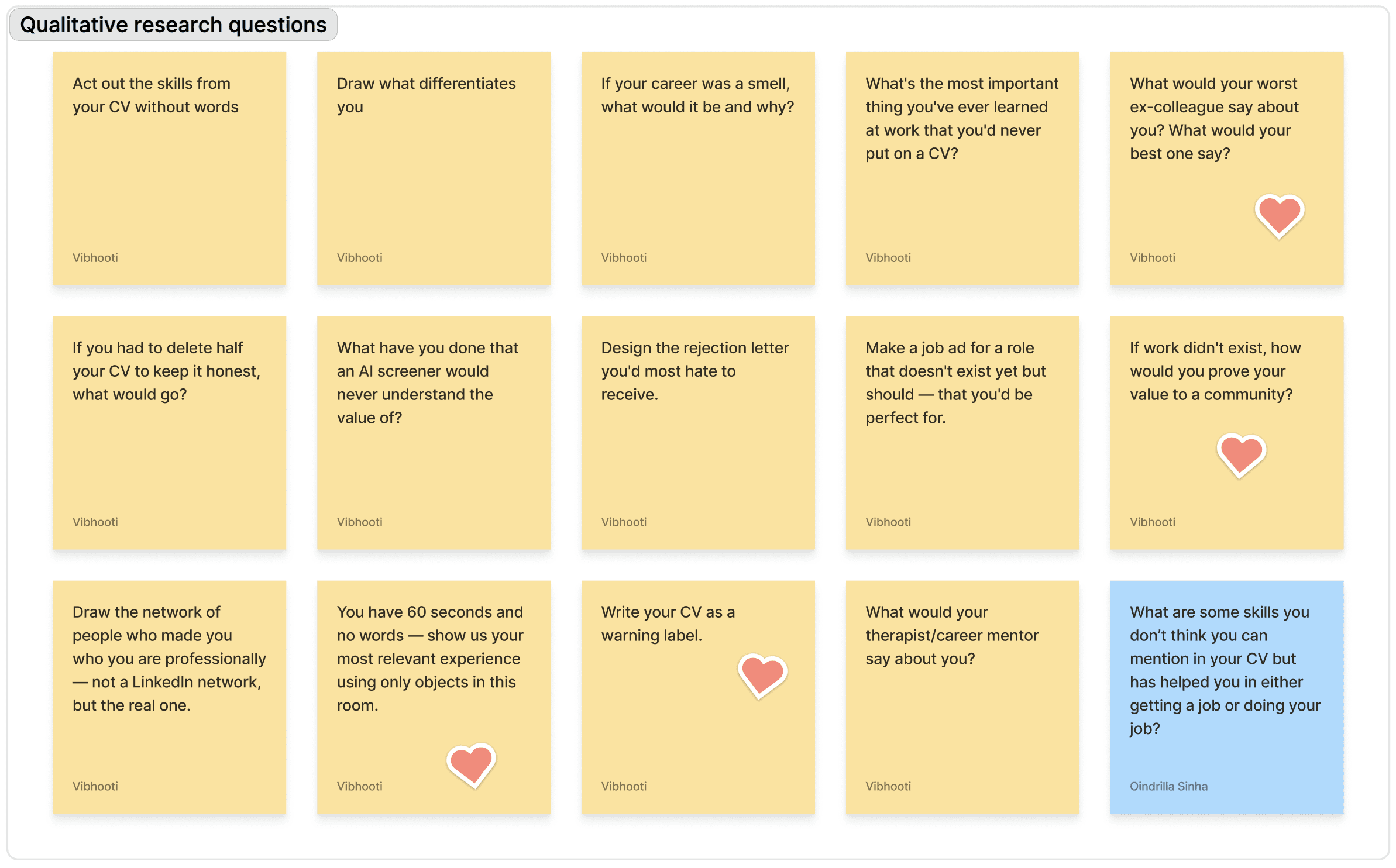
Questions we brainstormed for qualitative research. We used these as a springboard for our inquiry this week. While most of us helped frame these, Clara, Mary, Oindrilla, and Veronika took ownership of the research.
Qualitative research
According to Apers and Derous (2017), resumes are no longer personal inventories. When candidates become “paper people”, resume-based personality judgements show low reliability and limited validity (Cole et al., 2009). This led us to conducting a variety of qualitative research methods.
Creative Toolkit
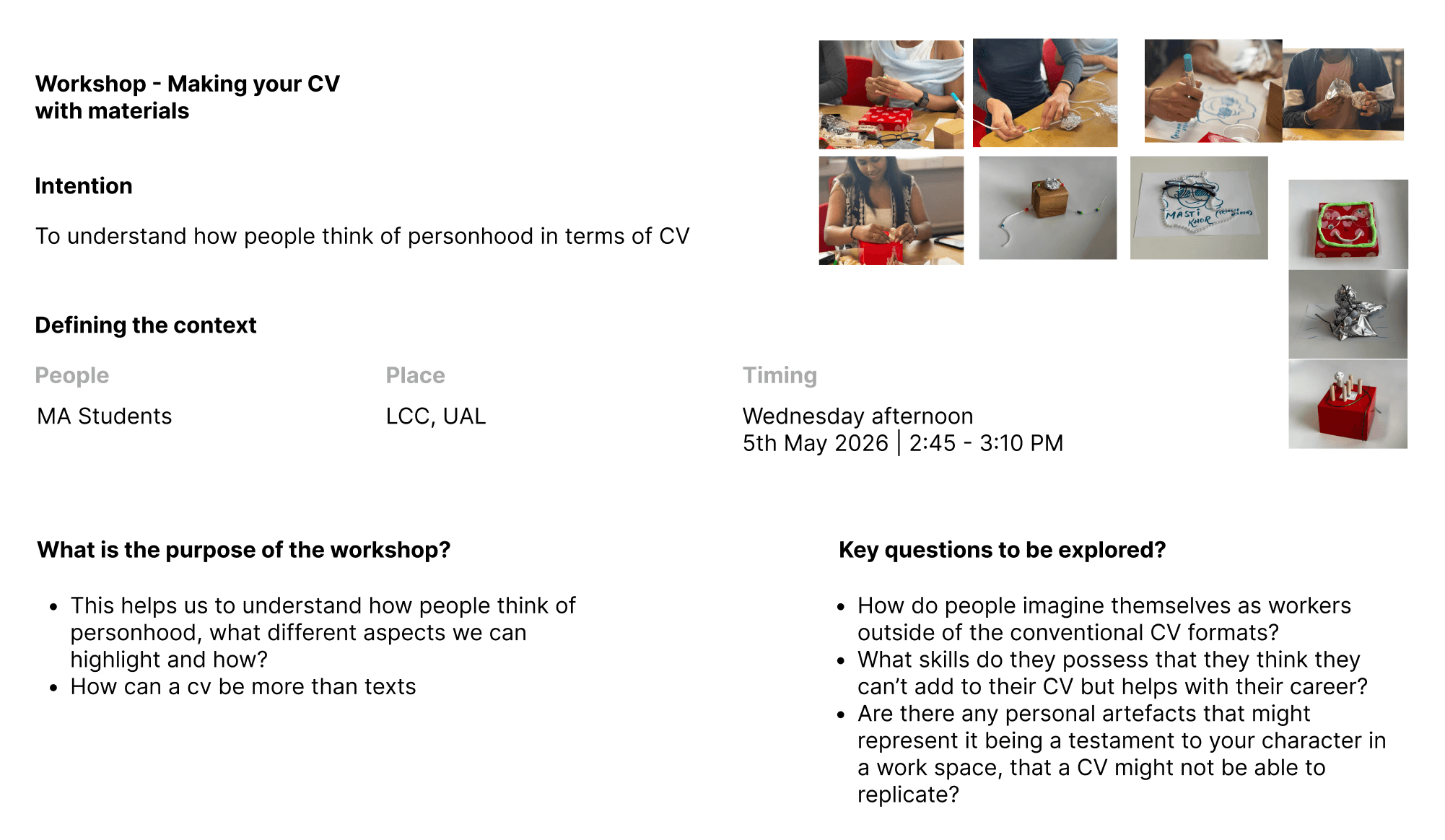
We conducted a creative toolkit to see what qualities people would highlight and what forms that might take. (Credits: Veronika)
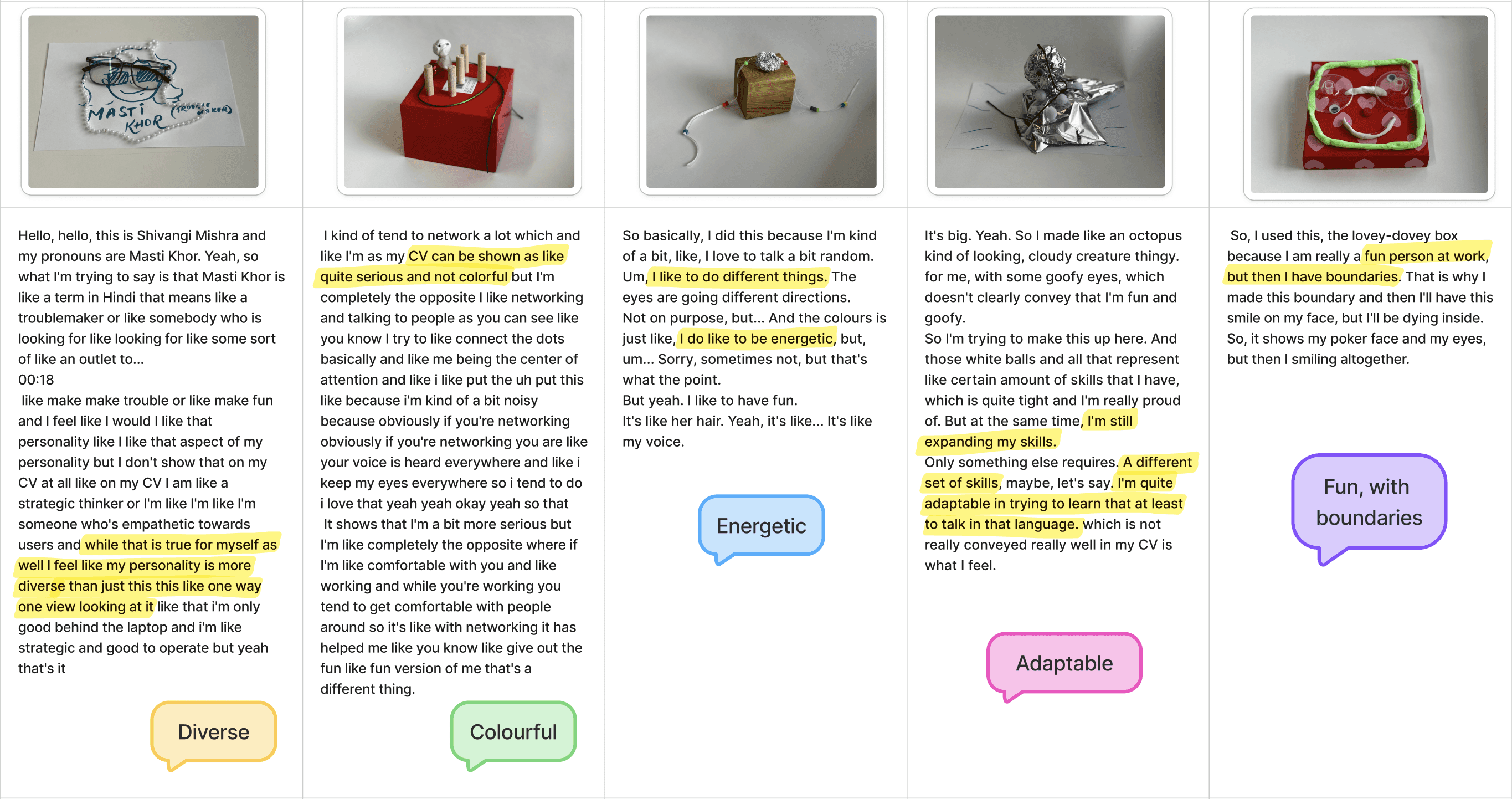
Top-level analysis of the produced artefacts. (Credits: Veronika, Images: Mary)
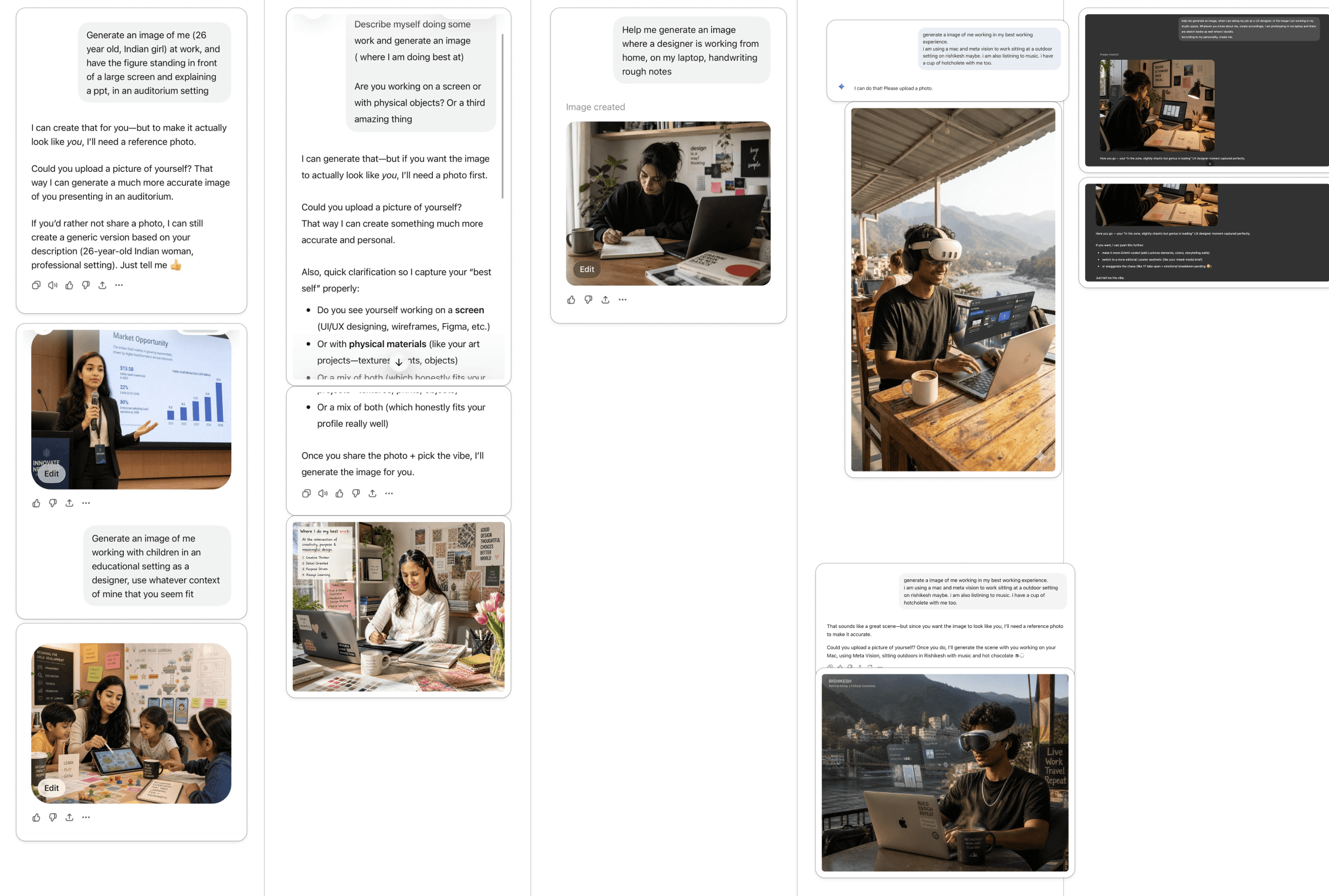
Images people generated of themselves with AI. We wanted to understand how they felt about the image and if there were any gaps in the image. (Credits: Veronika)
Personal Inventory
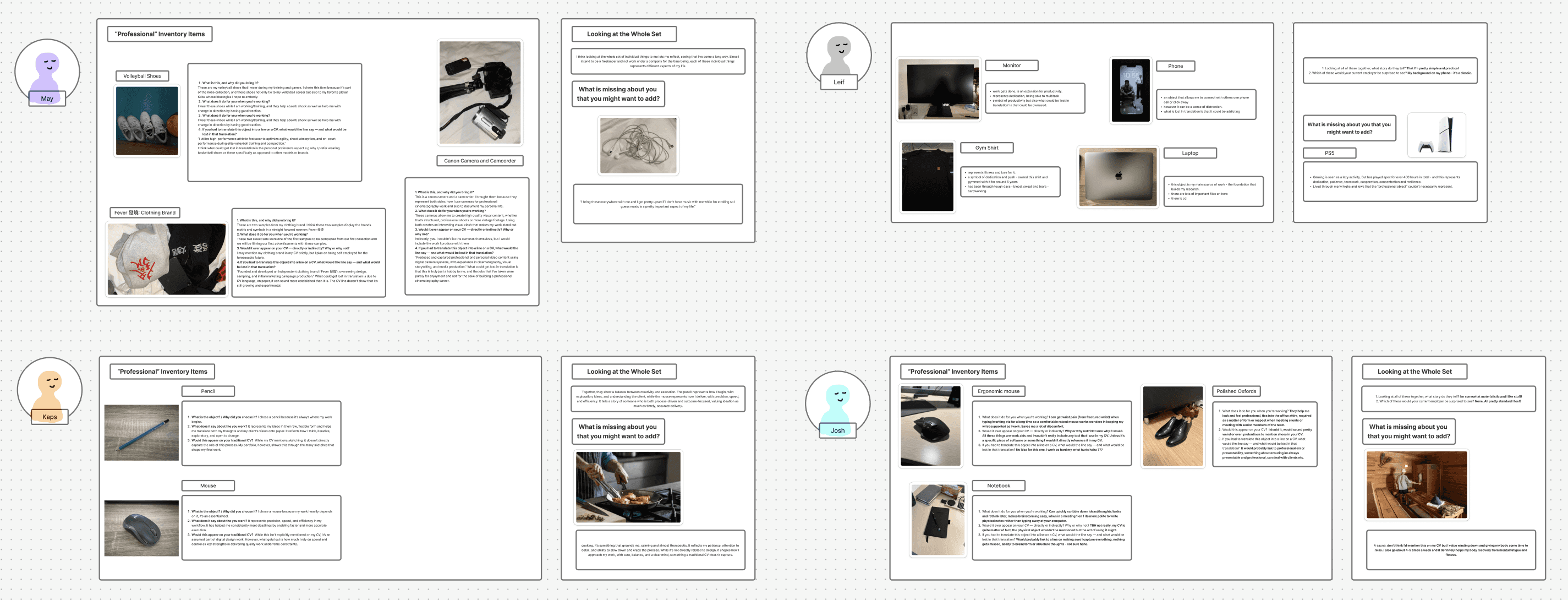
This was conducted to understand what aspects of a person a CV is unable to capture. Objects, habits, stories and other things that represented the participants were analysed. (Credits: Clara, Oindrilla)
Cognitive mapping

We wanted to understand how people would map their activities (professional and otherwise) that they might not necessarily put on their CV. One participant put "successfully quit smoking" which demonstrated self-discipline and a huge personal development, but they wouldn't put it on their CV. (Credits: Clara, Oindrilla)
Testing in the physical world
Lorde (1984) notes, you cannot dismantle systems of oppression using the very frameworks those systems created. Real change requires building from difference, not assimilating into existing structures. Keyword stuffing, white-fonting, and prompt injection fail Lorde’s test because they accept the system’s logic. This led us to step away from the system and connect with people directly.
Getting feedback at Google
Google's work culture stood out to Waleed, which is why he had visited Google at St Pancras to gather information about how people get noticed.
Unfortunately, he was unable to gather a lot of data as he kept getting escorted away by security. At the end, only one person took the time to talk to him. His suggestions were:
Post a lot, your personal brand matters
Keep working on projects
Embrace AI
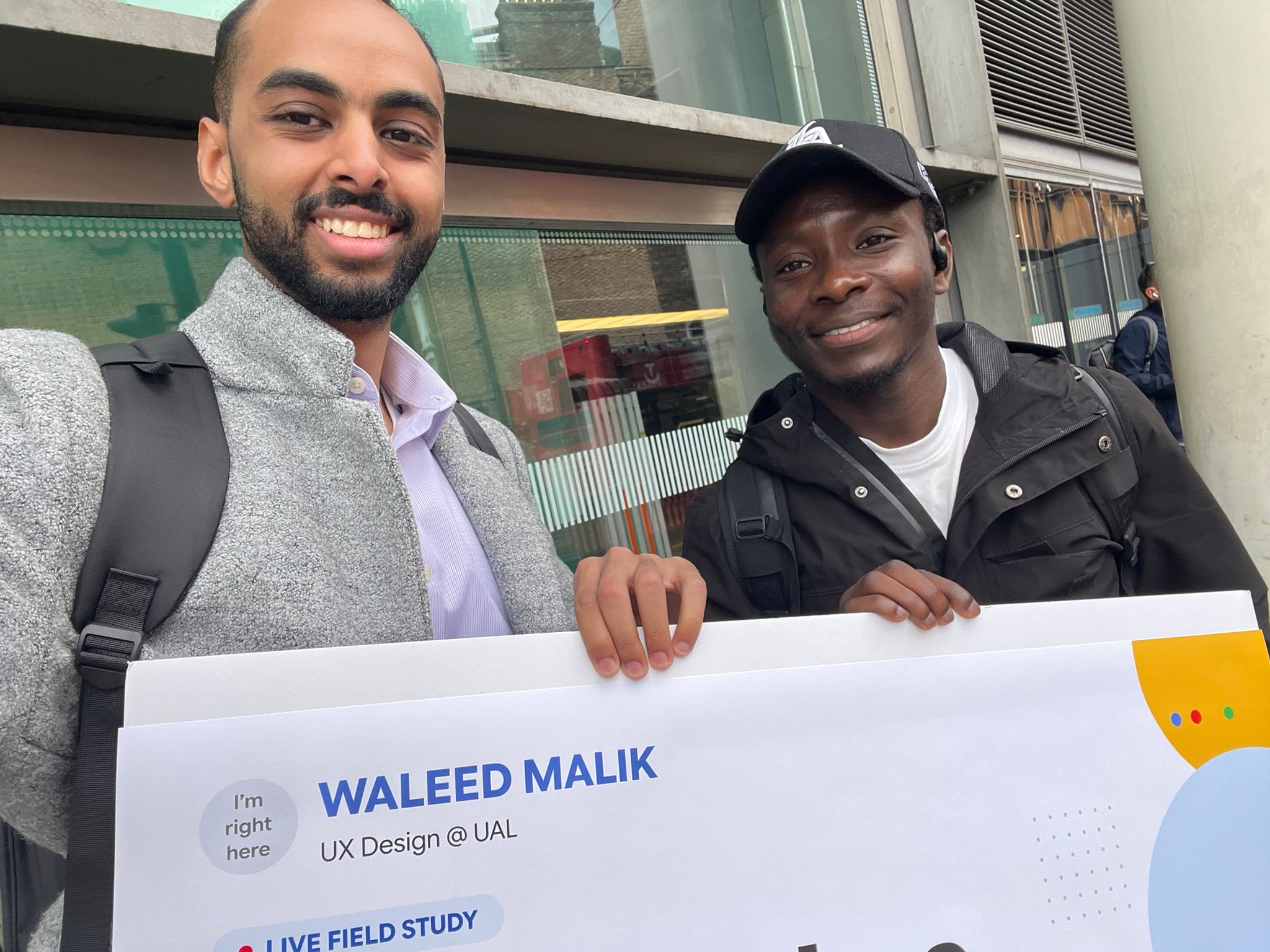
Image of Waleed with Adekunle he interviewed outside Google London, Pancras Square at 2:30pm, 6th May. (Credits: Waleed)

Front of placard had context and who Waleed is.
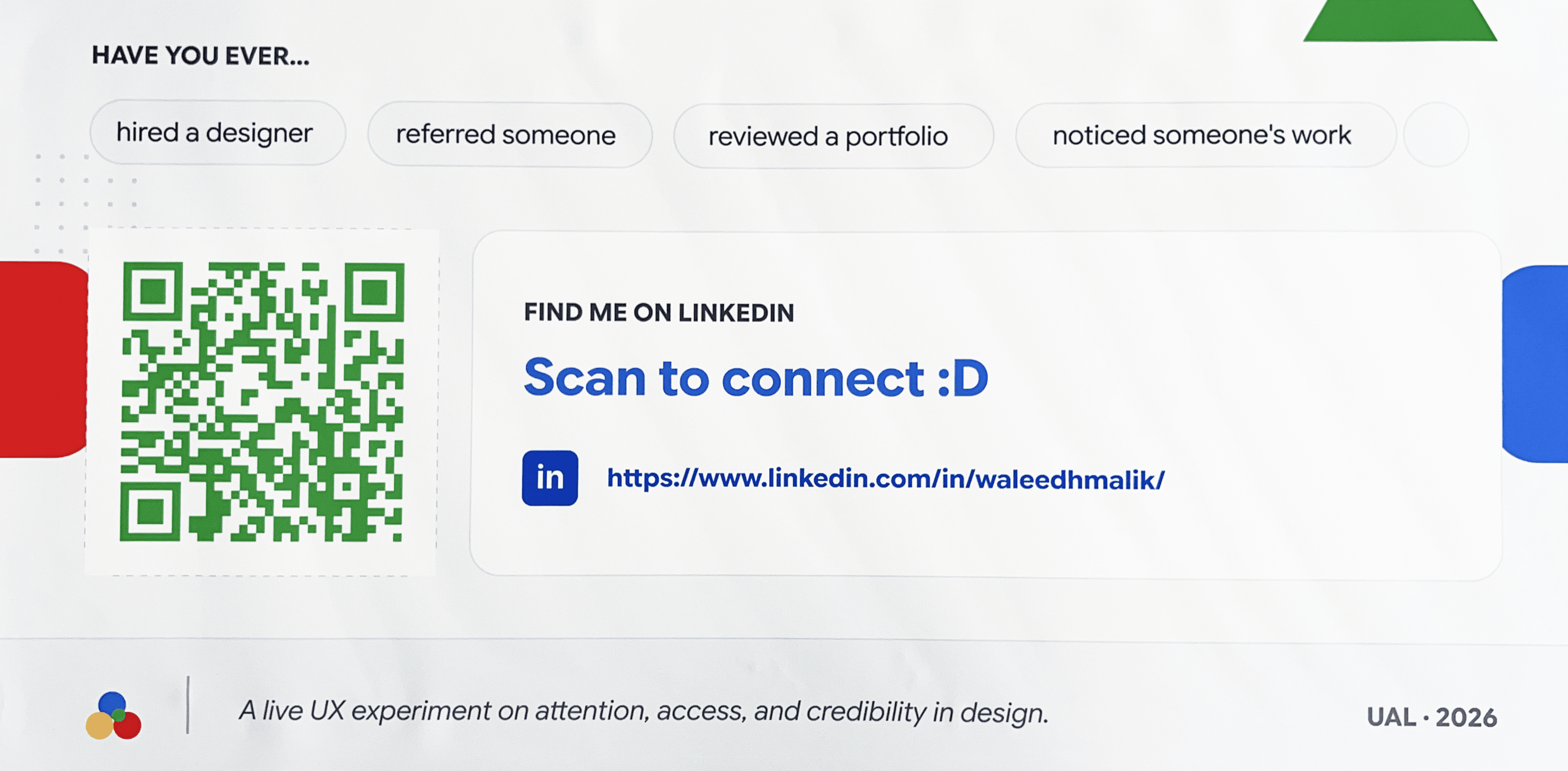
The back had contact and a QR for the survey.
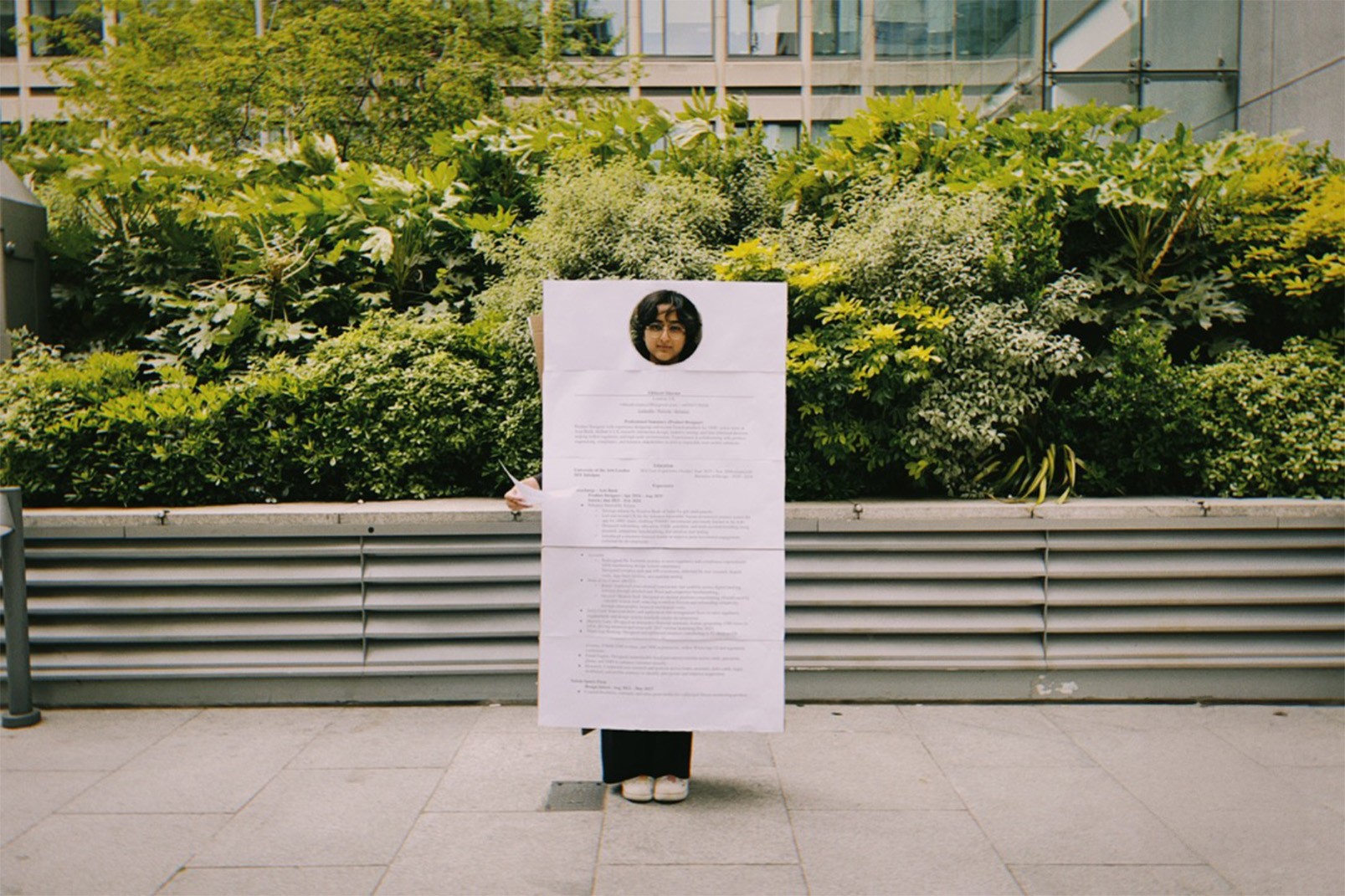
Being a CV at WPP
We wanted to test grabbing attention to our CV and ourselves. I had volunteered as I don't experience social anxiety.
A compiled video showing our process and people we interacted with. (Credits: Revati) (Video controls are available)
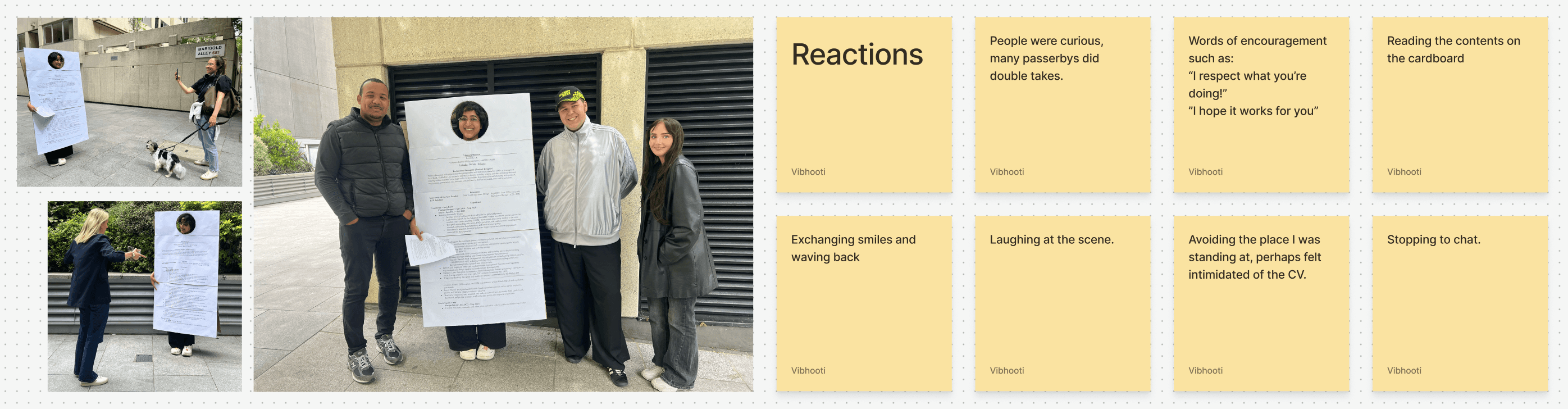
Most of the reactions I received were very supportive and optimistic. People were interested to chat and they were actually taking the time to read my CV.

It felt very close to selling myself and handing out flyers, but I liked the experience of being rejected in-person as it felt more human.
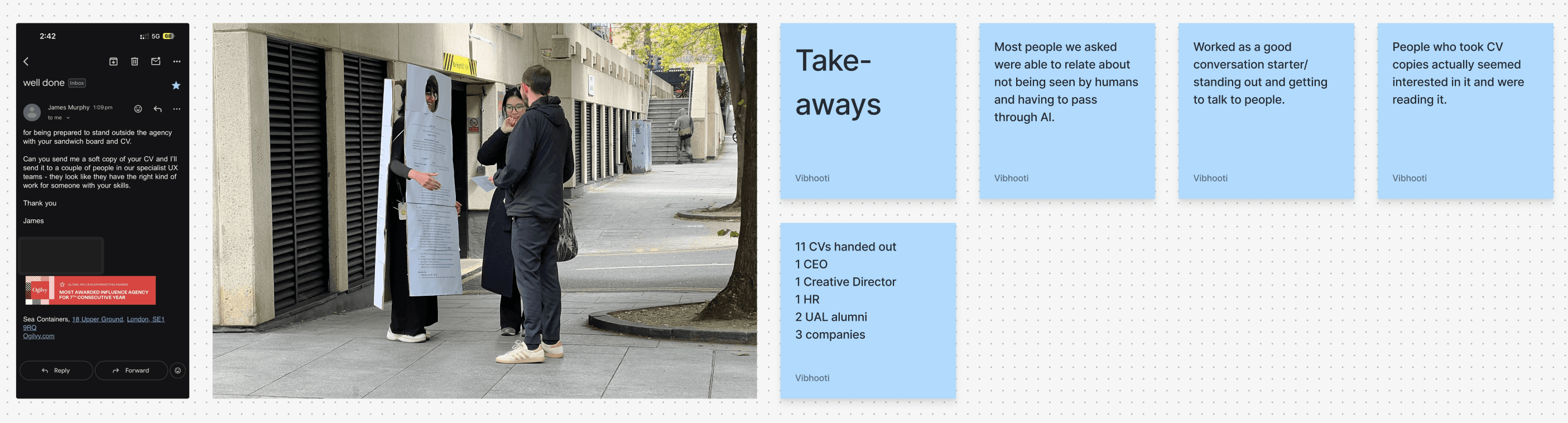
People found applying for jobs and the whole situation quite relatable. There were 11 people who took my CV, the CEO of Ogilvy mailed personally, and a creative director reached out on Linkedin.
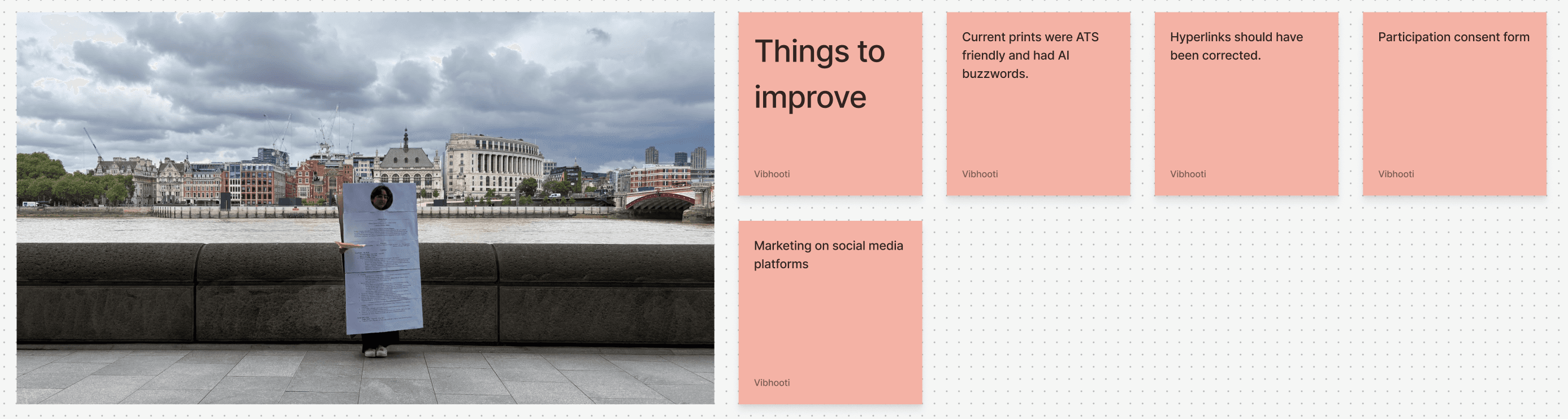
Upon reflection, there were things we could have surely navigated better, such as adding full links instead of the hyperlinks in our prints, doing a risk assessment, and keeping a participant engagement form ready.
Other inquiry
Stakeholder mapping
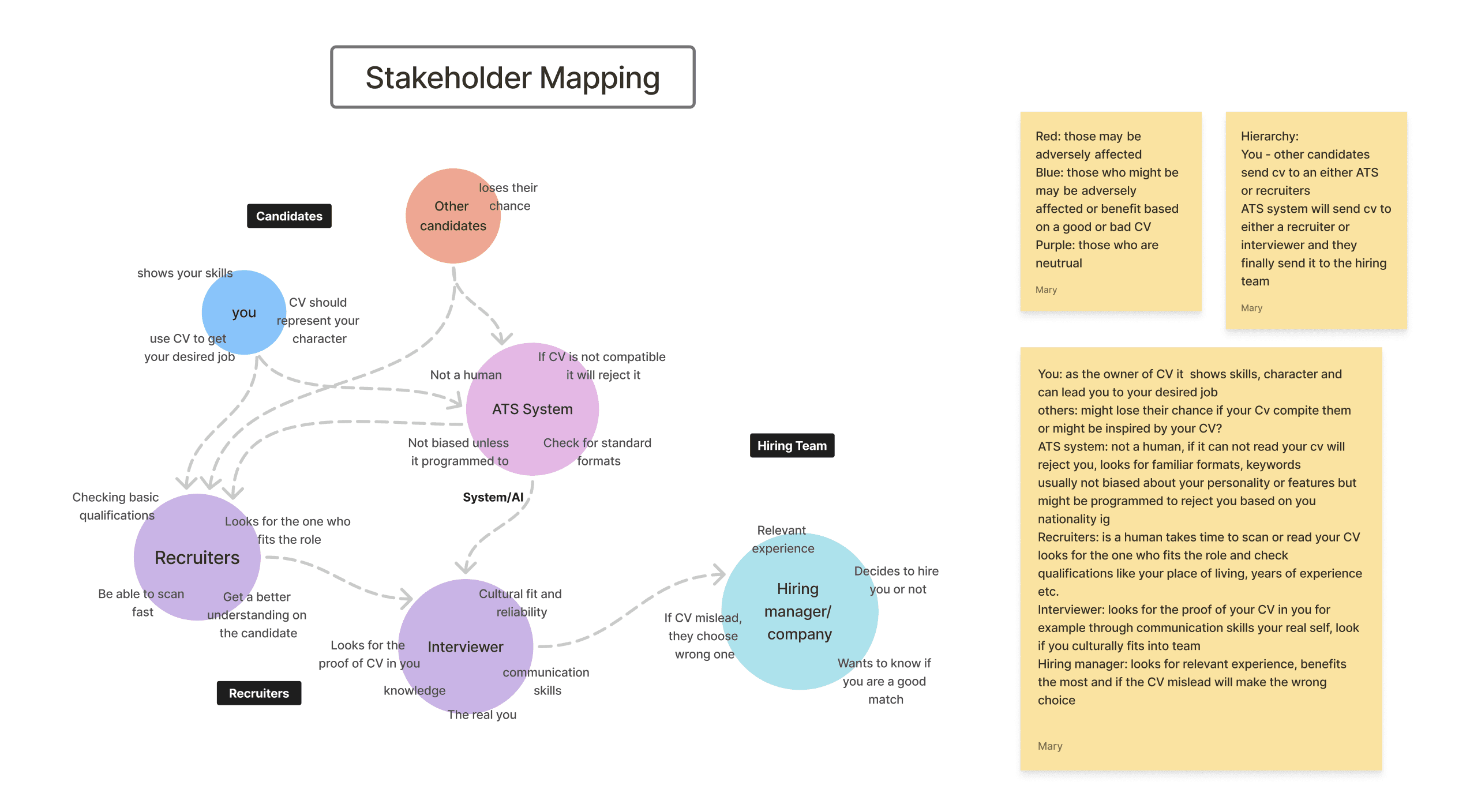
Mary developed a stakeholder map to identify those who are a part of the system and are affected.
ATS system mapping
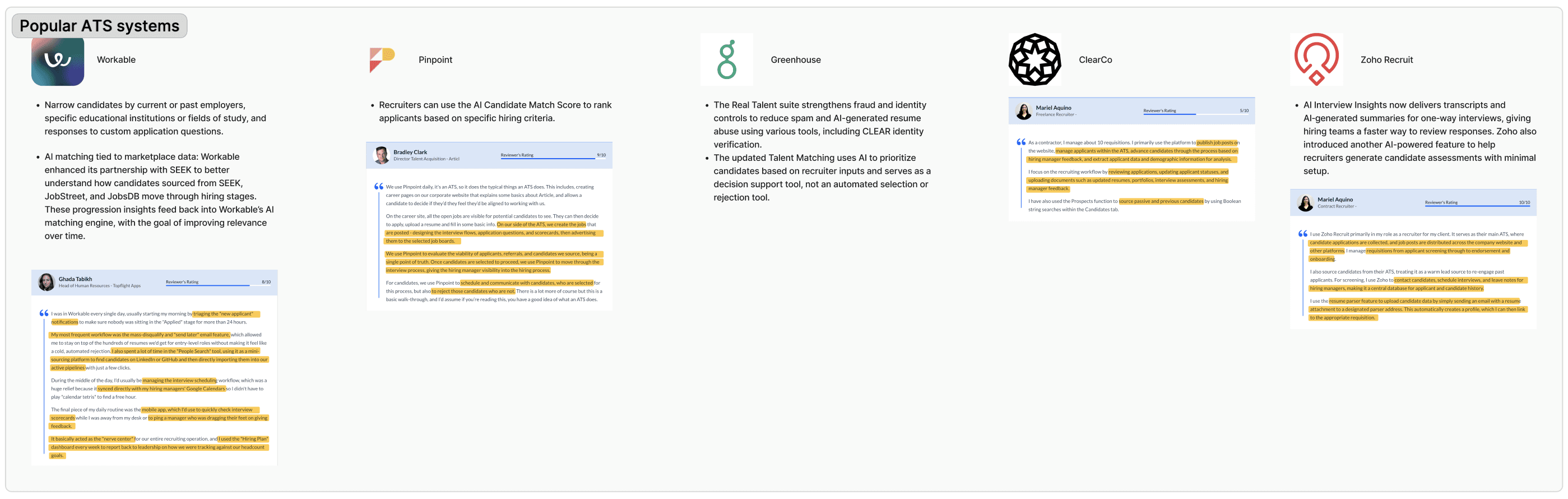
Veronika researched popular ATS systems to understand how they review candidates.
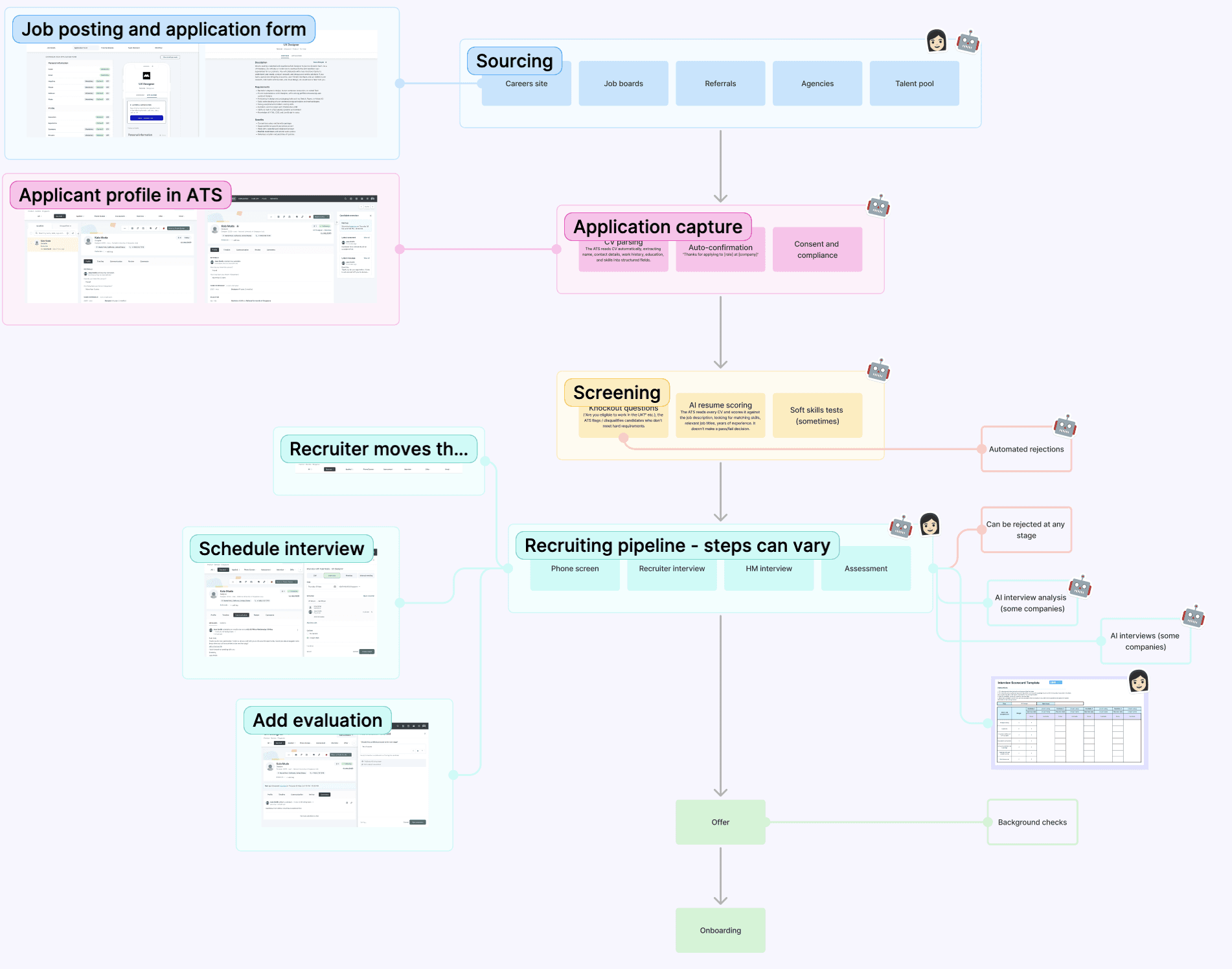
She was able to produce a general map of the system and identified where there's humans involved and where there's machines or AI involved.
Presentation
We analysed our research and physical testing. We were able to validate our assumption of grabbing attention and making human contact, while also finding gaps in the current CV format through qualitative insights.
Presentation from Thursday. (Video controls are available)
Feedback:
Stakeholder mapping is quite shallow.
Insights from personal inventory can be surfaced better.
Numbers and sources as supportive evidence.
Work on risk assessment and information sheets.
Reflection
Boillig (2025) advises to focus on adaptability and self-promotion, something we attempted through guerilla testing. Being in public with my personal details on a huge board was a vulnerable experience. It did however, feel like an extension of my outspoken, unafraid and weird personality, something better expressed through actions. My friendliness while wearing the CV functioned as a form of emotional labour (Yee et al., 2024). Even as international students of colour, my experience was not as taxing as Waleed's, it reinforced that situated knowledge is always partial and dependent on one's specific location within a power structure (Haraway, 1988).
References
Apers, C. and Derous, E. (2017) 'Are They Accurate? Recruiters' Personality Judgments in Paper versus Video Resumes', Computers in Human Behavior.
Bollig, C. (2025) 'Postcapitalist Professionalization: Civic Education and the Future of Work'.
Cole, M.S., Feild, H.S., Giles, W.F. and Harris, S.G. (2009) 'Recruiters' Inferences of Applicant Personality Based on Resume Screening: Do Paper People have a Personality?', Journal of Business and Psychology.
Haraway, D. (1988) 'Situated Knowledges: The Science Question in Feminism and the Privilege of Partial Perspective'.
Lorde, A. (1984) 'The Master's Tools Will Never Dismantle the Master's House'.
Meadows, D.H. (1999) Leverage Points: Places to Intervene in a System.
Perry, D. et al. (2005) Guerrilla Marketing for Job Hunters.
Pham, D.P. et Le, T.P. (2026) 'Determinants of Personal Branding and its Influence on Perceived Employability in the Digital Era'.
Yee, J.S.R., Tan, L. and Jefferies, E. (2024) 'Invisible Designing: Emotional and Affective Labour in Relational Participatory Practices', in Proceedings of the 2024 CHI Conference on Human Factors in Computing Systems.