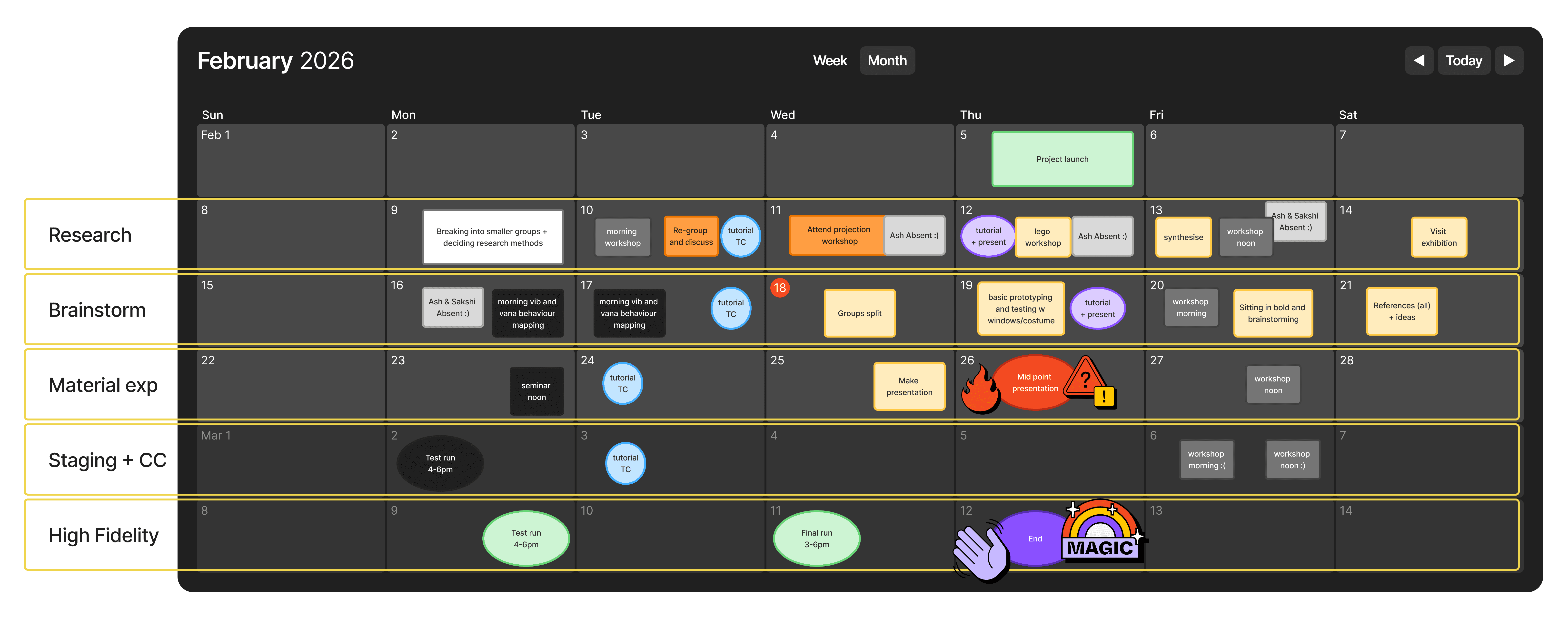
TIMELINE:
15 FEB - 21 FEB 2026
RESEARCH METHODS:
LITERATURE REVIEW, AFFINITY MAPPING
TEAM:
VIBHOOTI • AMITA • EVANDER • VANA • YUKI
Fourth Wall:
Week 2
Brief
"Express the inner life of a building on its outside."
Overview of Week
For this week, we tackled challenges in communication and split into separate teams for the project to work efficiently. We also synthesised research and staged interactions.
Research Synthesis
Talking within ourselves
By tackling the challenges experienced last week, we were able to set expectations about responding on time and showing up.
AEIOU
We further synthesised the data from AEIOU and made key points.
Directed Storytelling
Further analysis of transcripts and notes from Directed Storytelling let us identify recurring themes.
Affinity Mapping - Synthesis of Research
By collectively reviewing AEIOU, Directed Storytelling, and Affinity Mapping, we produced sticky notes and grouped them to make common themes. As half the team was unavailable, it might have produced some gaps in our synthesis as we didn't get their inputs.
At this stage, we decided to split into separate groups for the project based on work times that worked best for us. This allowed us to explore ideas more rapidly with reduced friction.
Brainstorming
Testing and staging interactions
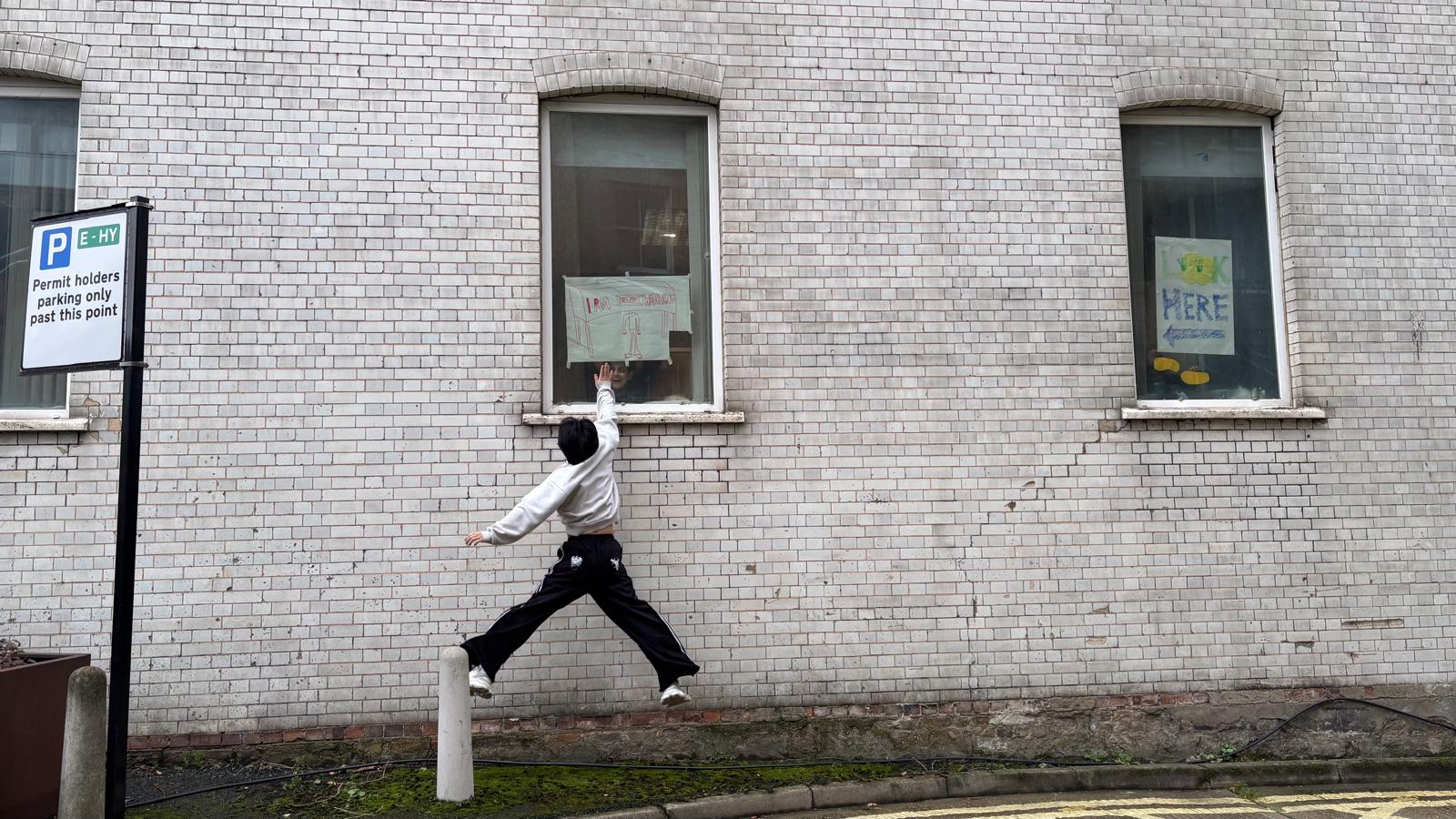
Through the areas of the building identified last week, we quickly staged interactions through the back windows of Bold. This allowed us to understand colour visibility, scale, and the limitations of the approach.
Although it was easy and interactive to conduct from inside the windows, we felt it wasn't "outside" and too two-dimensional.
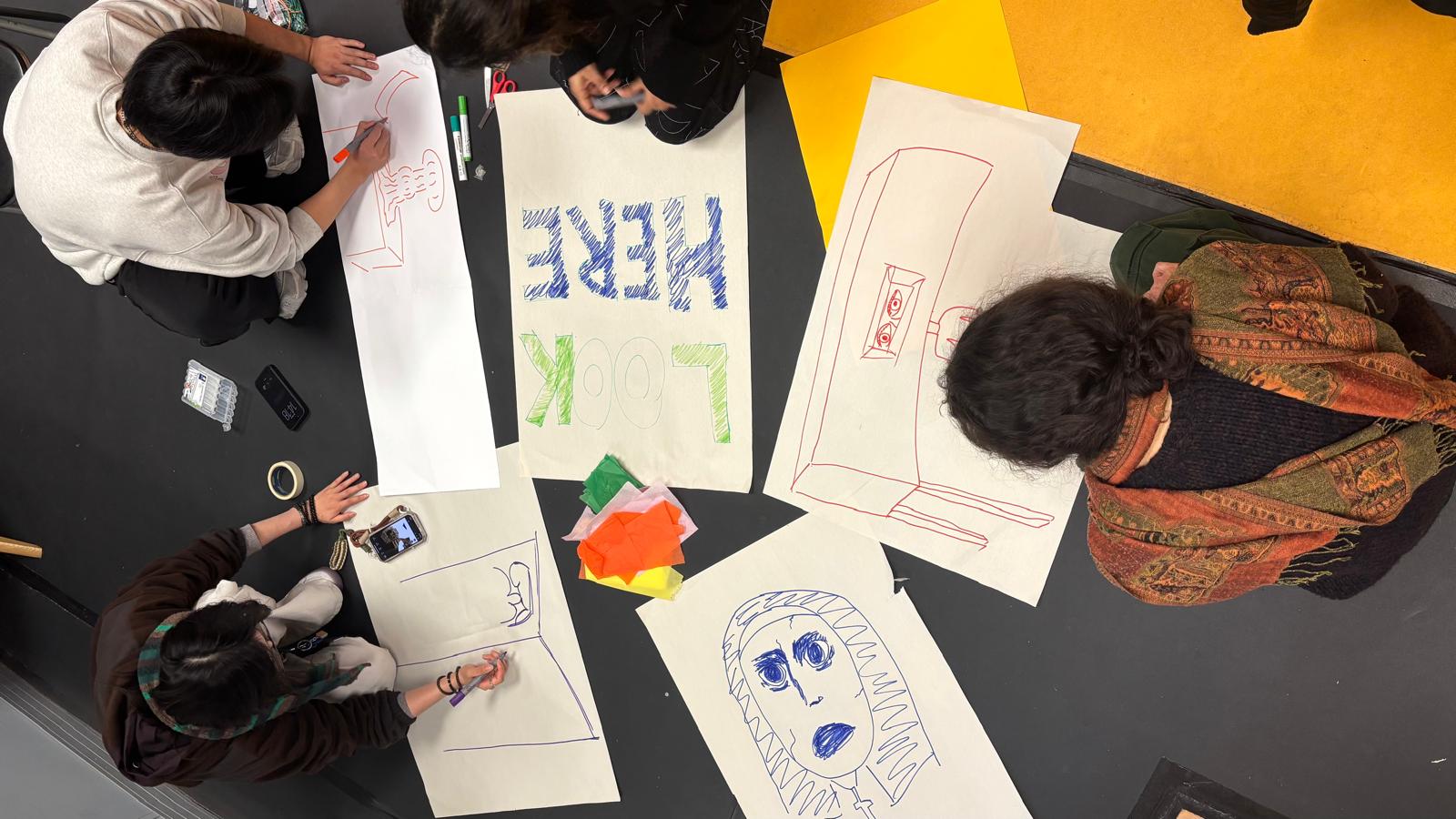
Us sketching with various colours at Bold for testing
The eyes could be identified from a distance.
Trying a scrolling format for the drawing was less static.
Using an image and yellow footsteps was engaging.
Character improv
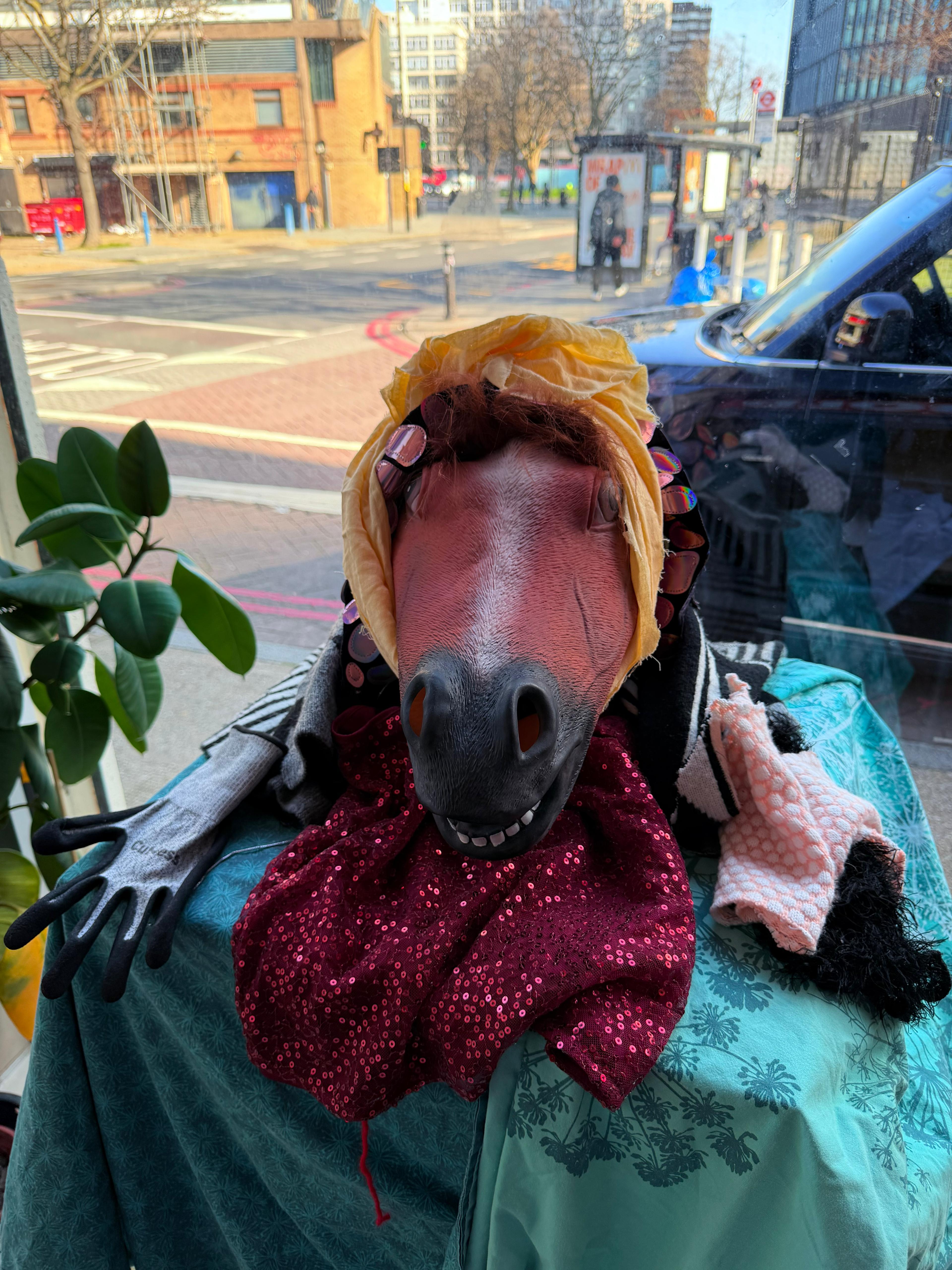
Bold had a bowler hat and cane, which we used to improvise characters on the spot. It made us realise how the same props were interpreted as different characters. The experience was fun, engaging, and dynamic.
Ideas and References
Through the staging and improvisation, we brainstormed potential ideas and looked up references.
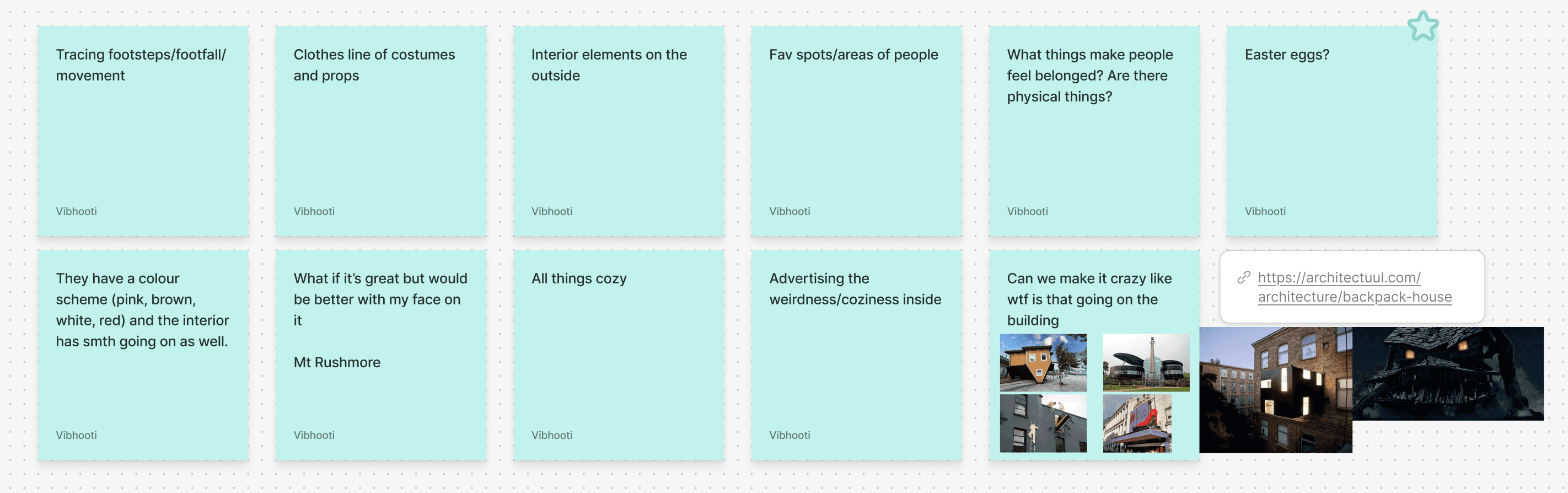
Initial ideas that we used as a base for gathering references.
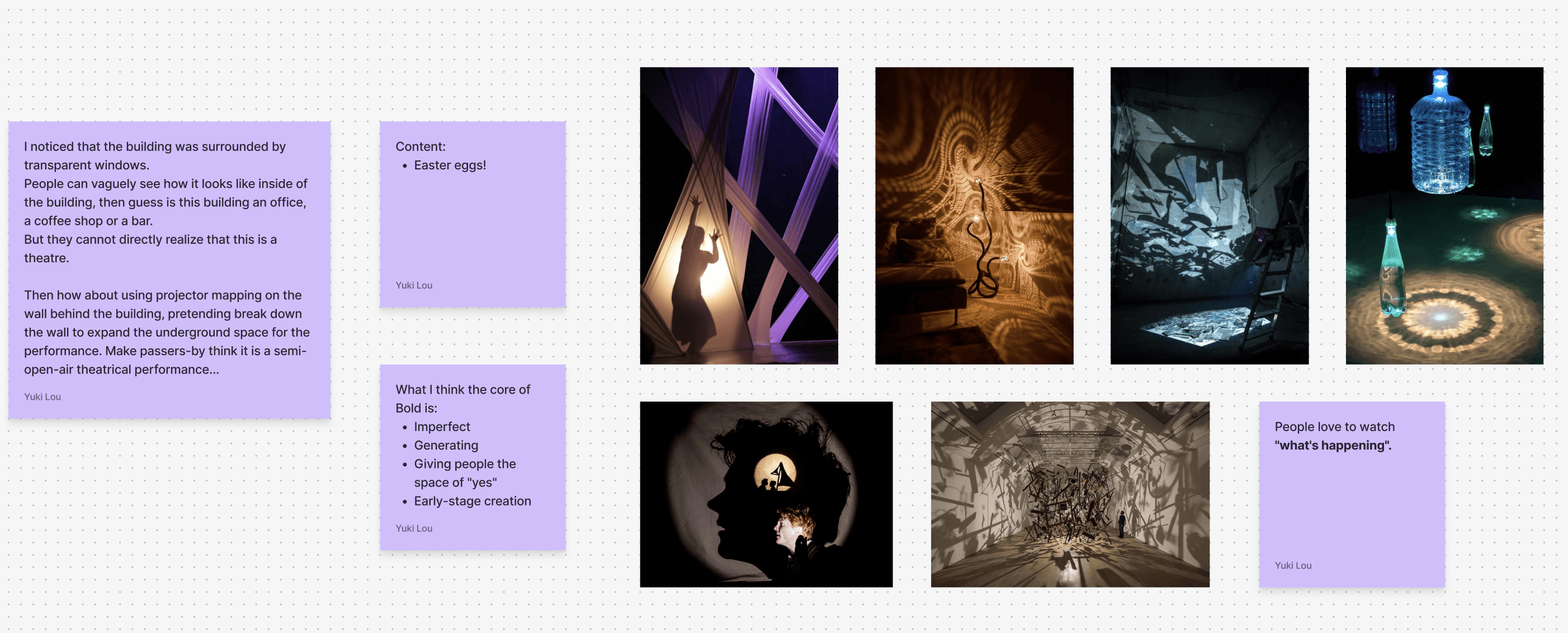
References for using lights, shadow and projections.
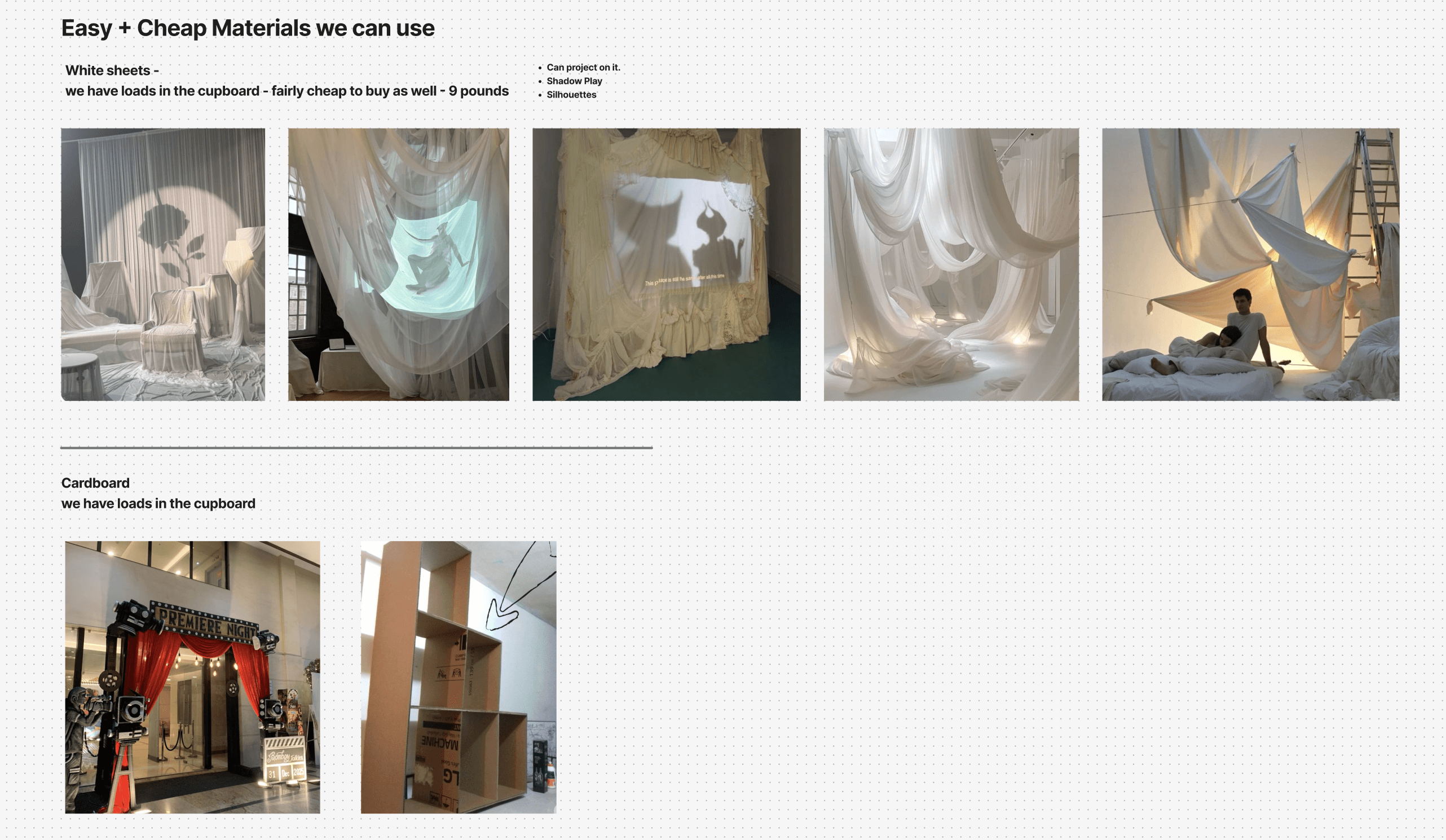
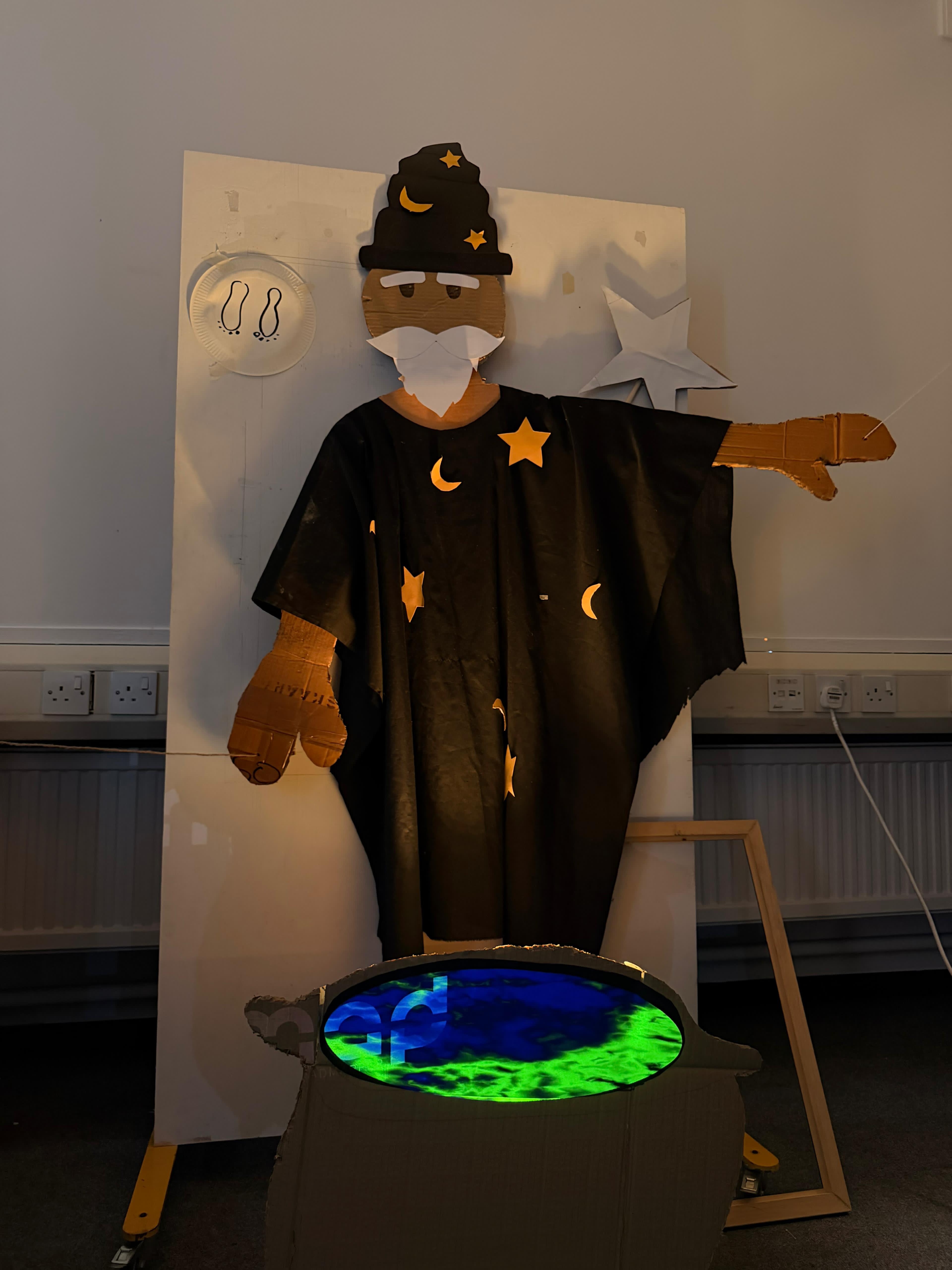
Setups with cardboard and white cloth that can be executed easily.
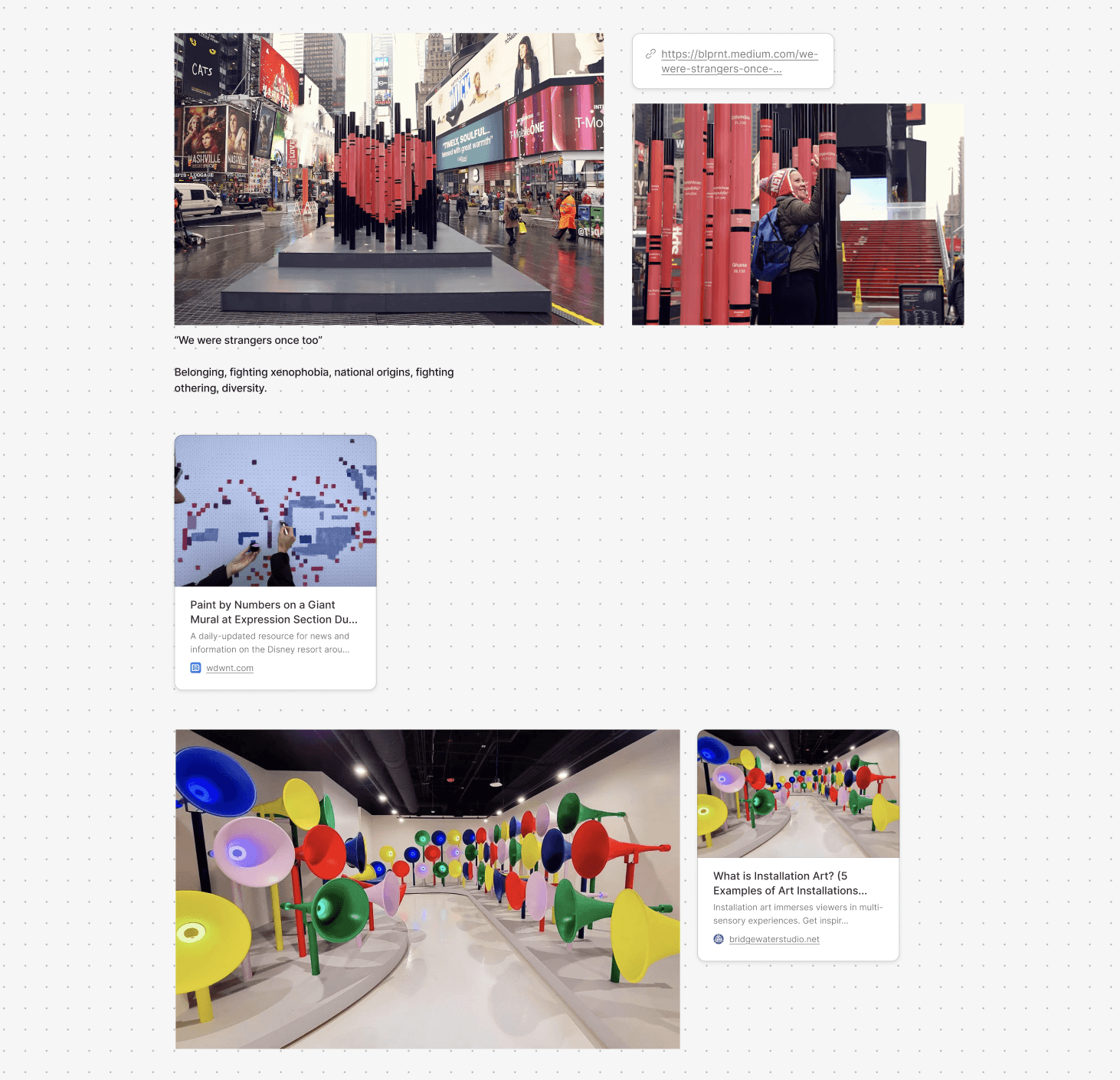
Large-scale installations that involve community.
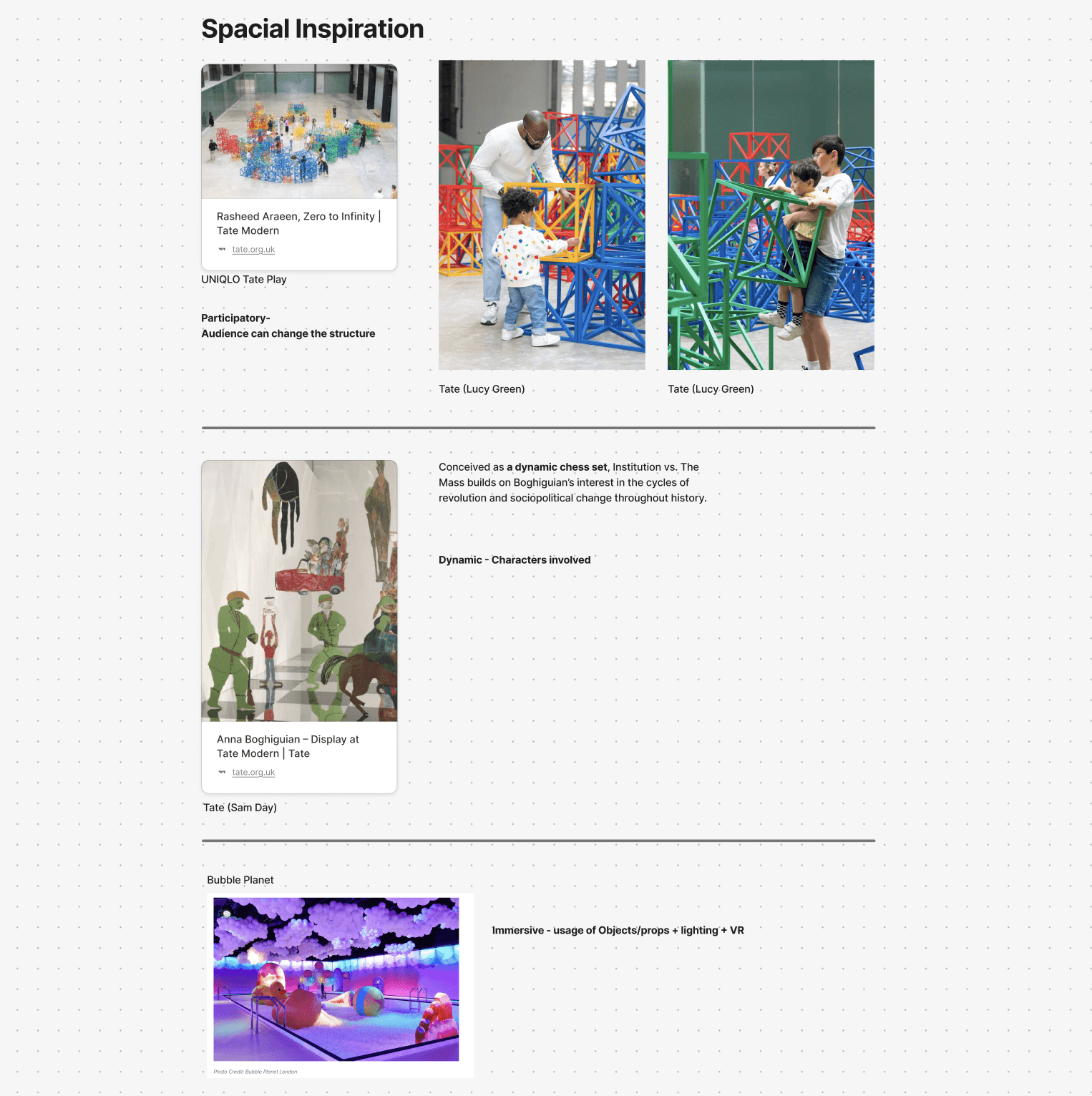
Interactive spacial experiences.
Reflection
This week allowed us to prototype and test low-fidelity ideas very quickly. Splitting into completely separate groups made communication and coordination effective. Being physically present at Bold and ideating felt effective and let us also think about the space simultaneously, which we decided to continue for next week.
References
Anastasiu, I. (2019) ‘Unpacking the Smart City Through the Lens of the Right to
the City: A Taxonomy as a Way Forward in Participatory City-Making’.
Araeen, R. (2023) 'Uniqlo Tate Play'. Available at: https://www.tate.org.uk/whats-on/tate-modern/uniqlo-tate-play/uniqlo-tate-play-zero-to-infinity
Boghiguian. A. (2023) 'Institution vs. The Mass'. Available at: https://www.tate.org.uk/visit/tate-modern/display/materials-and-objects/anna-boghiguian
Bubble Planet London, Available at: https://bubble-planet.com/london/
Martin, B. and Hanington, B. (2012) Universal Methods of Design. Beverly, MA: Rockport Publishers.
Eberstadt, S. (2004) 'Backpack House'. Available at: https://architectuul.com/architecture/backpack-house
Fabianski, A. (2024) 'What is Installation Art?'. Available at: https://www.bridgewaterstudio.net/blog/what-is-installation-art-5-examples-of-art-installations-that-stimulate-the-senses
Ikea Småland
Monopoly Lifesized. Available at: https://www.monopolylifesized.com/about-the-experience/
Morris, C. and Cong, Y. (2024) ‘Wanghong Spaces: The Spatial Effects of China’s Ascendant Digital Culture’.
Paint by Numbers on a Giant Mural at EPCOT (2023). Available at: https://encrypted-tbn0.gstatic.com/images?q=tbn:ANd9GcSj6q6QWX_euRvDOzlhb7NZpeQg6PoTq3JFUQ&s
Sovhyra, T. et al. (2023) ‘The Problem of Introduction of Digital Technologies in the Performing Arts’, J. Comput. Cult. Herit., 16(1), p. 23:1-23:8. Available at: https://doi.org/10.1145/3587169.
Thorp, J. (2017) 'We Were Strangers Once, Too'. Available at: https://blprnt.medium.com/we-were-strangers-once-too-47f3a8793cb1