TIMELINE:
2 WEEKS
RESEARCH METHODS:
ARTEFACT ANALYSIS, LOVE & BREAKUP LETTER
TEAM:
VIBHOOTI • AMEN • ANDRÉ • KAI • MATTHEW • VANASHREE

UX of Digital Interfaces
brief.
"Design a physical environment derived from a digital one."
week 1.
Group Discussion
Through a focused and short discussion, we identified Bumble as an app we wanted to work on as a team. We decided to take our own time and familiarise ourselves with the app.
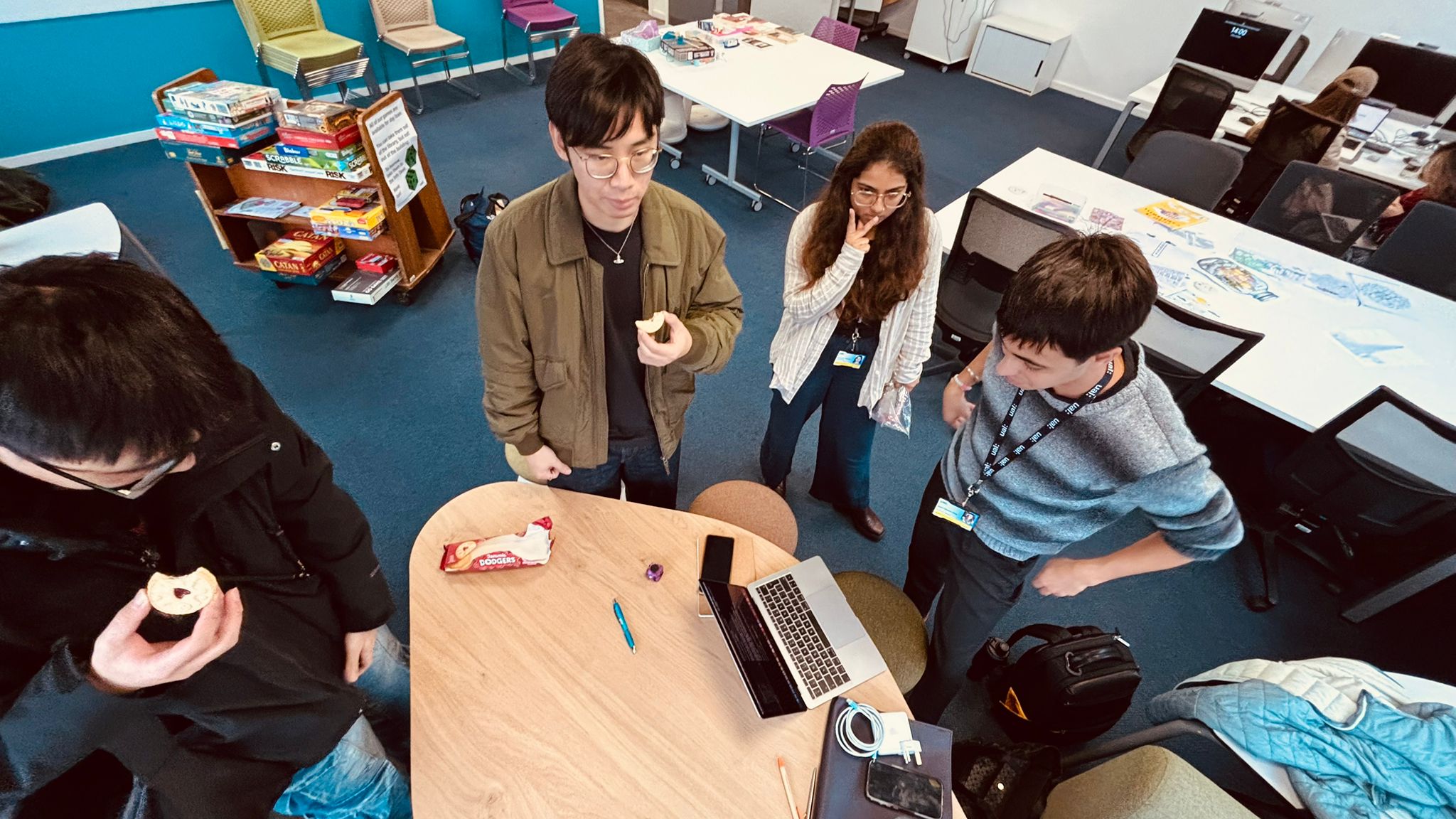
Brainstorming in the library with snacks and fidget toys.
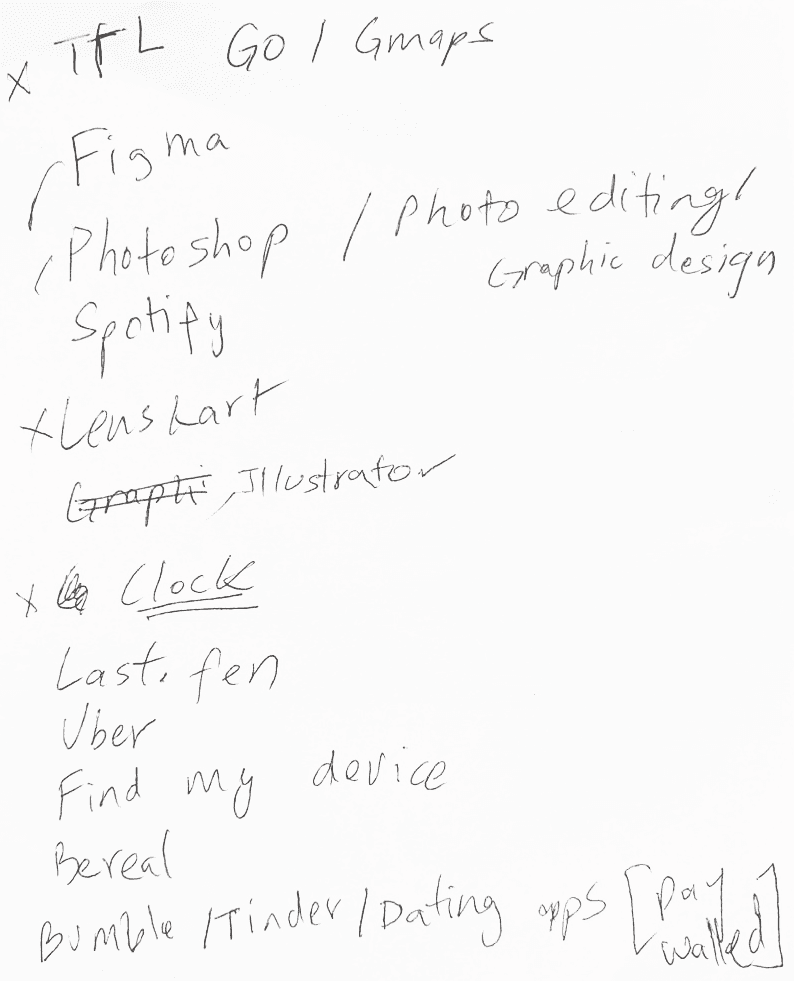
Initial eliminations due to unfamiliarity and lack of scope.
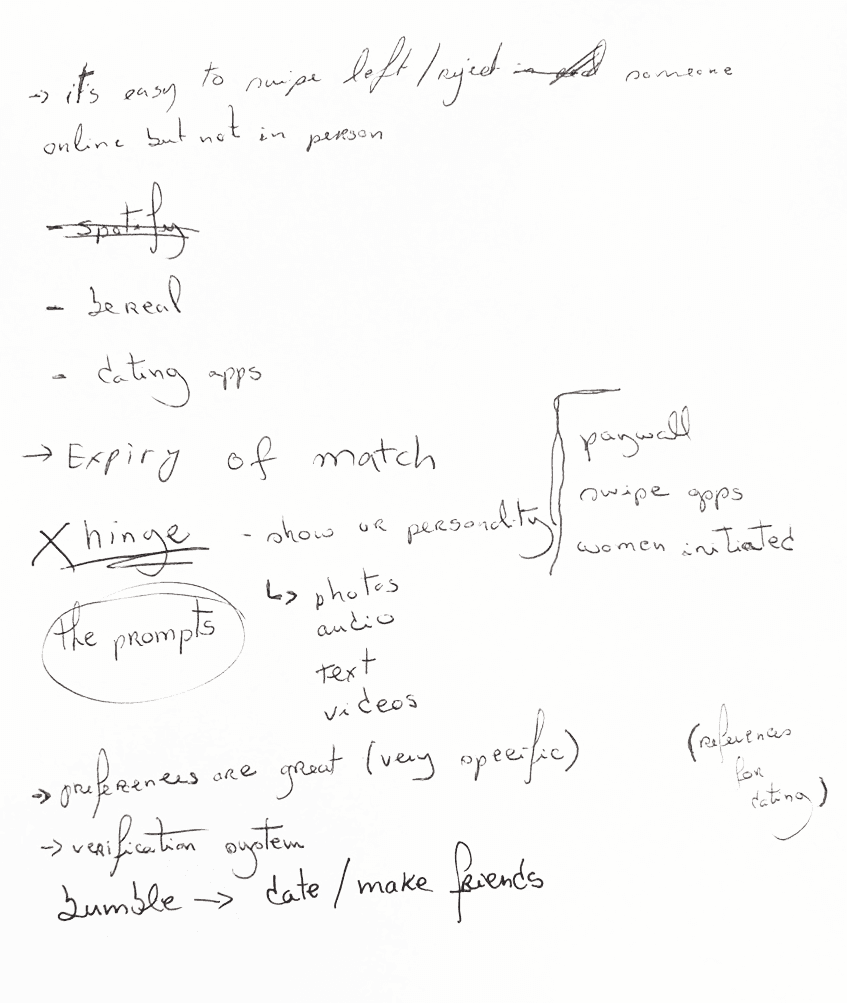
Listing things we find interesting in Bumble, also discussed Hinge (dating app).
Love letter and breakup letter
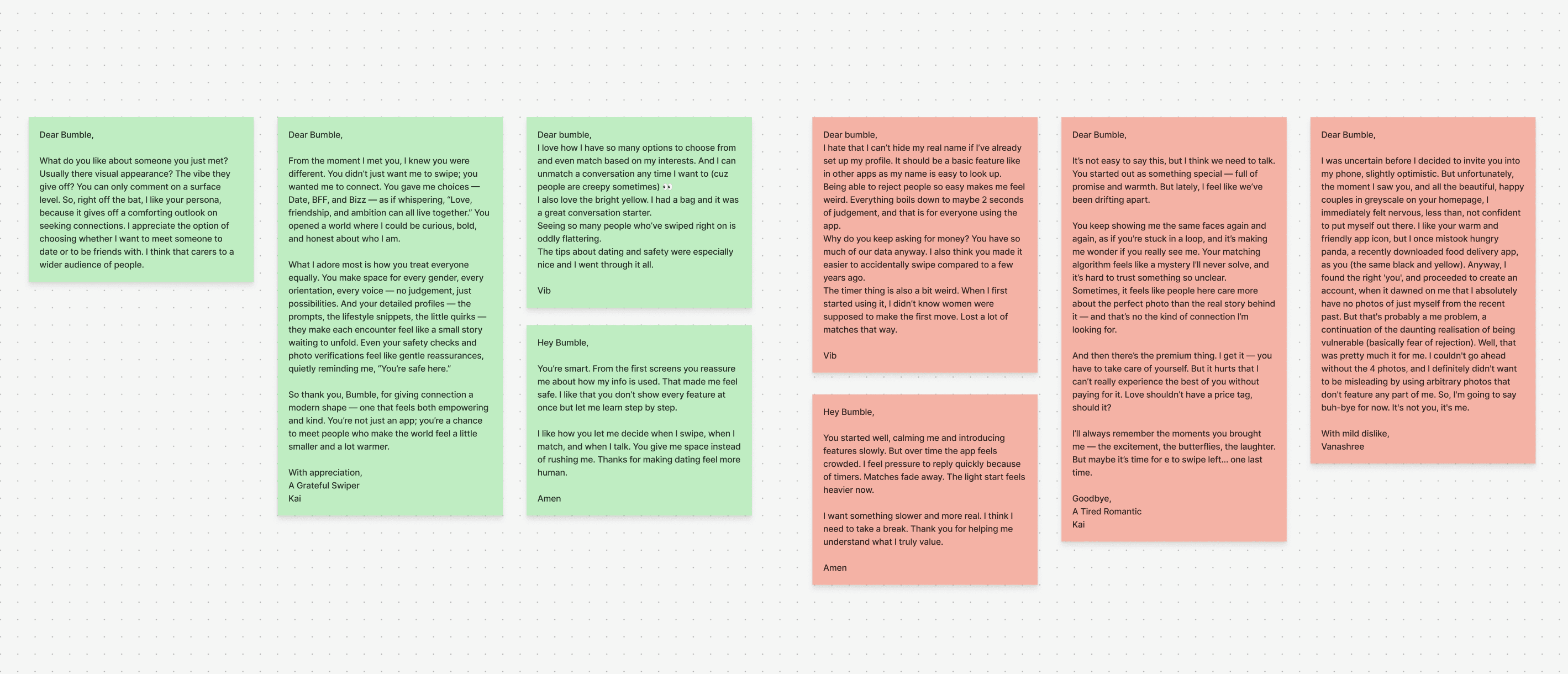
Some of the love and breakup letters written by the team.
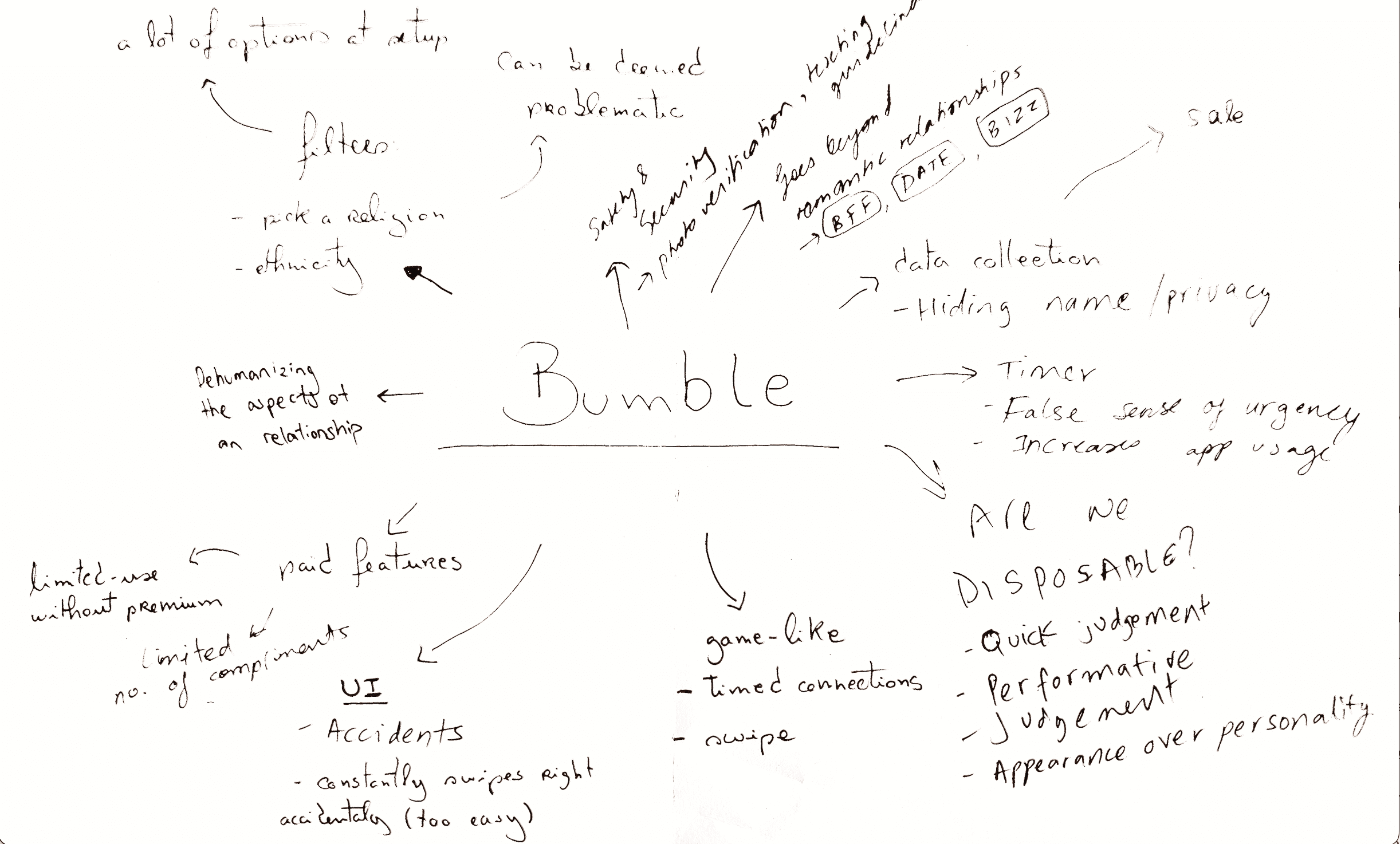
After synthesising and analysing our letters, we identified these common themes (judgement, vulnerability, dehumanisation, data concerns, disposability, money, and time restrictions) shown in the mindmap.
Artefact Analysis
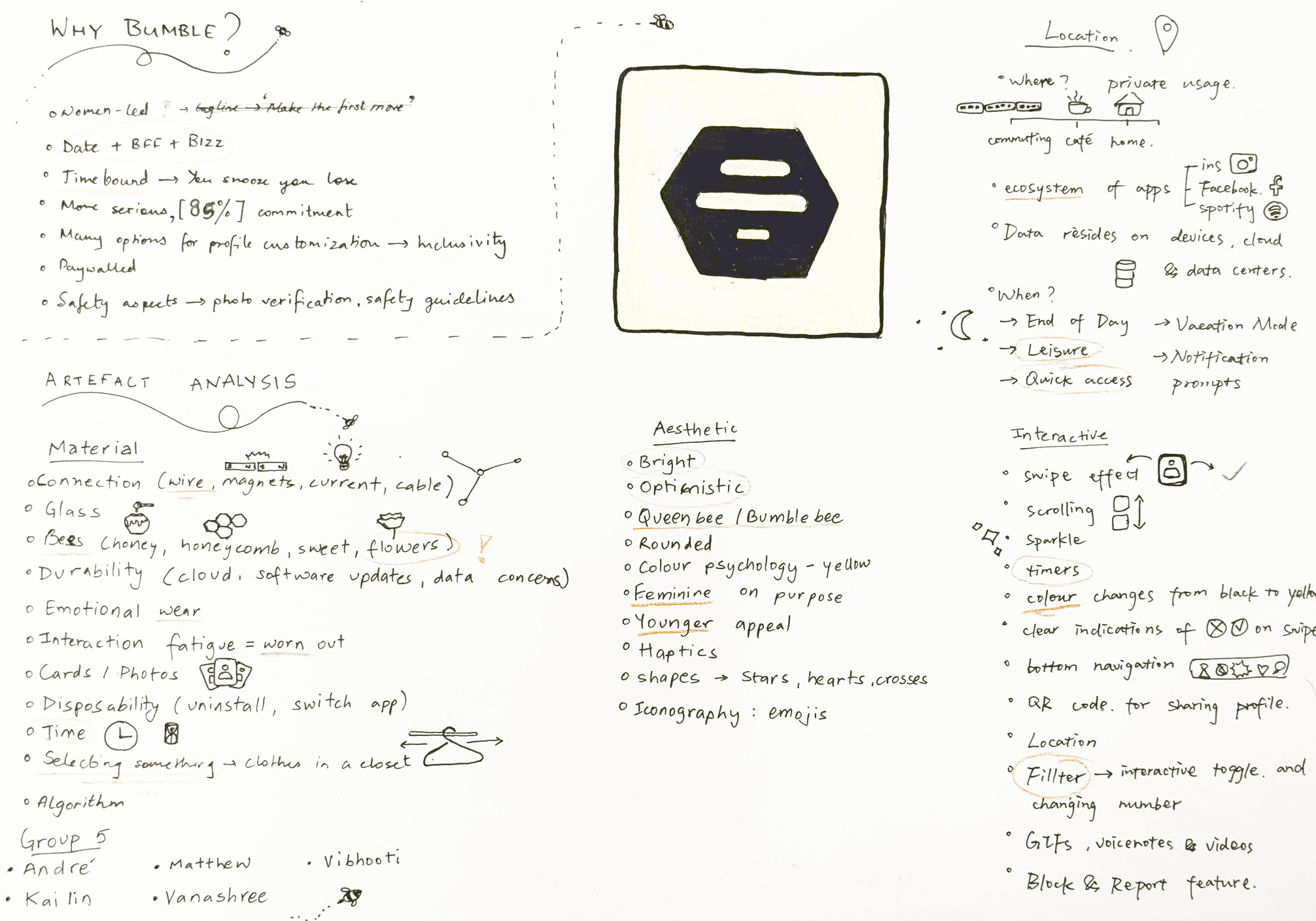
Although unconventional, our artefact analysis had physical properties like glass, wires, connection, magnets, and emotional durability.
Secondary Research
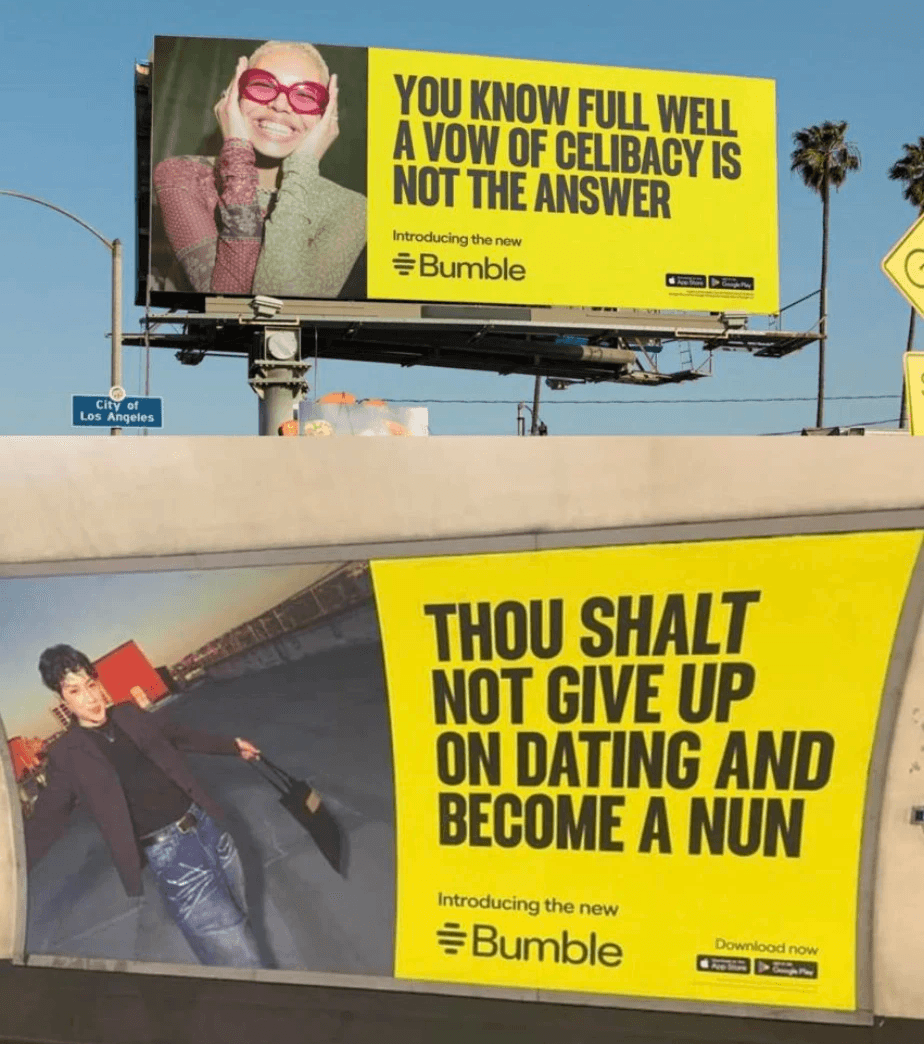
Checking advertisements and their public perception.
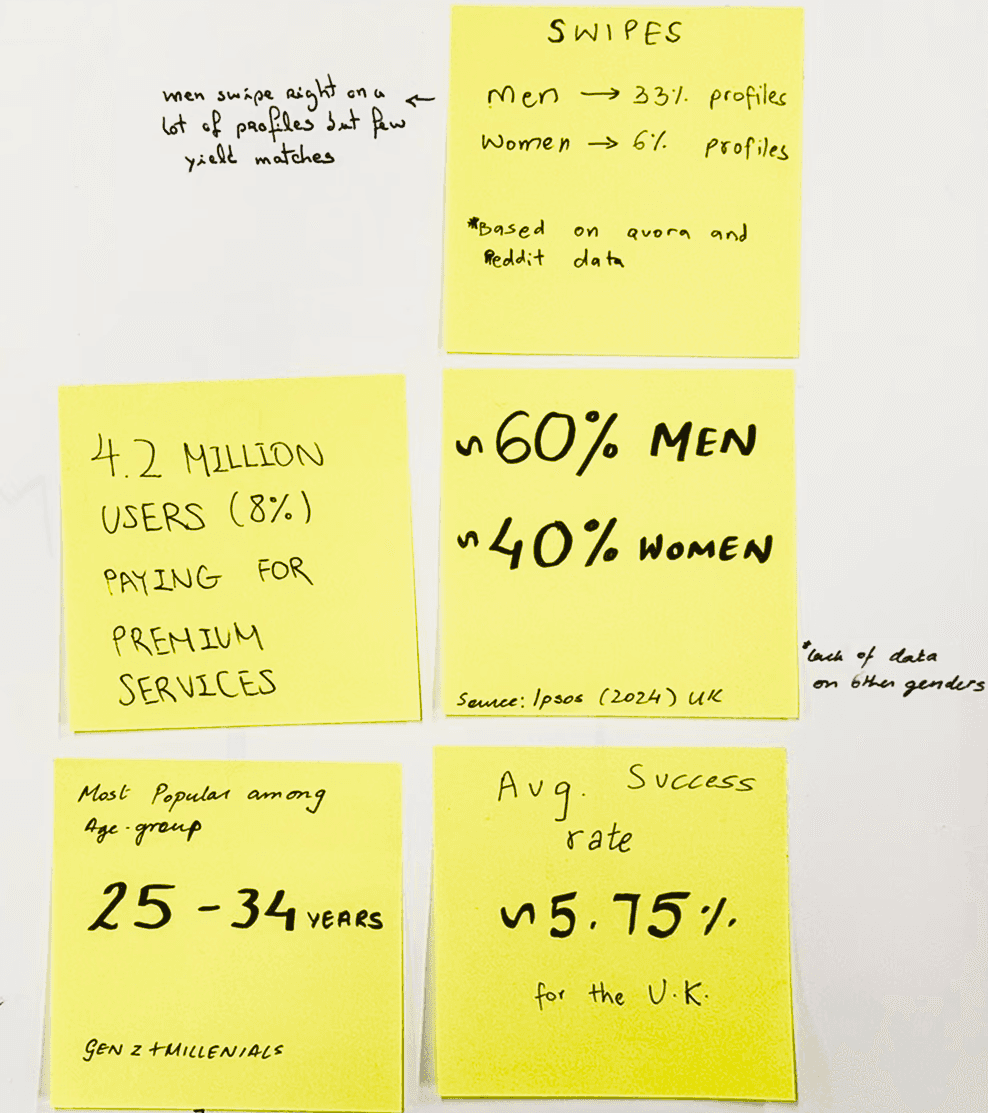
Insights derived from publicly available information.
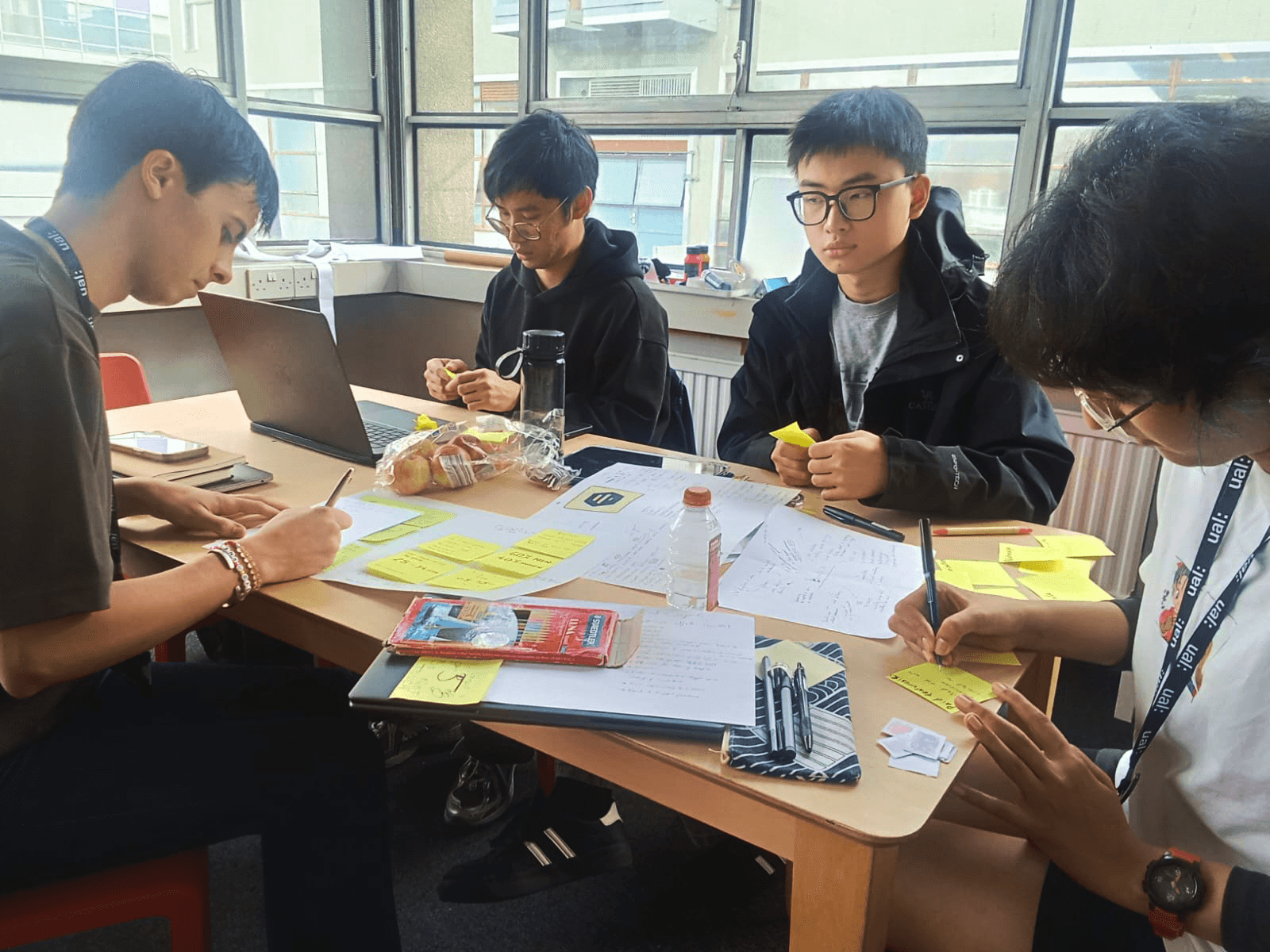
Working and collating our research.
Themes
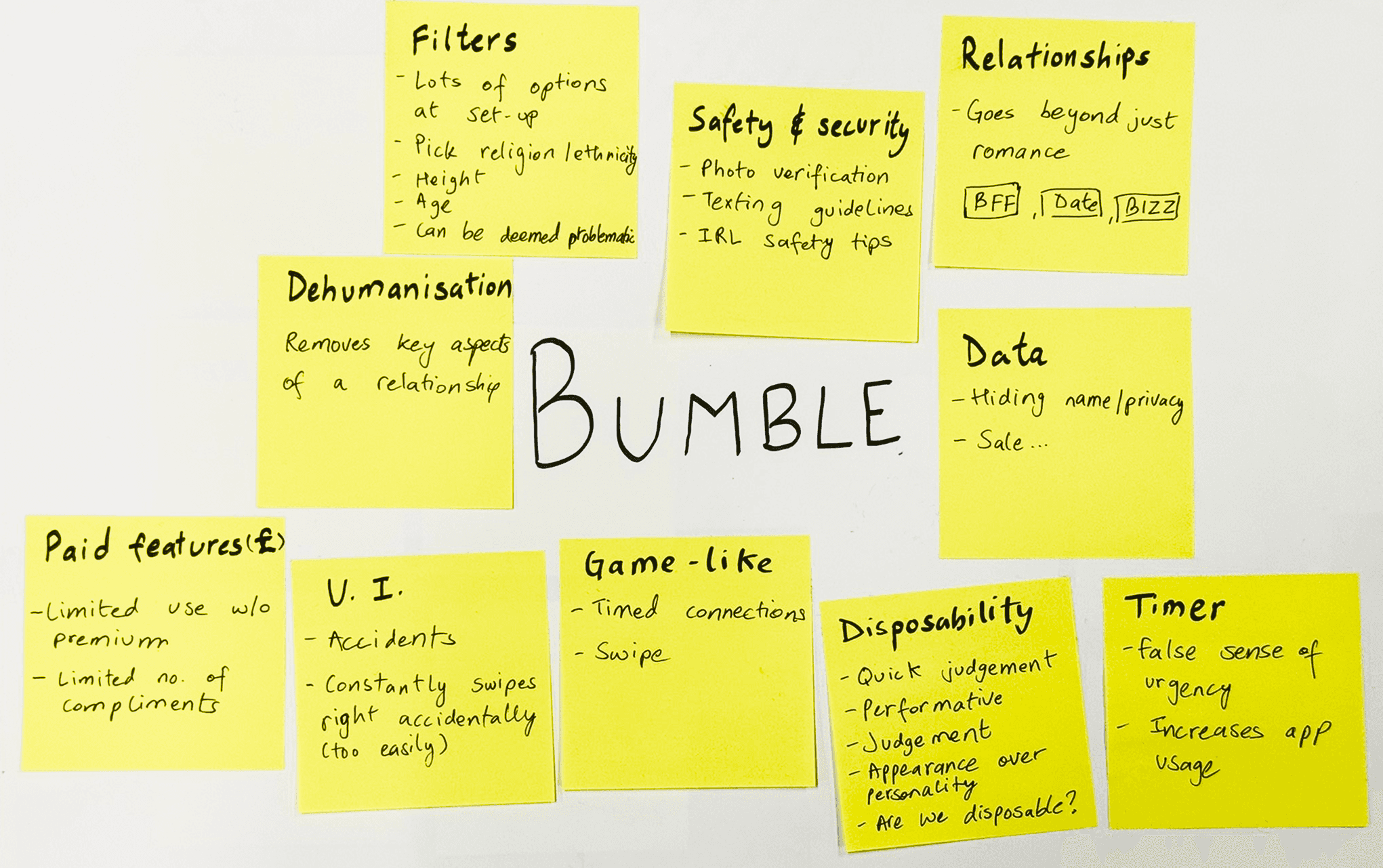
Out of the many themes that emerged from our research, we decided to focus on these four themes for our project:
Time: Unique to Bumble, gives a sense of urgency to start a conversation and leads to some anxiety.
Quick judgement: As one of our letters mentioned, “being able to reject people makes me feel weird, everything boils down to 2 seconds of judgement.”
Perception: How people portray themselves on these apps versus real life.
Vulnerability: Trying to hide some parts or alter yourself in your profile. You can't hide your name as well.
Ideation
Some ideas that we thought of:
Bumble garden: Frivolously picking flowers and matching with someone who has the same colour. Participants may or may not have a match (similar to the app experience).
Swiping hangers: Similar to fast-fashion and overconsumption, people can swipe between profiles hung on cloth hangers.
Bargain sale: A pile/circular hanger arrangement of profiles that multiple people choose from with a time limit.
Door of possibilities: Two doors facing each other, connections can only be made if both people open their doors.
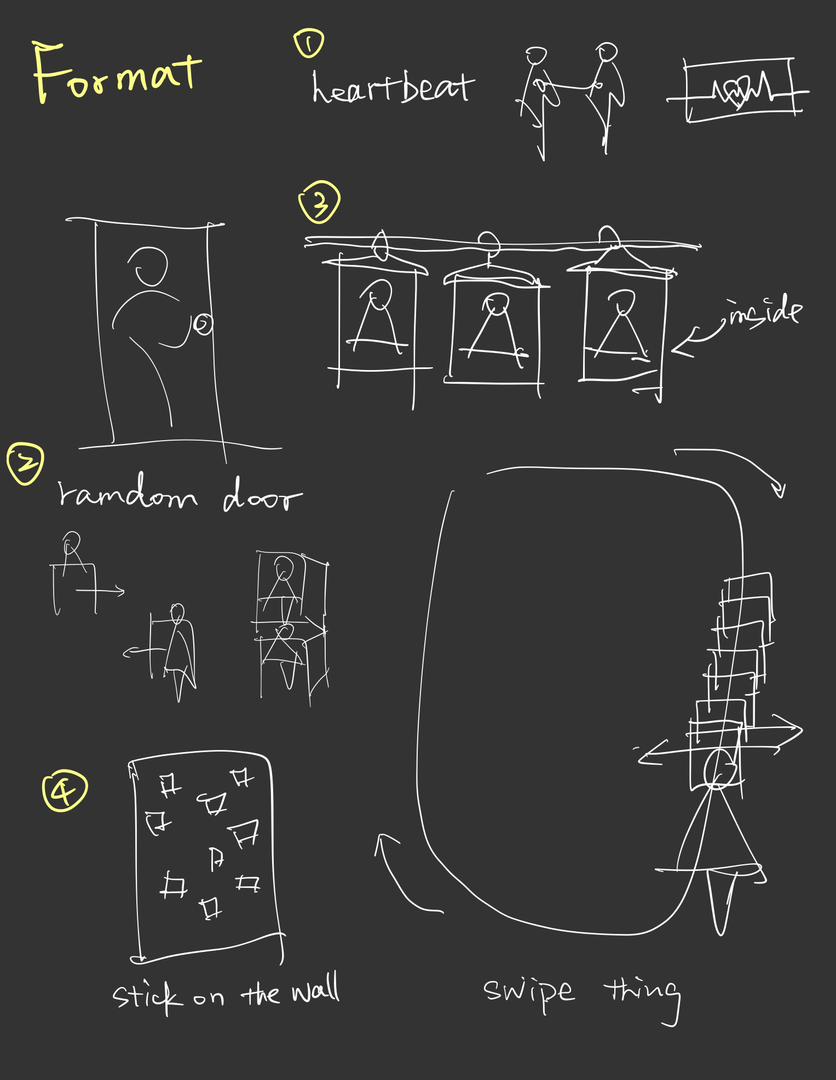
Concepts with hangers sketched by Kai.
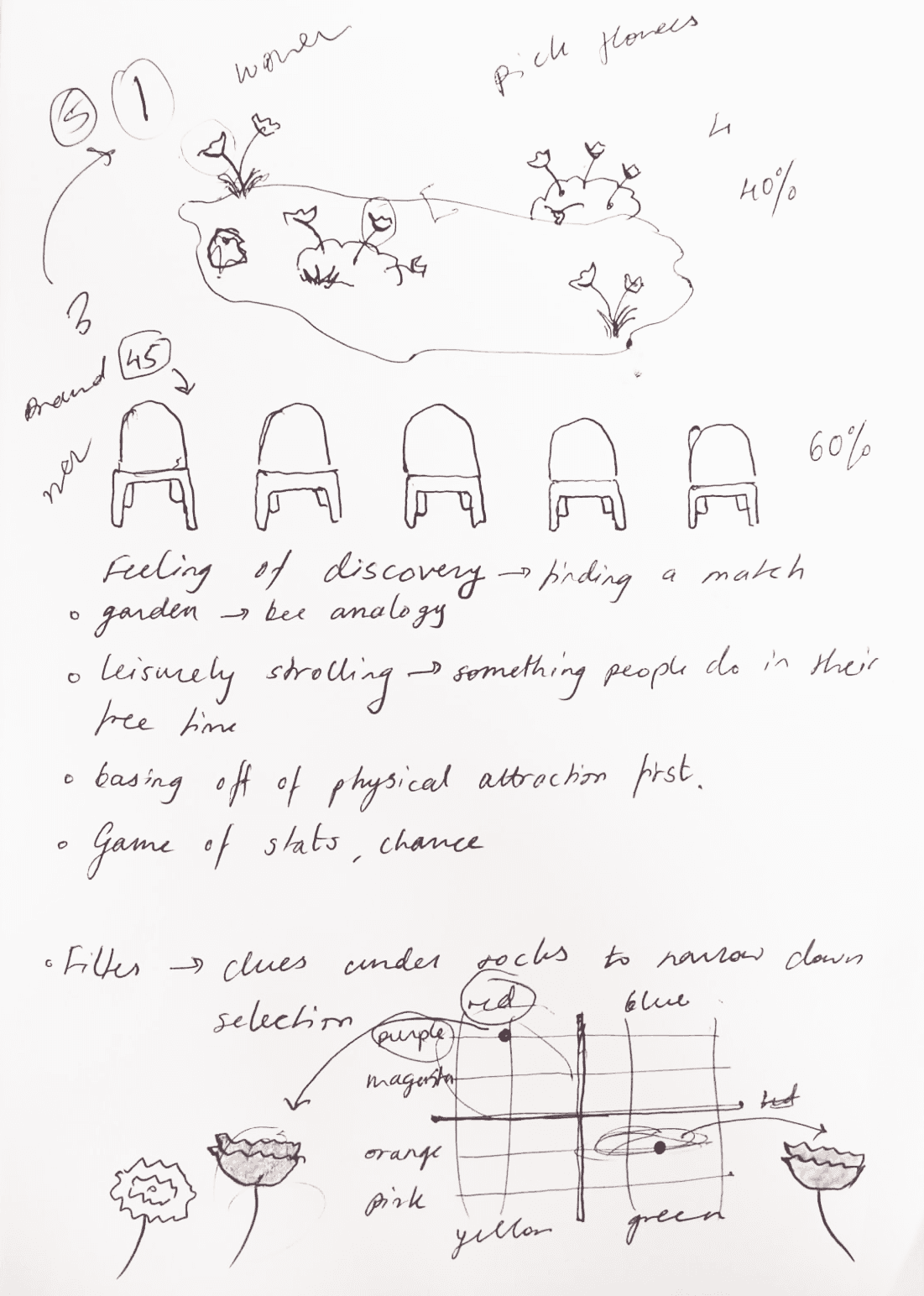
A dating garden of flowers (Vanashree).
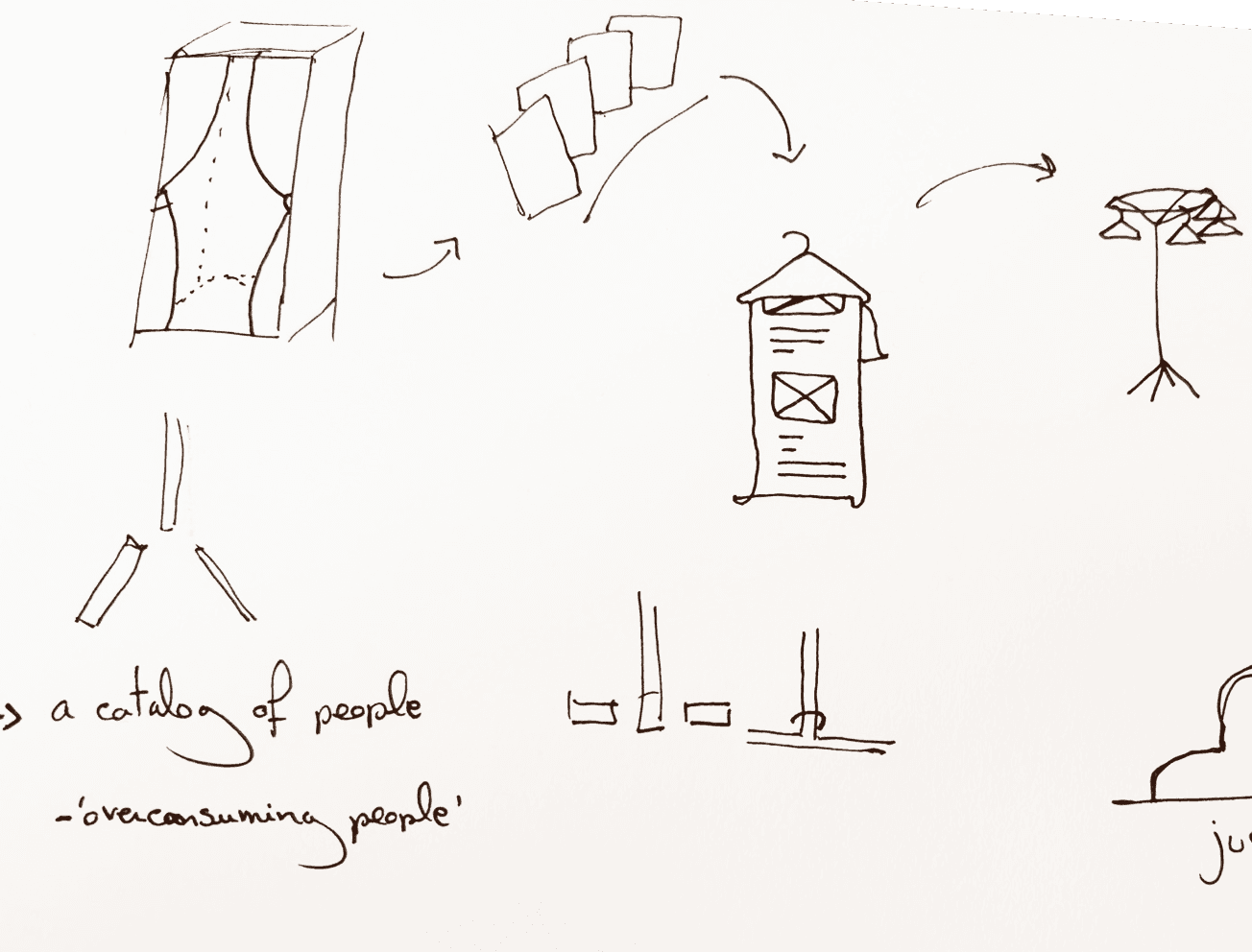
Some other concepts made by the team.
Feedback
We decided to develop and ideate more next week with the following in mind:
Keep the current ideas in mind, but not focus the research on it.
Ask more questions.
Don't brainstorm, bodystorm. Do instead of think.
week 2.
Bodystorming - Swiping IRL
We tried out swiping, a core Bumble feature, with participants. Participants held their sketched "profiles" in front of their face and one person swiped IRL.
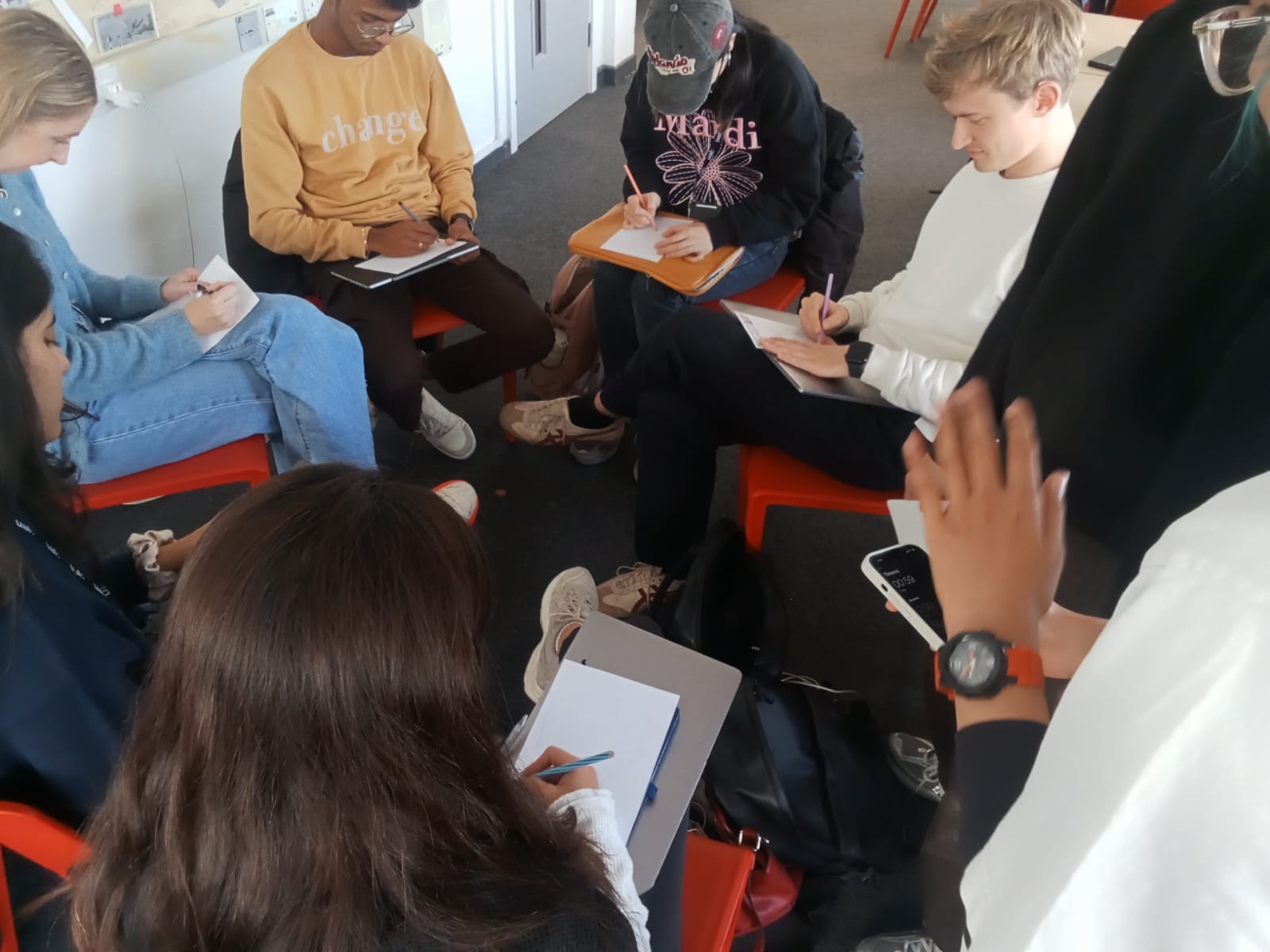
Participants making quick sketches of "profiles".
Participants being physically swiped based on their "profiles".
Observations and feedback:
It is a lot hard to reject people IRL compared to a phone app.
Participants were unable to see the swipe with the paper in front and had to peek or ask.
The person swiping was extremely conscious of their choices and felt the need to explain rejecting someone and apologising.
Bodystorming - Object selection
The activity involved two participants. Participants would take turns choosing one object from the array of fidget toys they liked the most. It is would be considered a successful match if both participants make the same selection.
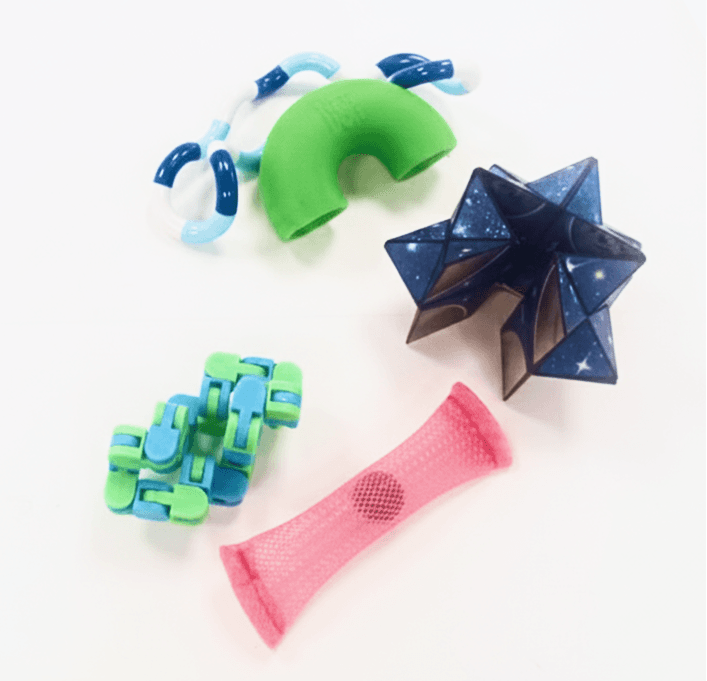
Array of fidget toys given to participants.
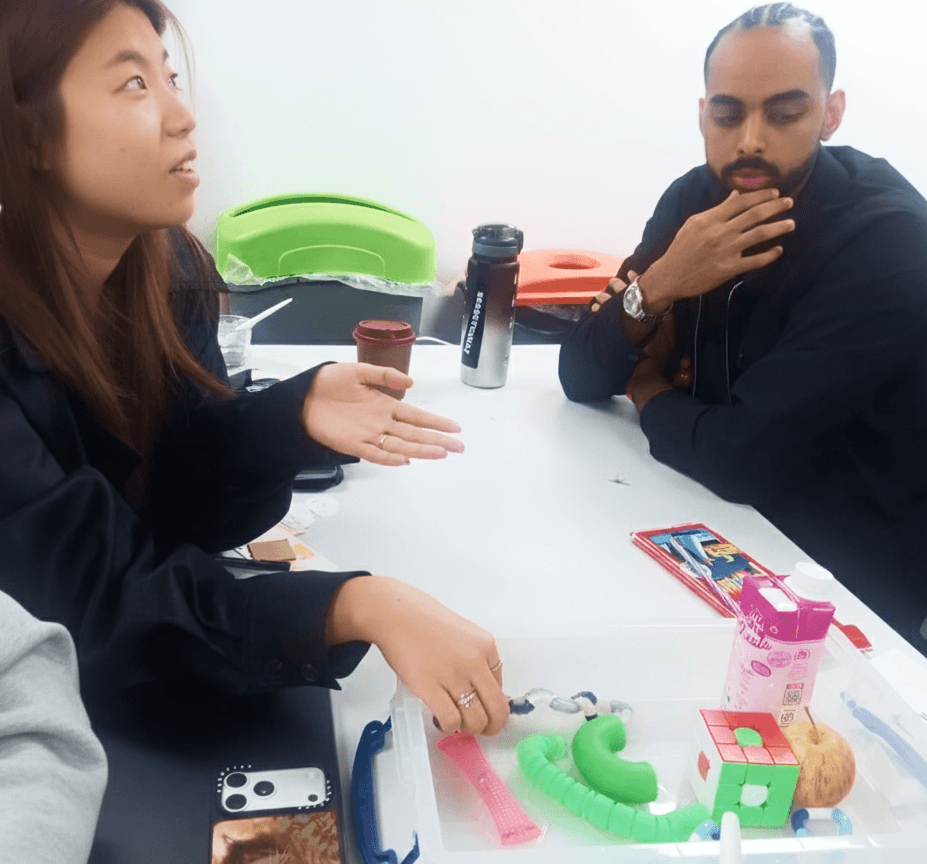
Participants engaging with the activity.
Observations and feedback:
People tended to choose an object they thought the other person would like.
While this partly reflects Bumble's current dating scene, it wasn't as impactful for the participants.
It involved a lot more talking and was less immersive and experiential.
Bodystorming - Wall of fame and shredder
One participant would judge profiles and decide if they should be shredded or put on the wall of fame.
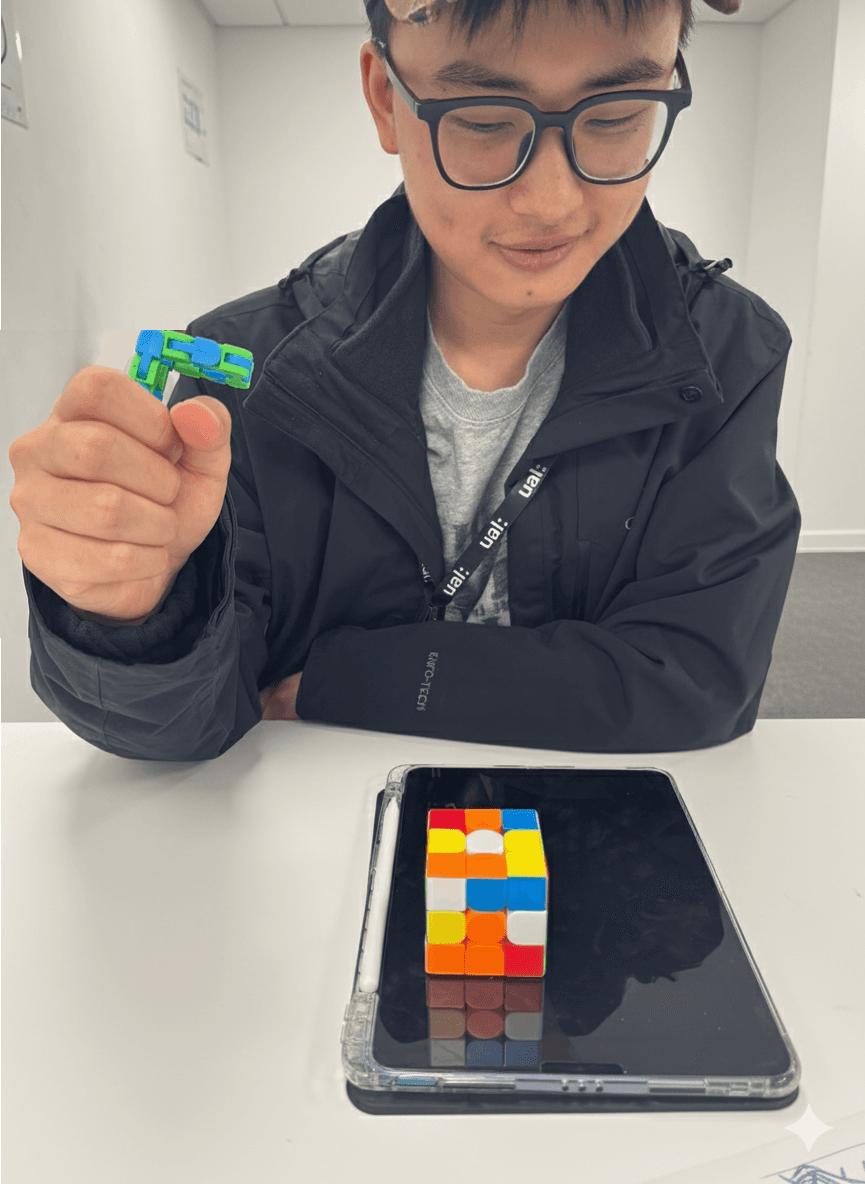
Participants making quick sketches of "profiles".
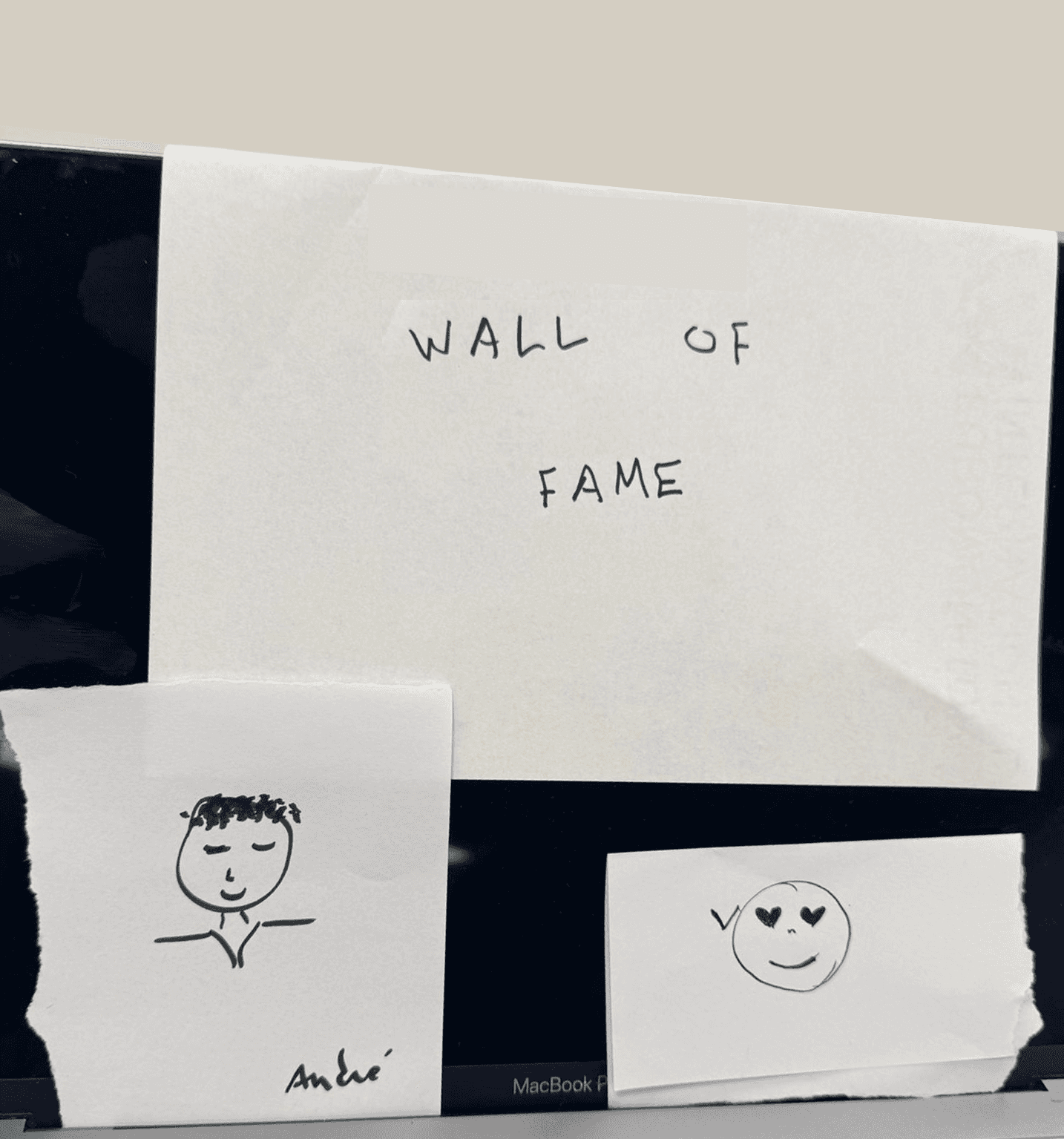
Participants making quick sketches of "profiles".
Participants making quick sketches of "profiles".
Observations and feedback:
Participants were really involved and were laughing and enjoying it.
As the judge didn't have to reject people, the role was less intense compared to swiping people.
Participants didn't take the rejection and shredding of their sketch personally.
Developing the idea
Through testing and feedback, we decided to develop the wall of fame idea further.
Masking your true self
Testing revealed that the masks and props helps ease the awkwardness, makes it casual, and keeps the activity light-hearted — similar to how Bumble works. Additionally, the judge attire helped people get in the role, and made them feel "in-charge" and less guilty rejecting people.
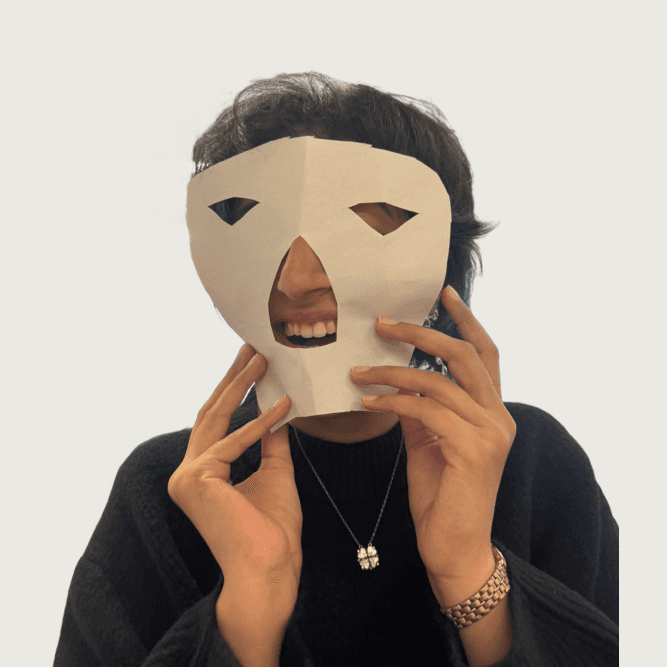
Poorly developed initial mask.
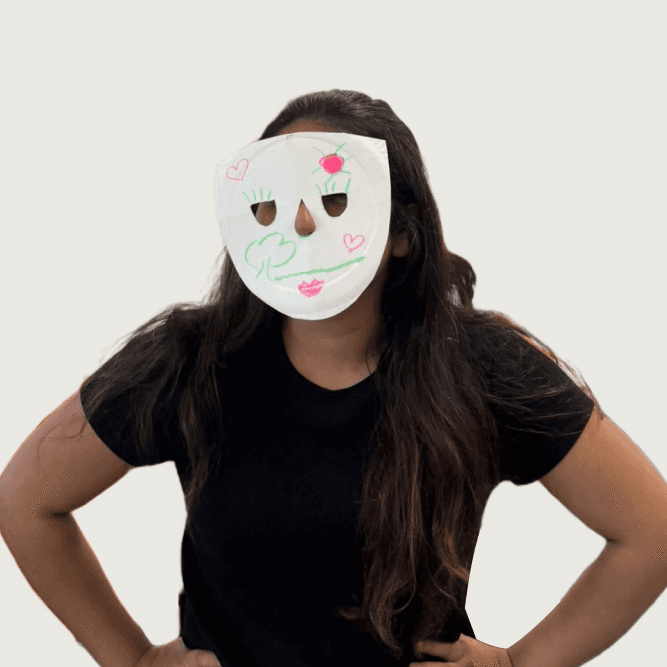
Enhanced mask with participant's scribbles to reflect their personality.
Judge attire made with black cloth and tissue paper.
Swiping mechanic
Our challenge was retaining the swiping mechanic while keeping it casual and non-judgemental. We kept the swipe outcome as something that happens out of the participant's control and they're pulled away, and is fun to be a part of.
Chair with wheels and hiding the outcome from the participant with a black cloth.
Chair with wheels pulled with bands on both sides, it performed better than kicking the chair.
Buzz Court - Final development
Wall of Fame on the right, bin at the left.
Haptics with lights at the top improved ambiance and provided a better view to the audience.
The wires on the chair were less noisy than the white bands.
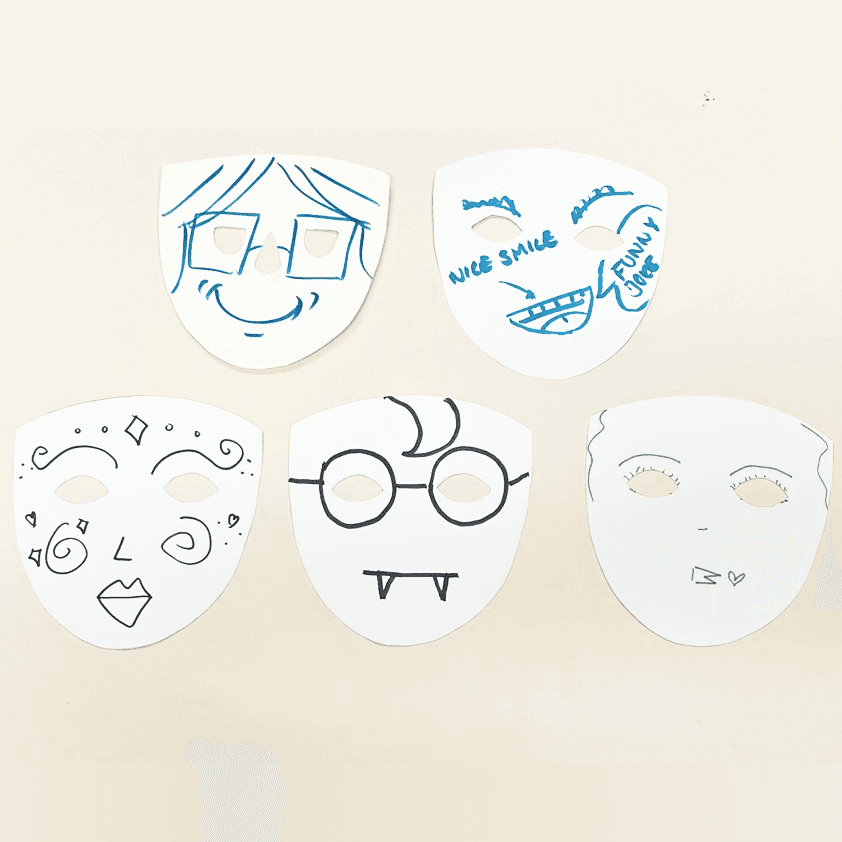
Masks made by participants.
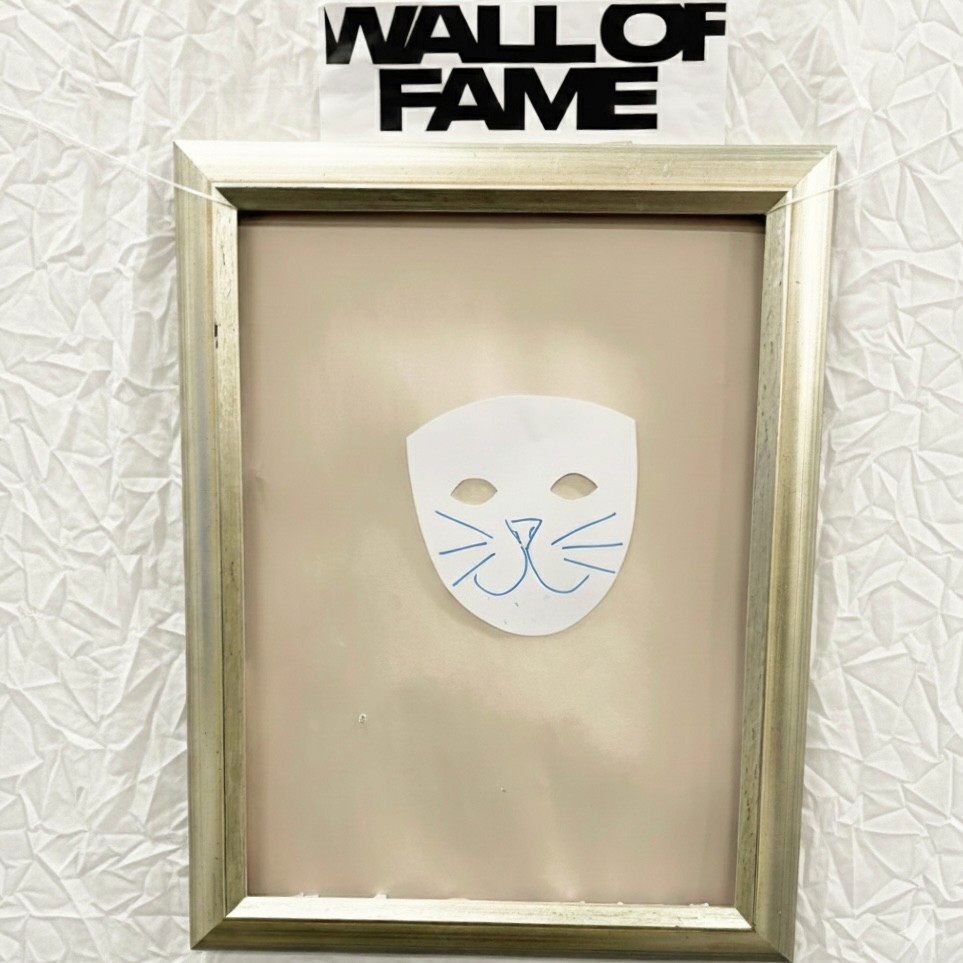
Wall of Fame with gilded frame for masks.
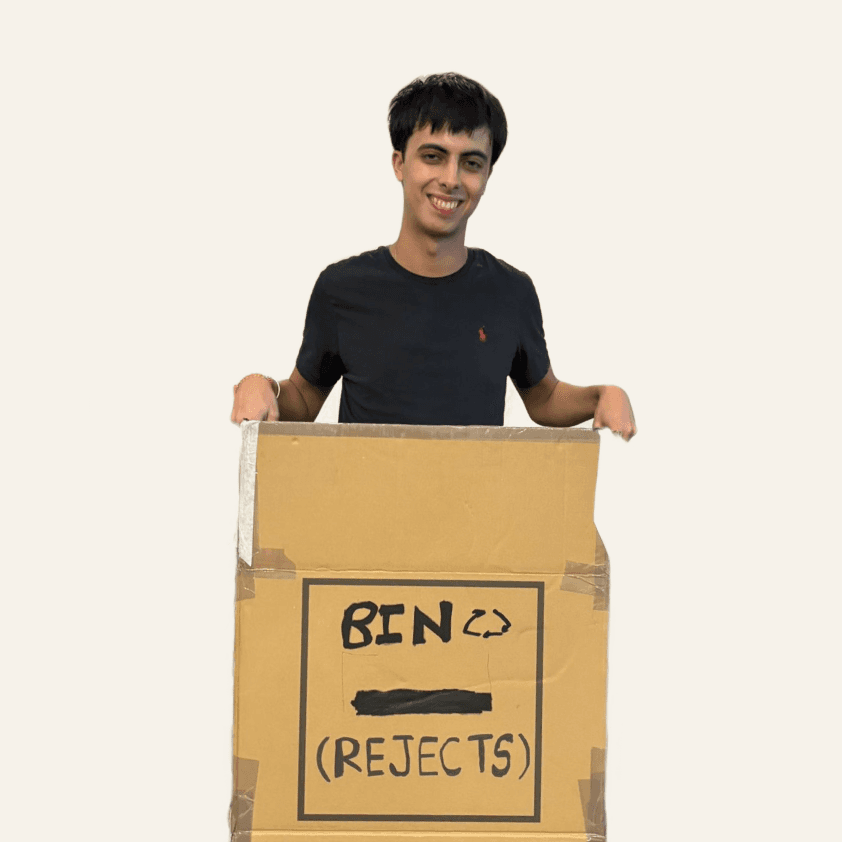
Human operated bin of rejects.
Final feedback
One participant expressed resentment from rejection, a feeling they initially did not expect.
The core mechanics of the app did seem to come across to the audience.
The lights weren’t visible to the participants, but they were to the audience. Unintentionally, the low intensity made sure that the lights were not distracting for the audience.
If we had more time, we could have introduced prompts, tags, and other app mechanics for the “profile creation” step and tested it.
reflection.
This project went really smoothly, we all worked really well with each other and bounced off of ideas. The core concept of the app was communicated well.
Looking back, there is room for improvement:
The photographs and videos are a slight improvement from the first project, but they all need a lot more work.
We did most of our work on paper or with physical tools, this approach worked well for us and helped us stay intentionally analog and keep the doodles flowing, but some of them are really hard to read and comprehend.
We were working and documenting as we went, which made our surroundings really untidy, and that really shows in the bodystorming.
The profile creation step was hugely overlooked and would have enhanced the experience greatly.
Despite its limitations, this project had many personal learnings. I learnt a lot from my team and identified my best ways of working. The project gave me room to explore lots of ideas and test them in a short time, pushing me to do more instead of saying more.
references.
Bumble (2025) About Bumble
Available at: https://bumble.com/en/about/
Bumble (2025) Global Dating Trends
Dominique, N. (2024) Bumble Removes Ads Mocking Celibacy After Women Campaigned Against Them
Reddit (2025) 9 Years on bumble, and the stats don’t lie
Available at: https://www.reddit.com/r/Bumble/comments/1hsqdkw/
Swipestats (2025) Bumble Statistics 2025
Available at: https://www.swipestats.io/blog/bumble-statistics/
Wikipedia (2025) Bumble
Available at: https://en.wikipedia.org/wiki/Bumble