TIMELINE:
19 JAN - 25 JAN 2026
RESEARCH METHODS:
SENSORY IMMERSION, AEIOU, BODYSTORMING
TEAM:
VIBHOOTI • AMEN • CLARA • VANASHREE • YIFEI
Sonic Commons
brief.
"Design and stage a sonic intervention that amplifies, distorts, or reclaims public space in Walworth."
week 1.
Primary Research
Our project started with a tour of the Walworth Area with Rosie and Ronnie. We revisited and documented our walk (shown in images). These observations led us to question how sound shapes the experience of public space.
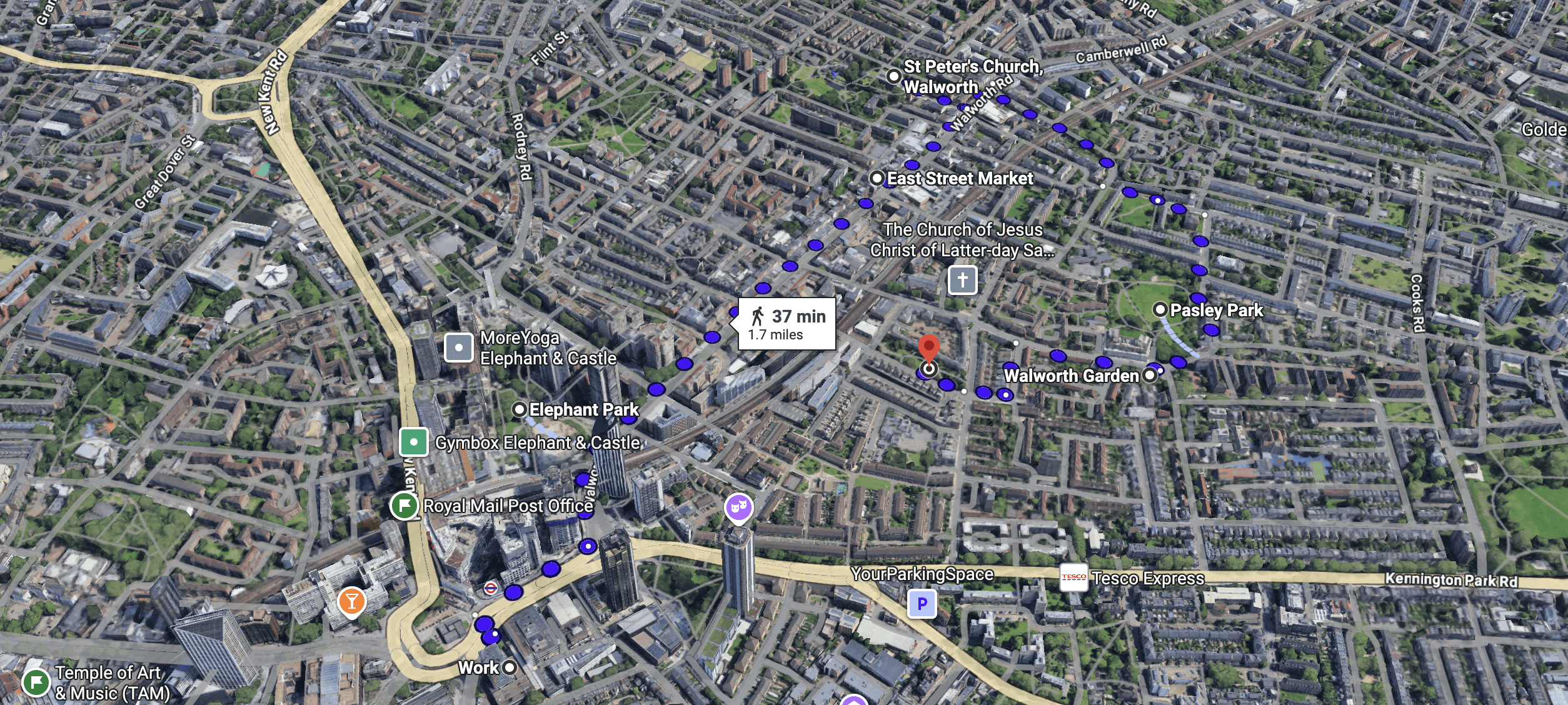
Thinking about the kind of public space created around Faraday Monument.
Noticing the surveillance at Elephant and Castle park, a privately run public space.
Walking through the stalls and bustle of the East Street Market.
Noticing the environment and quiet at Louie Café (St. Peter's Church).
Listening to the sounds at Pasley park and noting the fewer traffic noises.
Observing the plants and activities done at Walworth Garden.
Bodystorming - Laughter Yoga
While we were at Pasley park, hearing children's laughter at the nearby daycare reminded me of how, back in India, elderly people gather in parks every morning and laugh.
We quickly bodystormed this community activity. While the intervention felt awkward and drew stares, it revealed how unfamiliar sound-based interactions can disrupt social norms in public space.
Laughing at Pasley Park as a group (unmute).
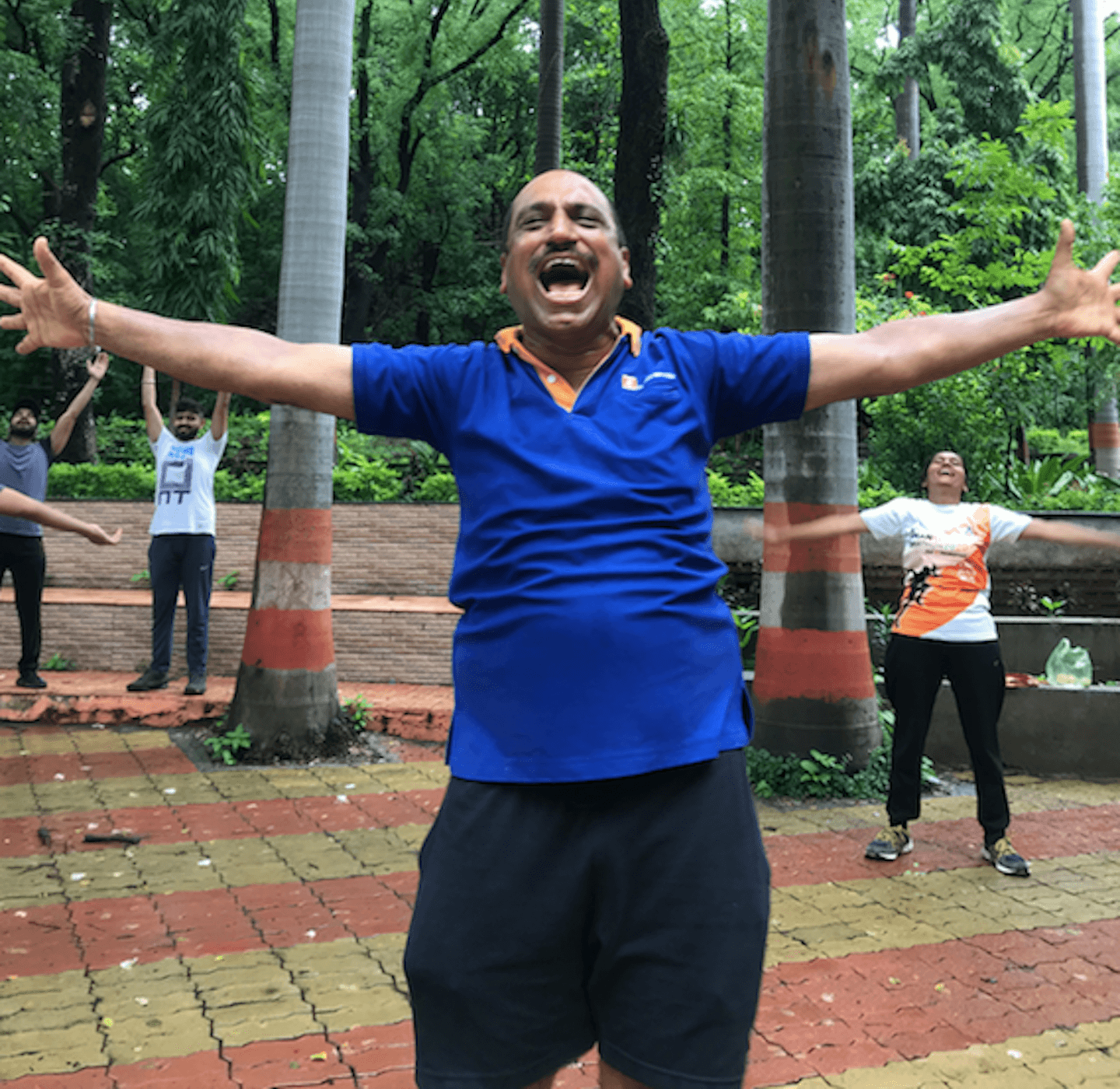
Image Credits: Manohar, S. (2020)
Sensory Immersion - Walworth Garden
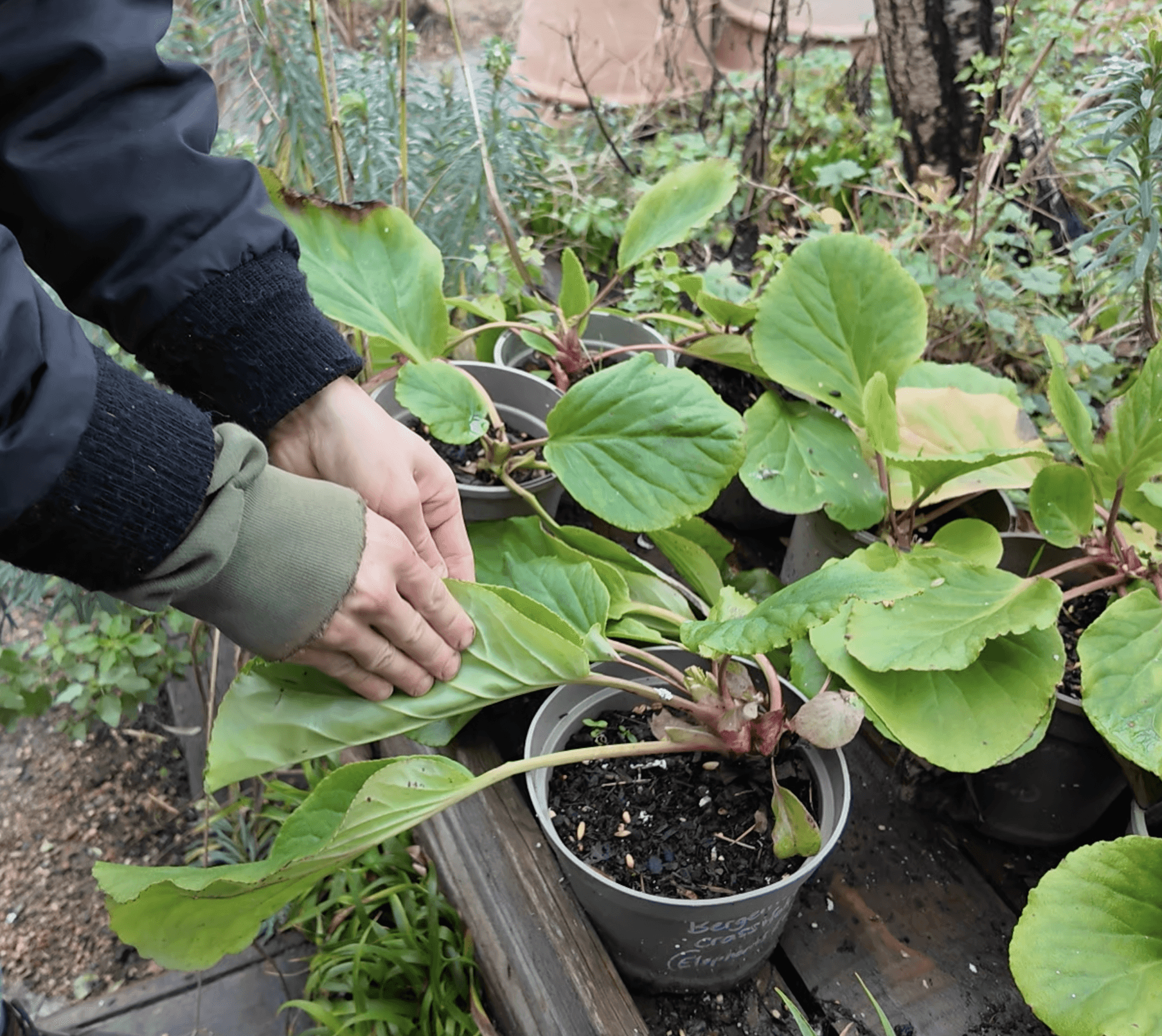
Walworth Garden, a public commons, had thriving plants and a very welcoming community. We understood more about the place by spending time chatting with the community, smelling plants, listening to the animal sounds, and frequenting the place throughout the week:
Walworth Garden induction: The induction helped us learn more about the history and functions without utilising a stiff interview format.
Volunteering: One of the team members, Vanashree, volunteered over the weekend and worked on plants.
Talking to staff and students: We learnt about their interests, passion, and background.
Jack, a staff member, showed us sounds in the garden like the Pigsqueak plant.
Observing the community working as volunteers.
The garden animals (foxes, birds, cats) were all relaxed.
AEIOU and Secondary Research
We documented our data and findings with AEIOU and looked into other secondary sources. These helped us develop a stronger understanding of the place for our project.
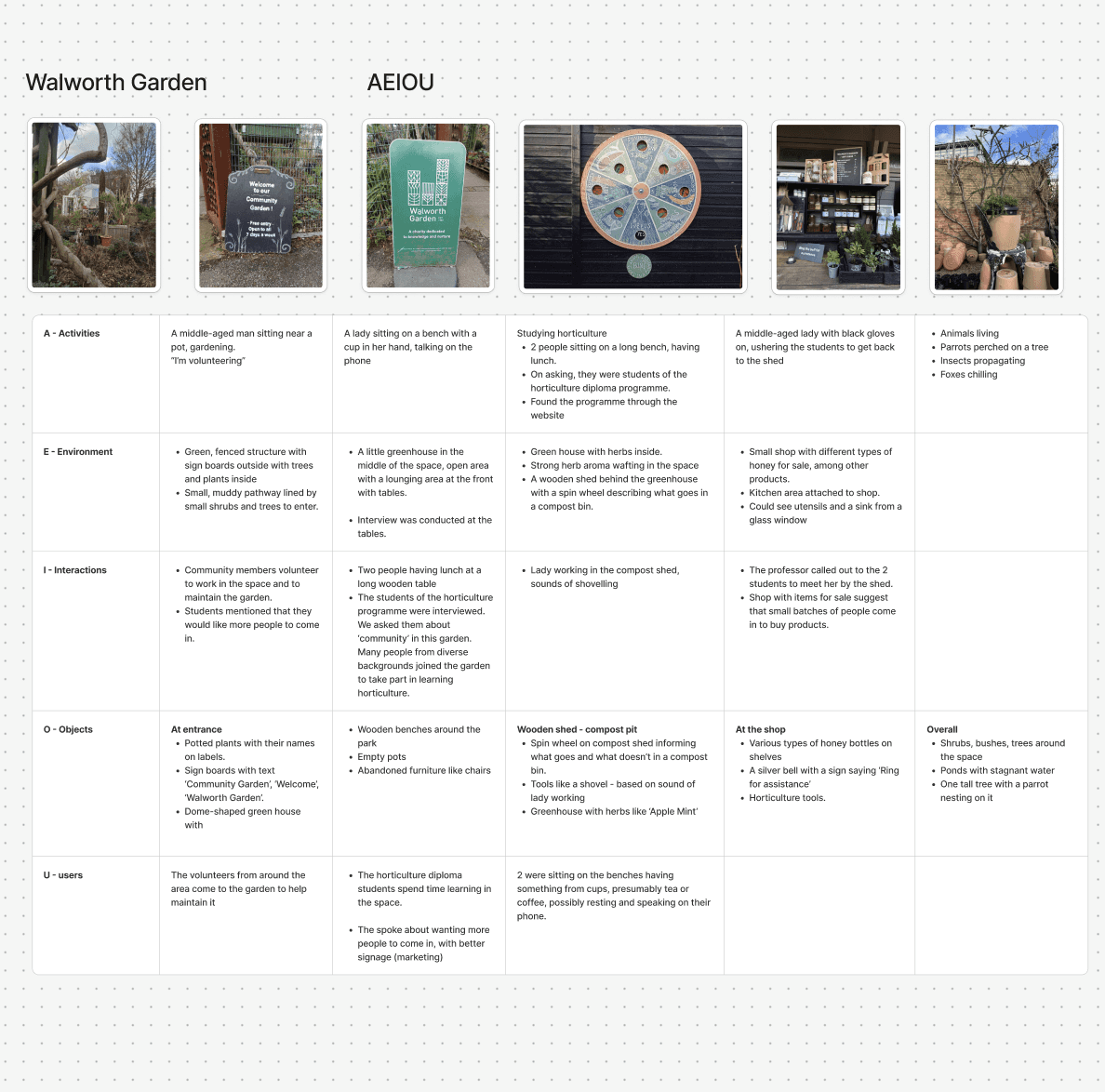
Data synthesised with AEIOU.
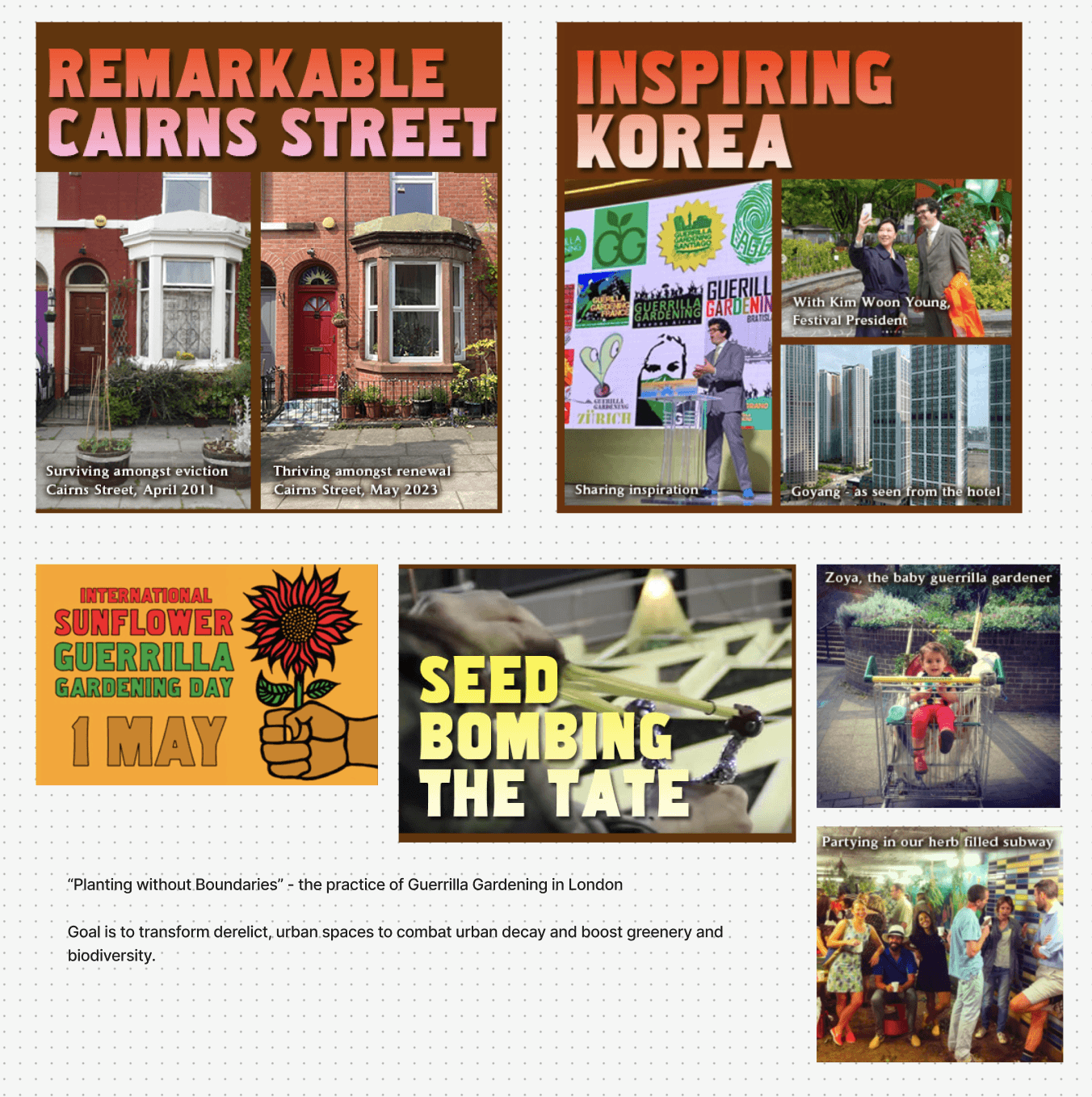
Research from guerrilla gardening, which was how the Walworth Garden was initially established.
Collecting Sounds
AEIOU helped us identify sounds from the garden we could sample. We had a variety of low and mid range samples, and one high range sample of parrots. Some of the samples we collected are below (unmute):
Rock Jamming
We jammed 4/4 and 6/8 rhythms with rocks. As I had prior experience with music, I was able to facilitate the improvisation. This was a quick and spontaneous sonic intervention we could perform at the garden.
4/4 rhythm (unmute)
6/8 rhythm (unmute)
Sample Tracks
Using the collected sounds, Vanashree and I created sample tracks. We found it interesting that the garden had so many sounds that go unnoticed, and creating tracks out of them let us amplify and bring them out purposefully.
Vana's sample: She blended elements of the garden with human sounds like laughter, whistling, and chatter (unmute).
My sample: I layered base and mid tones for the rhythm and used parrot sounds as the melody (unmute).
Feedback
We decided to explore these for next week:
Feed the sample tracks back to the Walworth Garden.
See what the community thinks about it and if they would like to add to it.
Involve people in making the music themselves.
Think of ways to make it more experiential.
Reflection
This week allowed us to engage with Walworth Garden through repeated visits, helping us ground our research and avoid straying from the context.
Due to unforeseen circumstances within the group, the distribution of work shifted, with Vanashree and I taking on a larger share of the research and ideation. While this presented challenges, it also allowed us to make quicker decisions and maintain momentum. This experience taught me the importance of flexibility and self-direction within collaborative projects.
references.
Farm Garden website: https://www.farmgarden.org.uk/london
Grassroots Activism website: https://www.amnestyusa.org/get-involved/grassroots-activism/
Manohar, S. (2020) Laughter Clubs Continue to be Popular in India Despite There Being Nothing to Laugh About
Available at: https://www.vice.com/en/article/laughter-clubs-comedy-india-pandemic/
Oxford: Grassroots Activism
Available at: https://oxford-review.com/the-oxford-review-dei-diversity-equity-and-inclusion-dictionary/grassroots-activism-definition-and-explanation/
Richardson, T. (2015): TfL are Shrinking Our Public Space at Elephant and Castle.
Available at: https://www.youtube.com/watch?v=7hkFM-5tfwA
Richardson, T. website: https://www.guerrillagardening.org/
Southwark website: https://www.southwark.gov.uk/culture-and-sport/parks-and-open-spaces/gardening
Walworth Garden website: https://walworthgarden.org.uk/